
Newest Feature

Farewell Tornado – The history of The Mighty Fin
With the Royal Air Force retiring its final Tornado aircraft this week, Gareth Stringer takes a look at the history behind this hugely successful platform, one that has provided the UK’s frontline strike capability for three decades. Images as credited.
More features

BlogGAR – Karl Drage – London-Heathrow Airport (LHR) – 03/08/2013
Free Saturday afternoons and evenings come around once in a blue moon in my world, but 3 August 2013 was one such occasion, and I really fancied an outing to London-Heathrow Airport.
Aviation Feature – HMLAT-303 – Training the Future of Light Attack
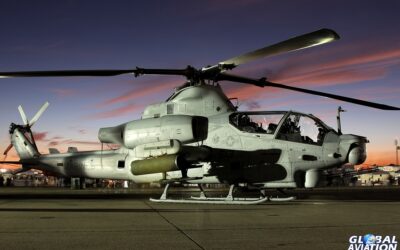
As the USMC’s only light attack helicopter training squadron, HMLAT-303 ‘Atlas’ is responsible for training all UH-1Y, AH-1W and AH-1Z aircrew. Paul Dunn visited MCAS Camp Pendleton to learn more about these exciting types, and talk to some of the people that operate them.

Aviation News – NASA’s new WB-57F, N927NA, flies for the first time in 41 years
NASA currently operates a pair of WB-57F high-altitude research aircraft based out of Ellington Field in Texas, but very soon a third airframe will join the fleet. Paul Filmer reports on NASA 927’s first flight.

Airshow Review – Gathering of Warbirds and Legends, Forbes Field, Topeka, KS
“An airshow that’s not an airshow.” That’s how Dan Gryder started off every morning briefing to all the pilots and crew that were in attendance. Paul Filmer attended the very first Gathering of Warbirds and Legends at Forbes Field, Topeka, Kansas.

Airshow Review – RNAS Culdrose Air Day, 24 July 2013
After having a year off in 2012, as a result of taxiway resurfacing work and Olympic commitments, RNAS Culdrose Air Day was back on the airshow calendar in 2013. Chris Wood headed back to Culdrose to report for GAR, with additional photography by Shaun Schofield.

Aviation Feature – Project Hawker 2013
Almost 100 years ago, a young Australian pilot set off on a flight around Britain in an attempt to win a £5,000 prize being offered by the Daily Mail newspaper. The pilot was Harry Hawker and his aircraft was a hydro-biplane designed and built by Thomas Sopwith, for whom Hawker worked.
Get involved – join the conversation?