
Earlier in 2024, NASA finally retired its DC-8 that had provided years of service sampling the atmosphere and participating in research programs. With it gone from service but having had a chance to see it one more time before it retired, Rob Edgcumbe takes a look for GAR at the end of the career for this iconic airframe.
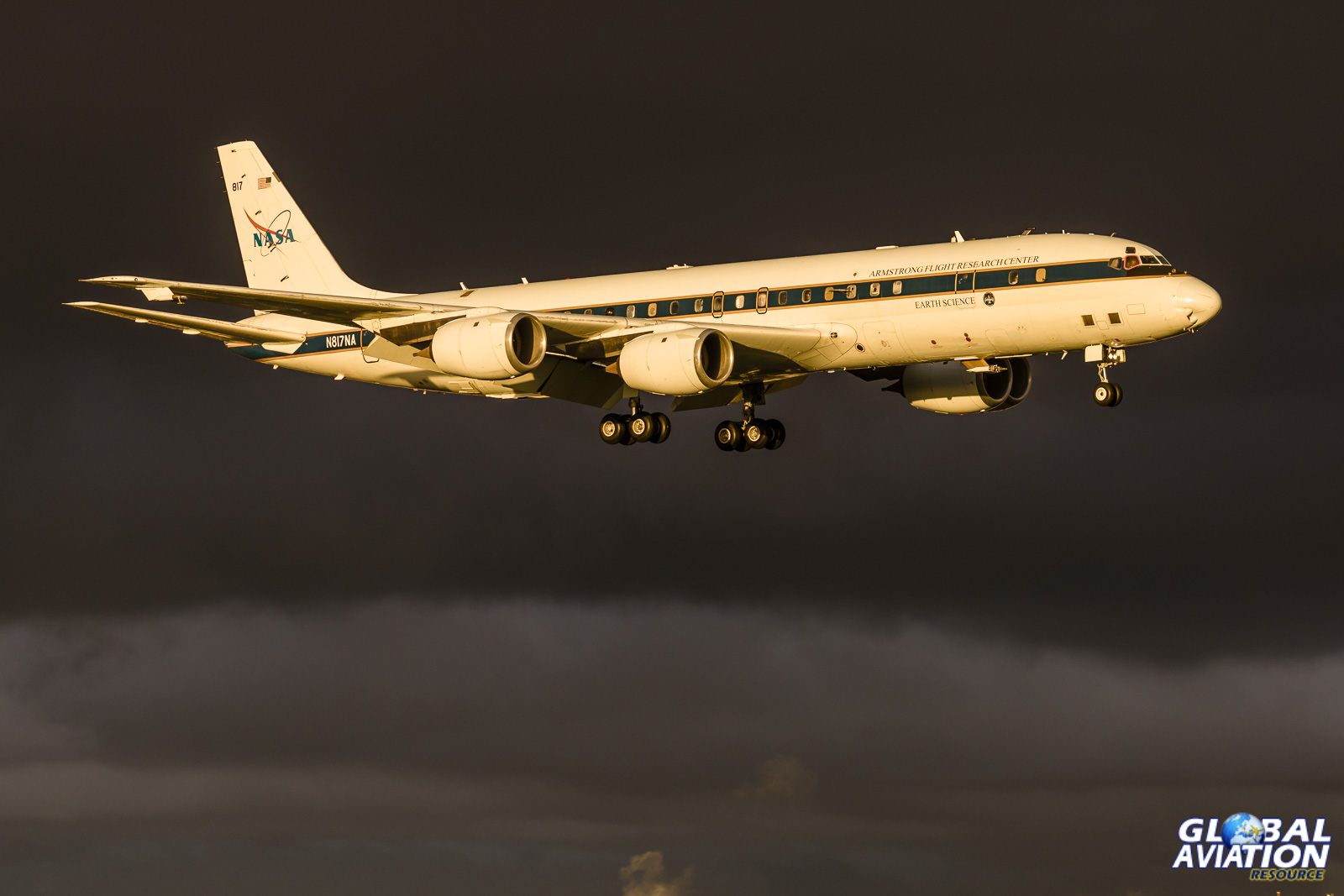
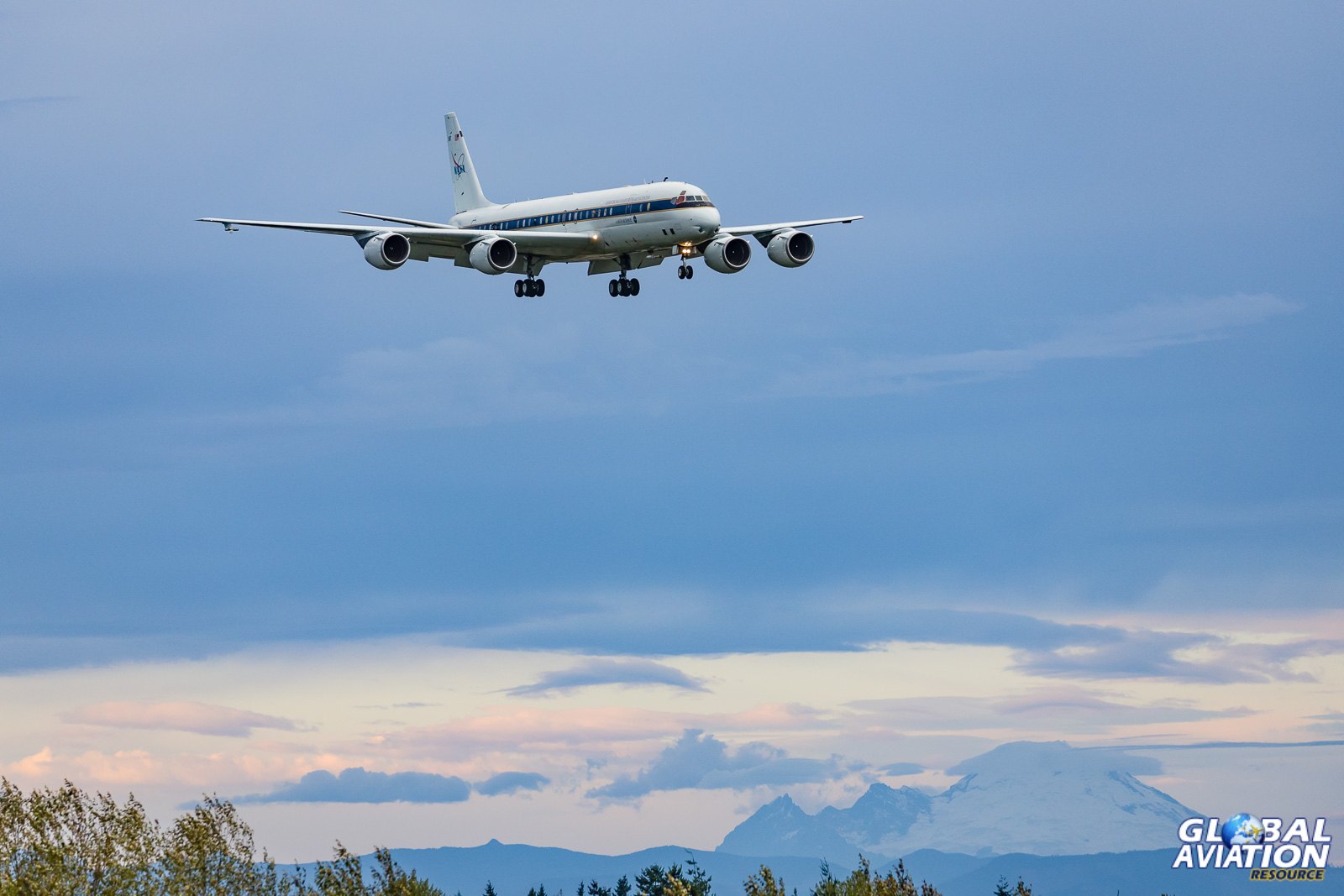
The storm clears just in time for a sunset landing © Rob Edgcumbe – Global Aviation Resource
If there is one thing that is likely to keep an aging airframe in service, it is its use as a testbed or a research platform. The low cost of older planes makes them a great candidate for conversion to a test aircraft and their low utilization thereafter makes the cost of keeping them going acceptable. NASA took possession of its DC-8 in 1985 although it was originally constructed in 1969. Built as a DC-8 Series 62, the airframe was delivered to Alitalia where it operated for about ten years before being sold to Braniff. It left Braniff service in 1982 and was converted to CFM-56 power in 1984 making it a Series 72. This was the configuration when NASA took ownership.
Naturally, once NASA had the jet, they implemented many modifications of their own. NASA identified four main categories of activities that the DC-8 was used for. These included:
- Earth surface and atmospheric research
- Verification of satellite sensor data
- Sensor development
- Space vehicle launch and reentry tracking and data retrieval
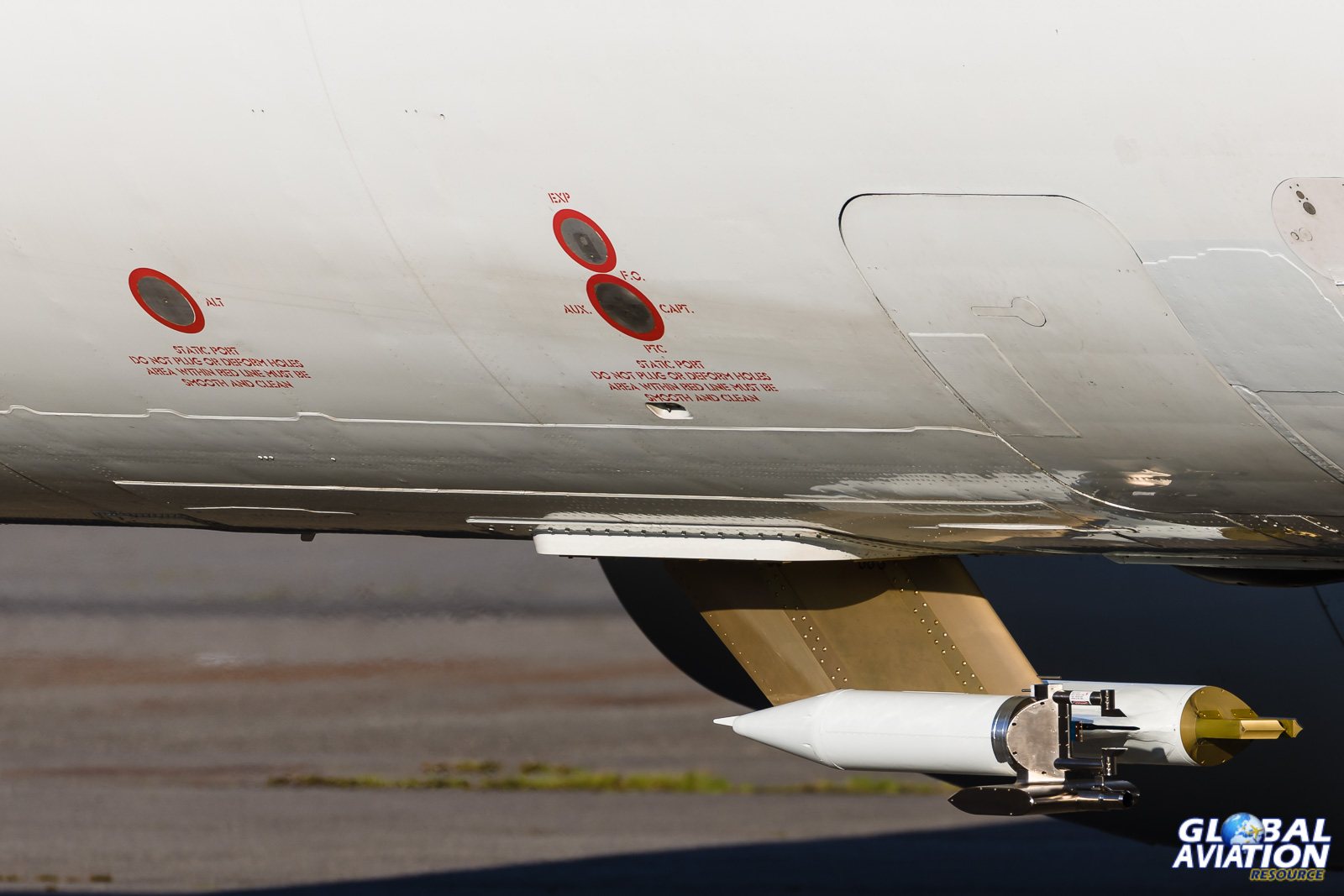
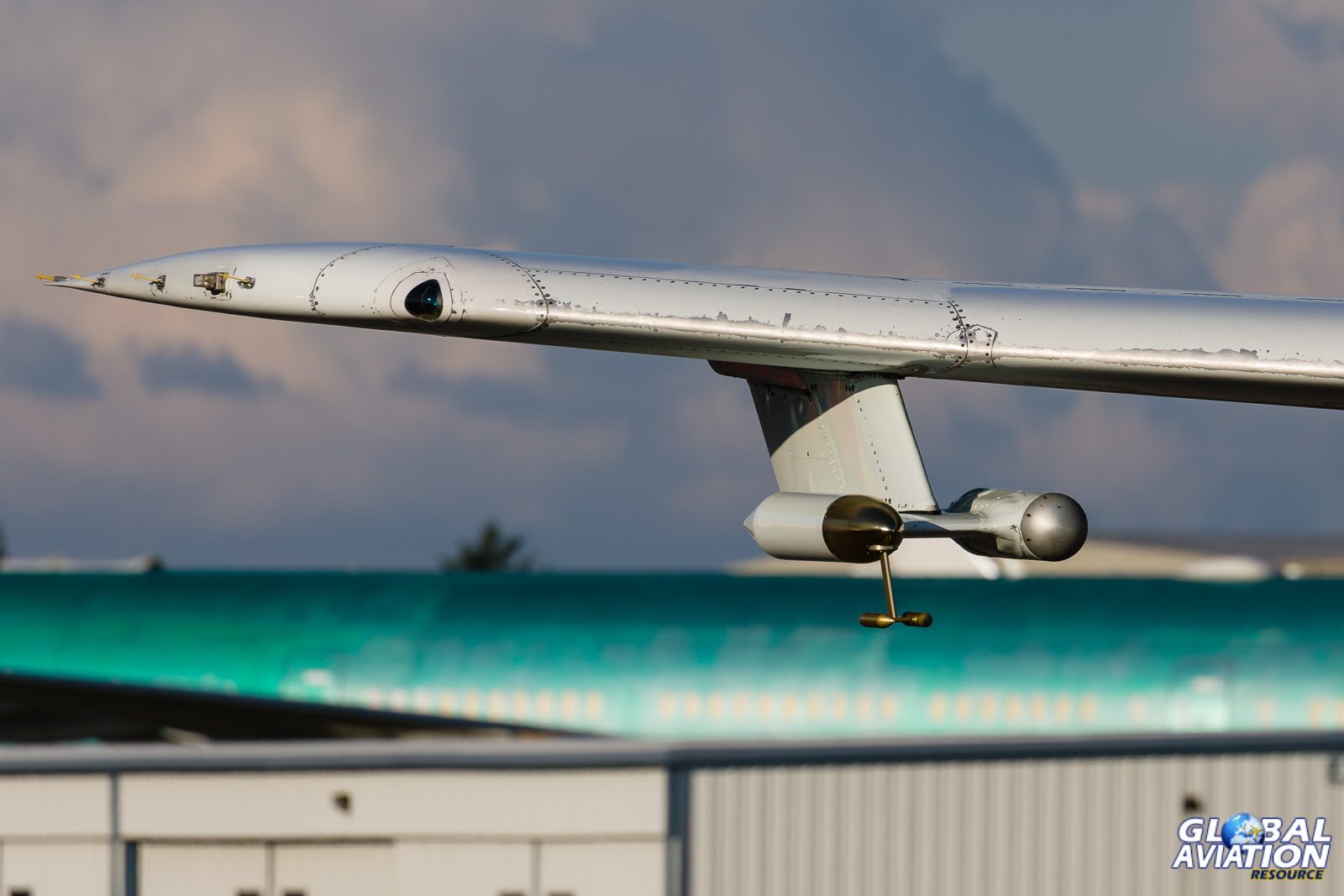
Some of the sensors are under the fuselage © Rob Edgcumbe – Global Aviation Resource

A view of the various sensors on the front fuselage of the DC-8 © Rob Edgcumbe – Global Aviation Resource

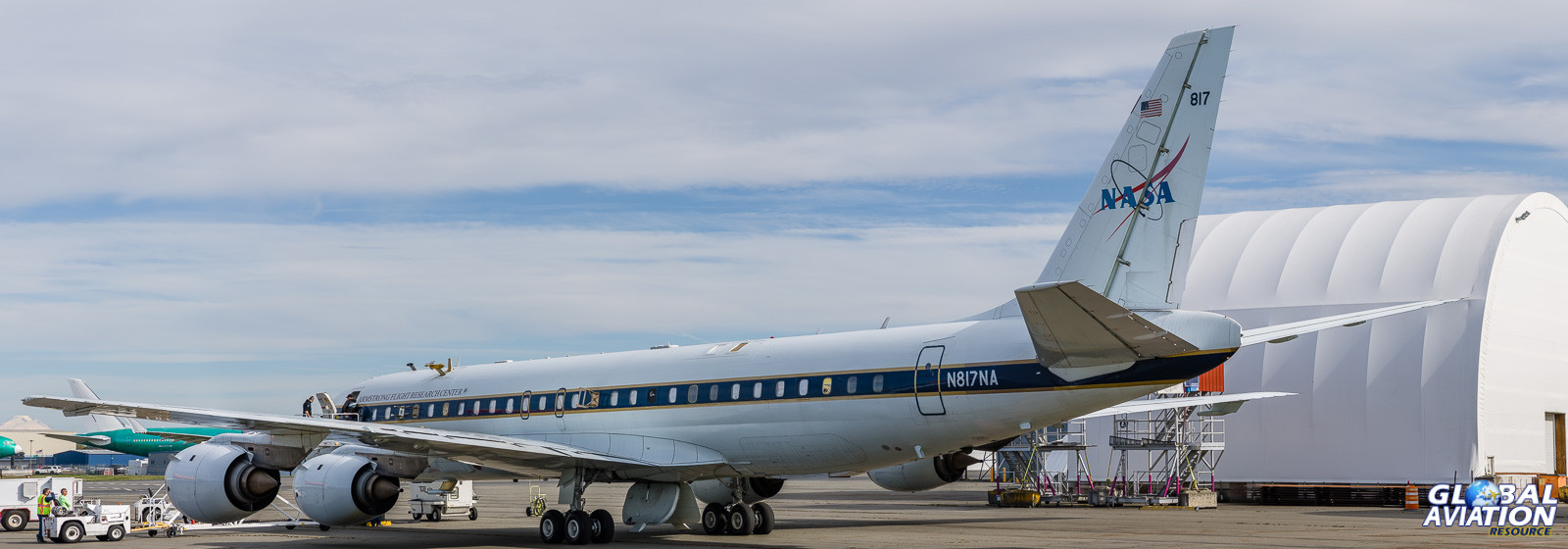
Post mission, the plane was pulled into this shelter at Paine Field © Rob Edgcumbe – Global Aviation Resource
To achieve these goals, various additions were made to the airframe. The window apertures are a simple location for adding sensors but NASA found plenty more locations across the fuselage and wings onto which test installations could be added. Consequently, when you get closer to the aircraft, you can see a lot of non-standard additions that will allow measurements to be taken of different conditions while in flight. It also had added communications equipment to allow satellite communication of both crew data and research data. While plenty of workstations were available in the cabin, remote researchers could receive data feeds from the flights.
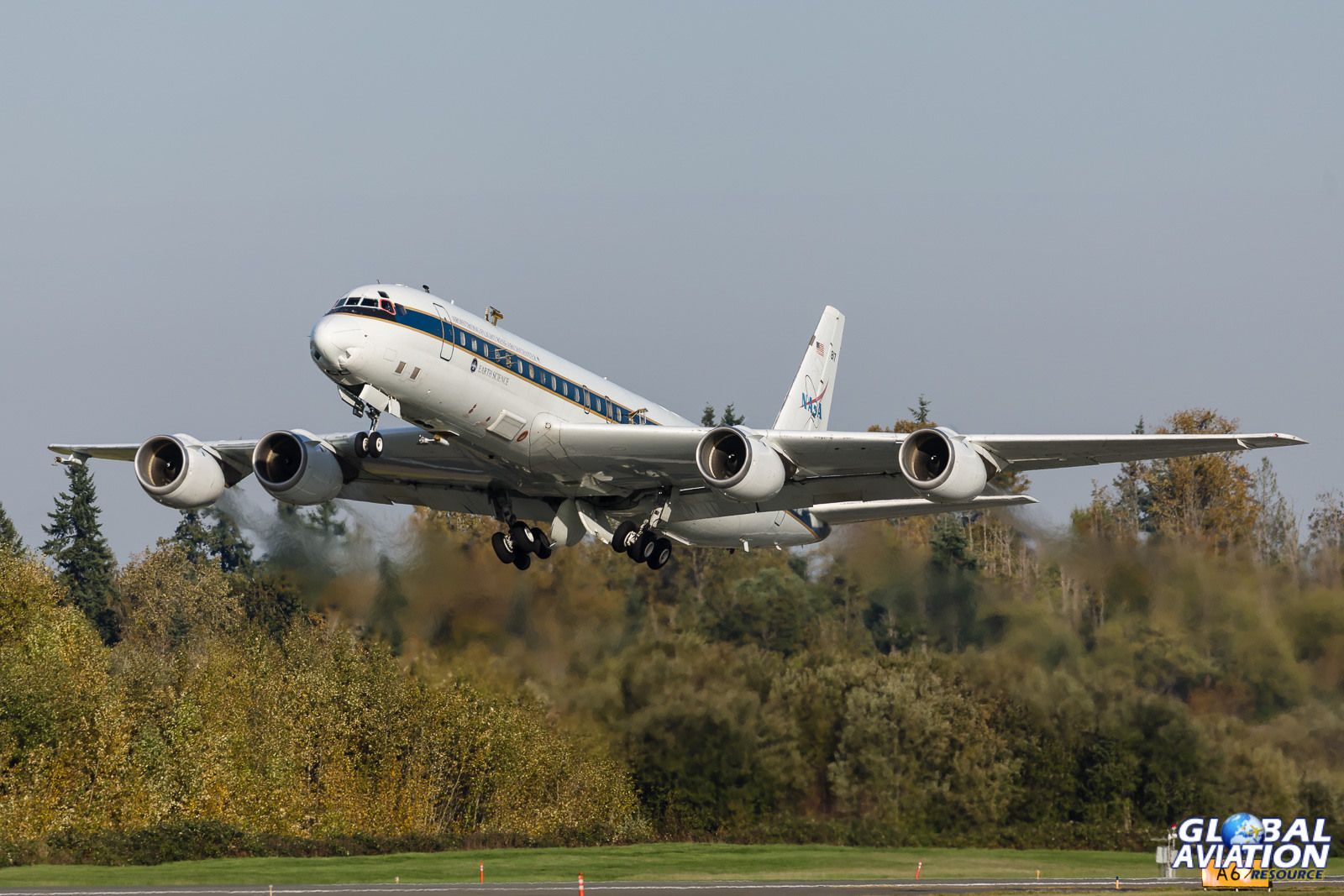
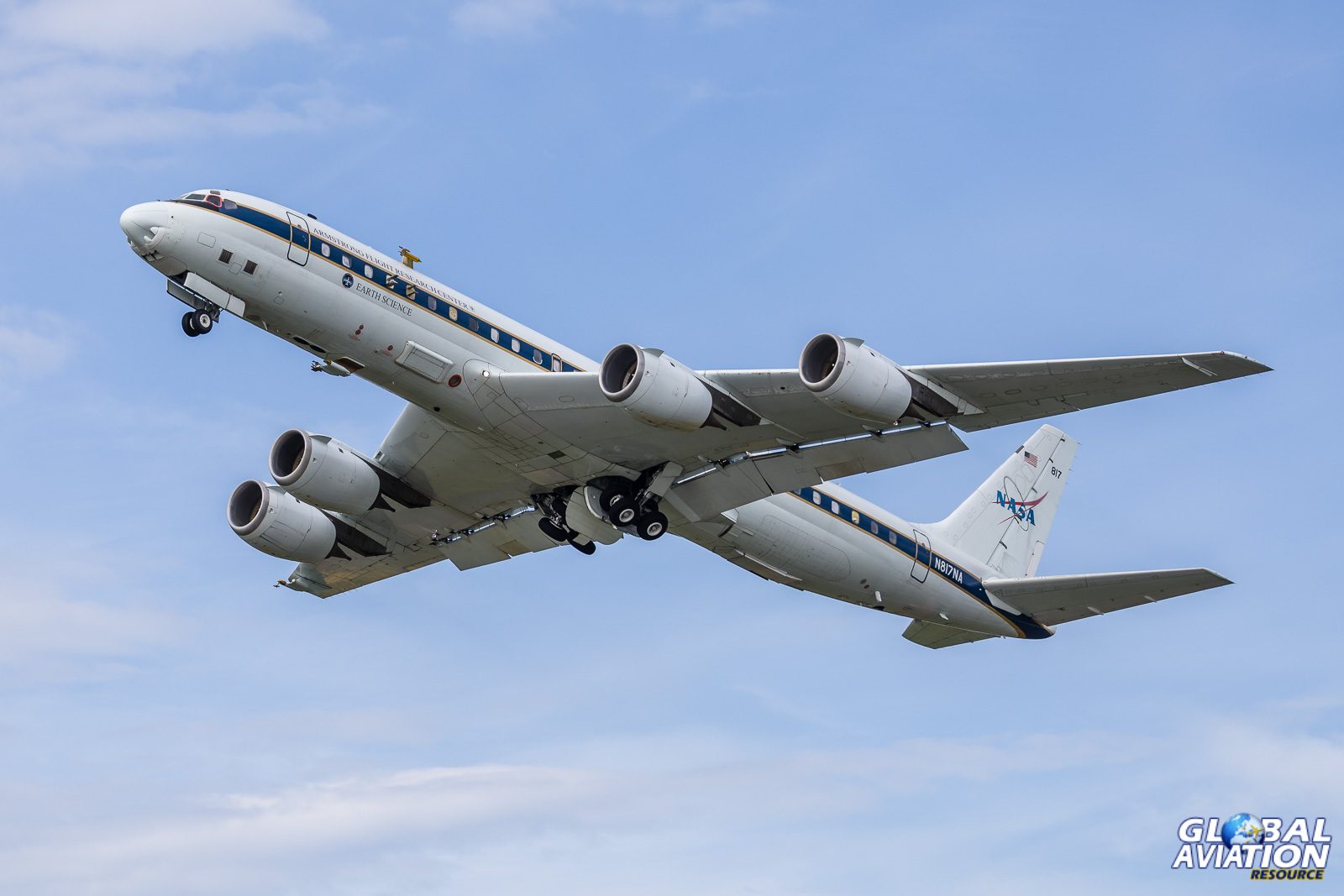
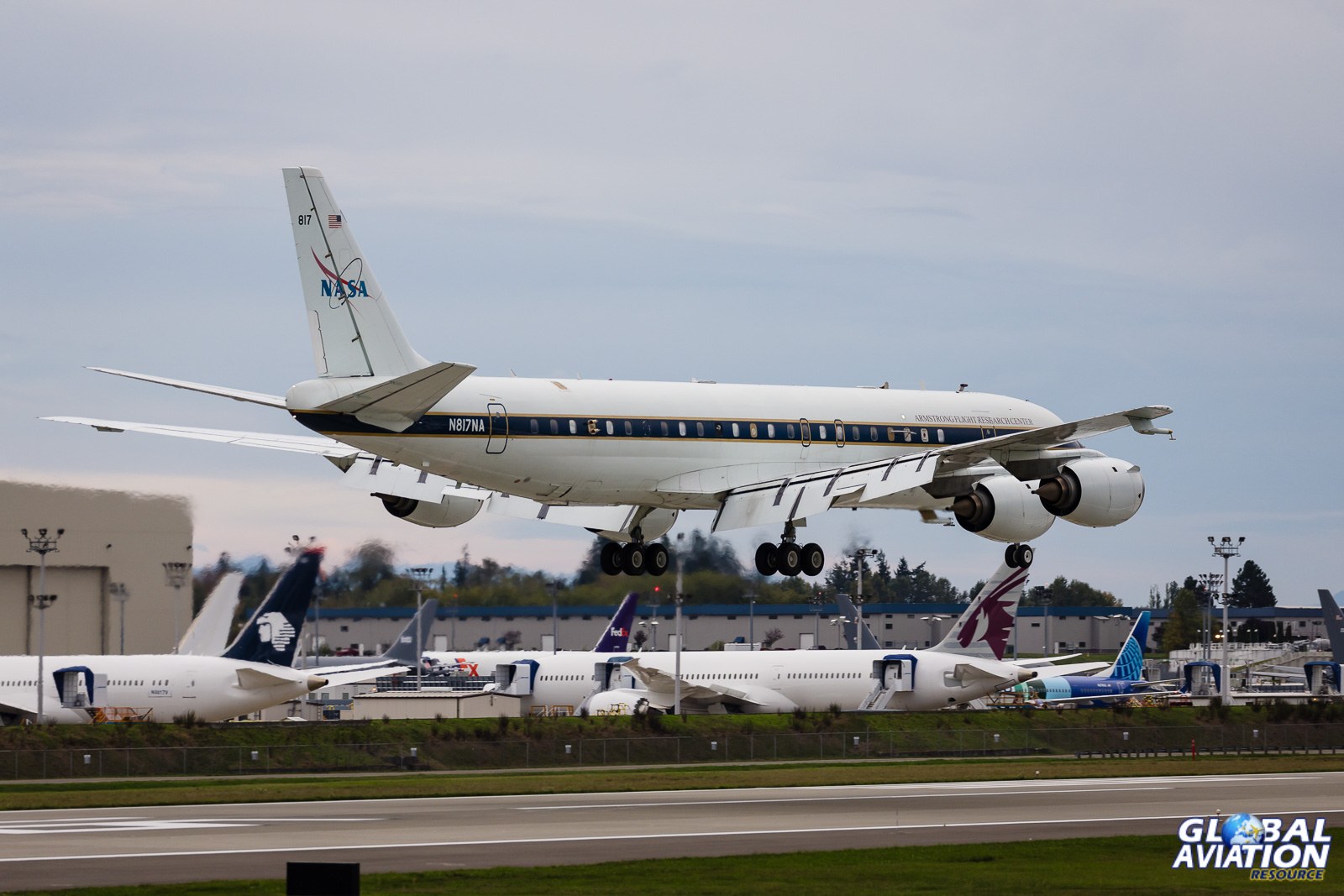
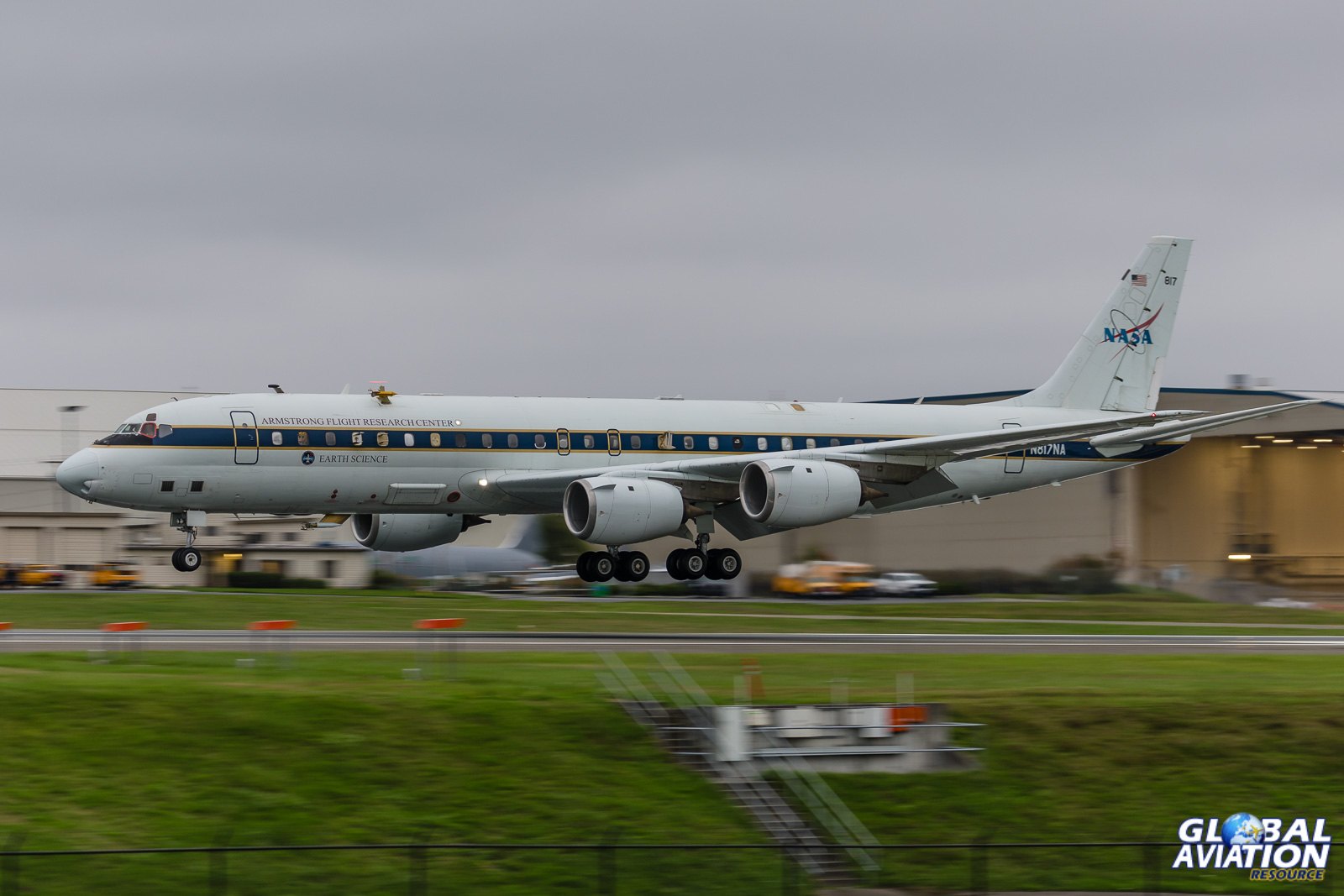
Airborne again © Rob Edgcumbe – Global Aviation Resource

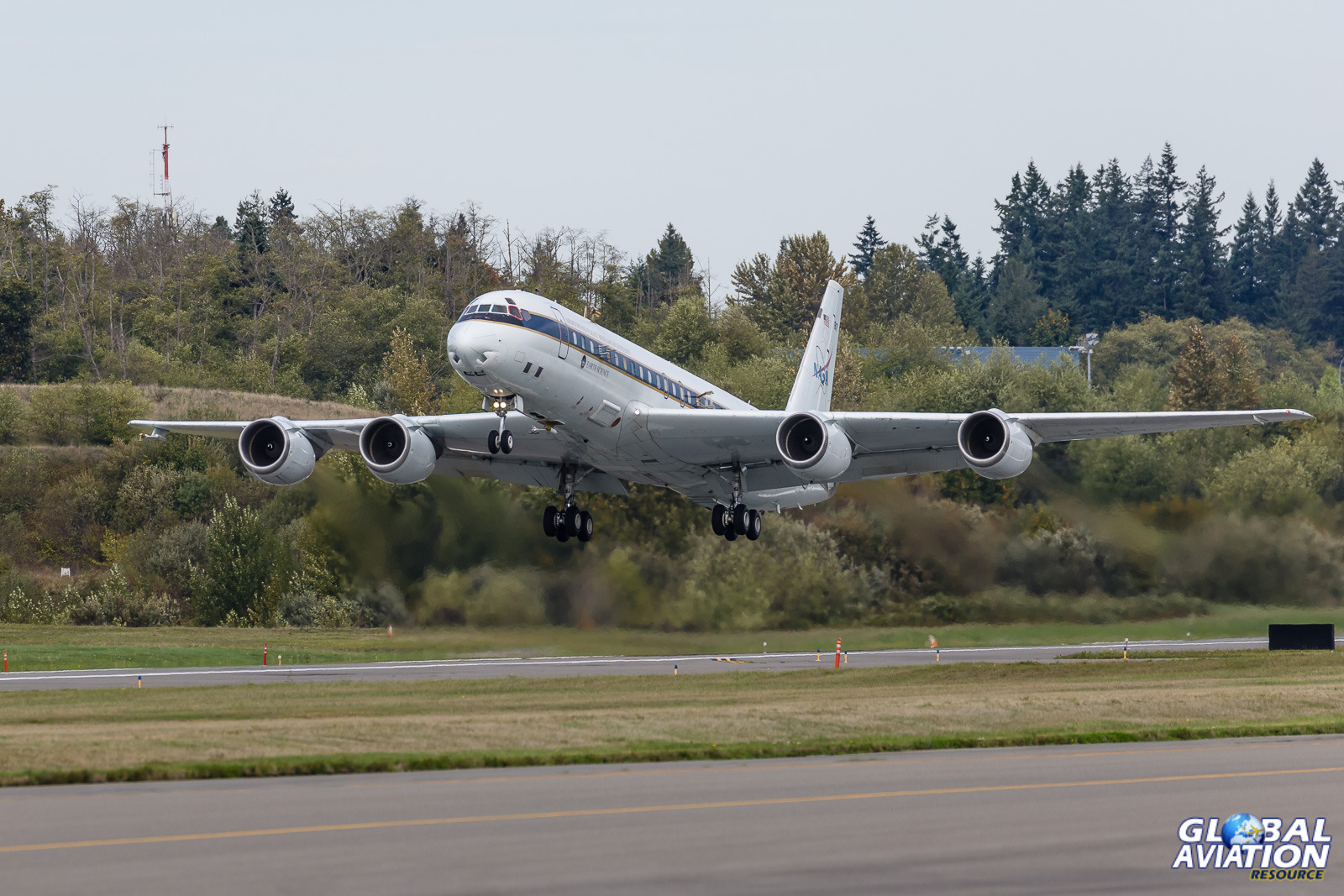
Overflight of the field prior to landing © Rob Edgcumbe – Global Aviation Resource

Mt Rainier is in the distance after another flight is completed © Rob Edgcumbe – Global Aviation Resource
The aircraft was based at the NASA Armstrong facility in Palmdale CA but the team would regularly deploy to remote locations based on the needs of the programs that they were supporting. This could take the aircraft all over the world including repeated trips to Antarctica. Research projects were not exclusively American and foreign facilities could run programs that involved the support of the DC-8.
One of the last projects that required the DC-8 was research into the composition of the exhaust of jet engines when operating on sustainable aviation fuels. This was a joint activity involving NASA, DLR, various universities, Boeing and GE and involved deploying the aircraft to Seattle for a series of flights. These involved a Boeing 737 Max 10 known as the Boeing ecoDemonstrator Explorer, an airframe ultimately destined for United Airlines when the Max 10 is finally certificated (which it is not at time of writing). Carrying a special livery for the test program, the aircraft would alternate burning conventional fuel and sustainable fuel at a variety of speeds and altitudes while the DC-8 followed close behind taking measurements of the wake of the aircraft as the exhaust mixed with the ambient air.
This program was undertaken from Paine Field in Everett Washington, home of Boeing’s original wide-body production facility. The Max 10 was operated from Boeing’s ramp, but the DC-8 was based on the ramp alongside the ATS maintenance facility. They would start up from here and, at the end of the missions, would return to the ramp for the crew to disembark before the nose of the DC-8 would be pulled under a cover for the night. This routine proved to be popular with the many enthusiasts that came out to see such a rare beast in action.

Final flypast for the NASA DC-8 © Paul Filmer – Global Aviation Resource
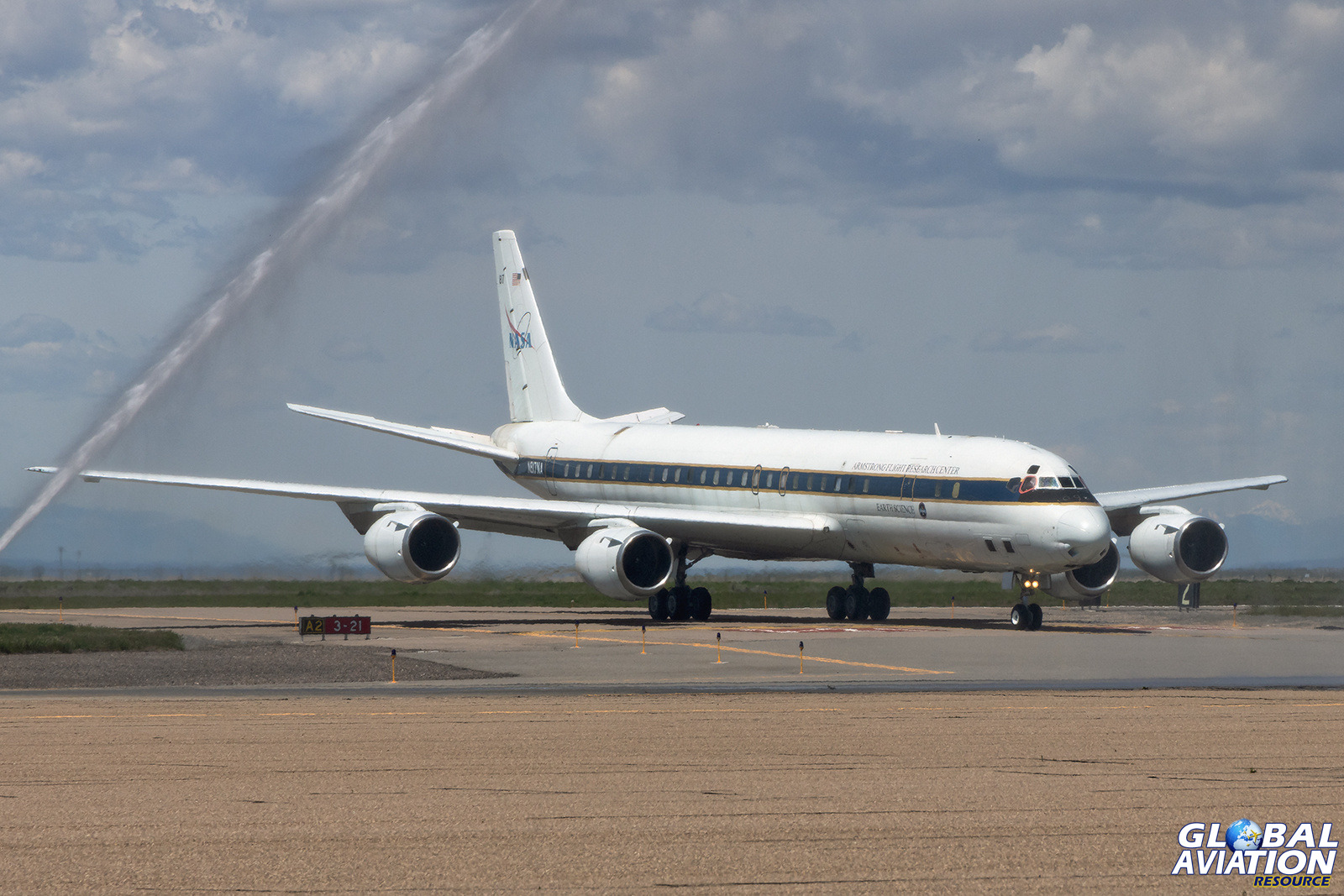
Water cannon salute upon arrival at Pocatello © Paul Filmer – Global Aviation Resource
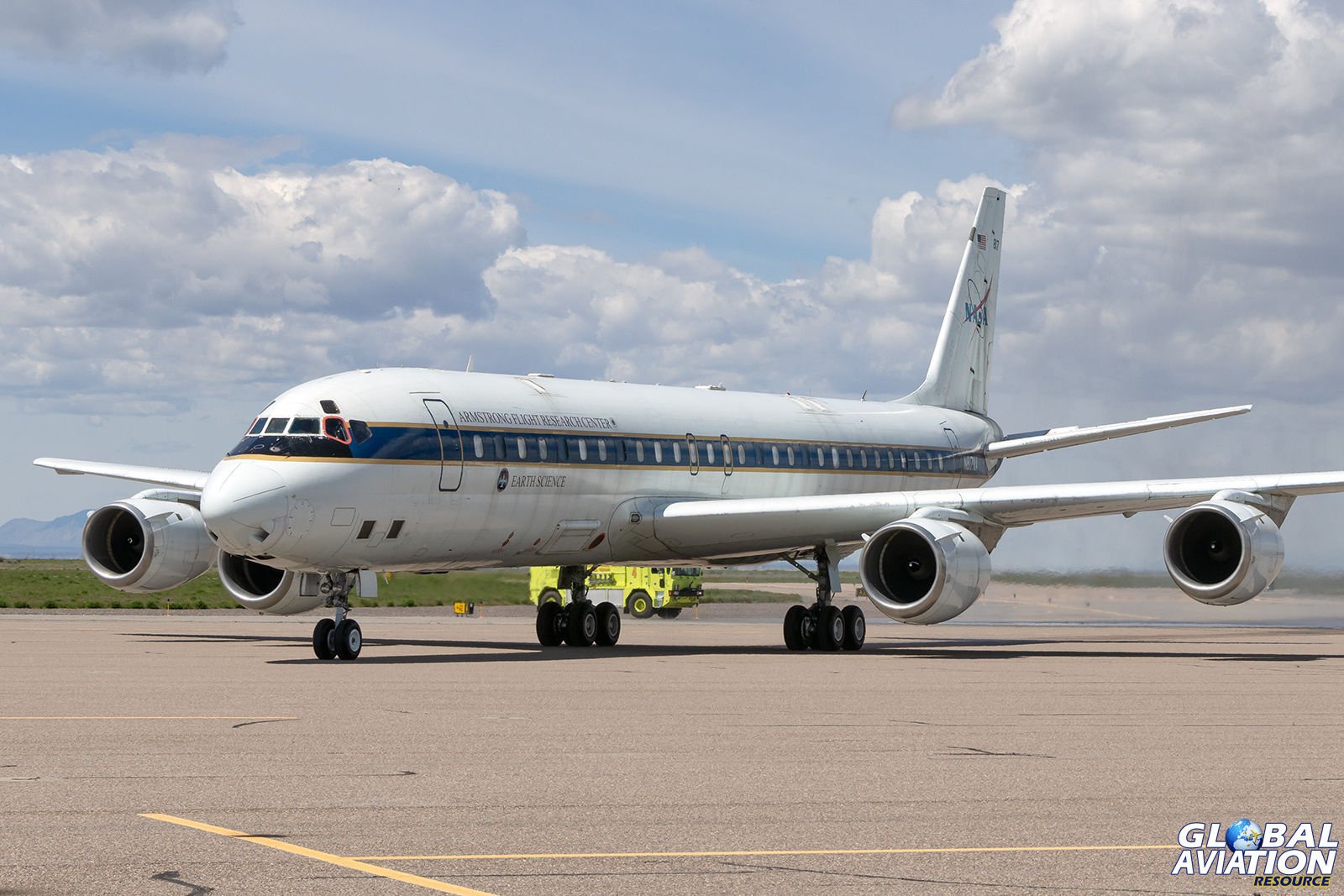
End of the road for its flying career © Paul Filmer – Global Aviation Resource
It wasn’t long after this test program was completed that NASA wrapped up operations with the DC-8. Fortunately, the airframe was not destined for the scrap heap. It completed its final mission on April 1, 2024 – the end of 37 years of use by the agency. It’s final resting place is the Idaho State University in Pocatello Idaho. Paul Filmer of GAR was there for its arrival. An overflight of the field was followed by a water cannon salute as it taxied in and was shut down for the final time. It will be used to support aircraft maintenance training programs and will support the next generation of maintainers for years to come. Despite its age, it will live on.









Fine report thanks, the Javelin at Duxford also stayed in use for a long time because it was used for air sampling as well. This included trials with Concord at Cardigan bay when it flew opposite tracks to gather air samples after the concord made a supersonic dash. We co ordinated the trial from Western radar Aberporth and gave the Javelin priority direct track back to Boscombe.