
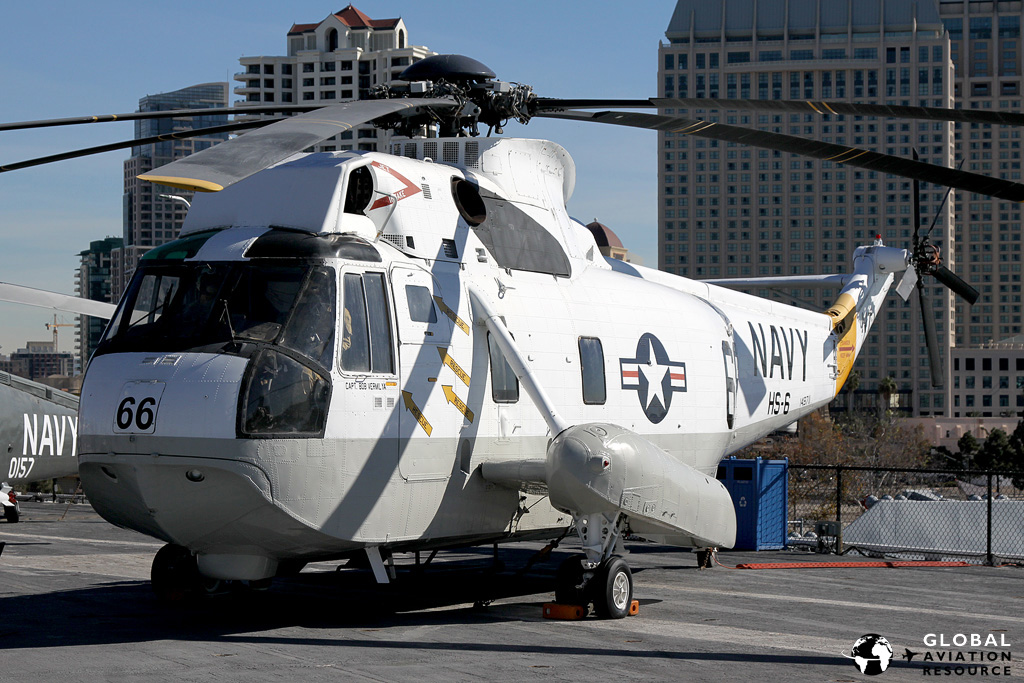
San Diego is one of the principle ports for the US Navy’s Pacific Fleet, and has a distinguished history. Installations in the area include NAS North Island, considered to be the birthplace of US Naval Aviation and still a very important airfield. In fact, the area will be one of the main locations for Centennial of Naval Aviation celebrations throughout 2011.
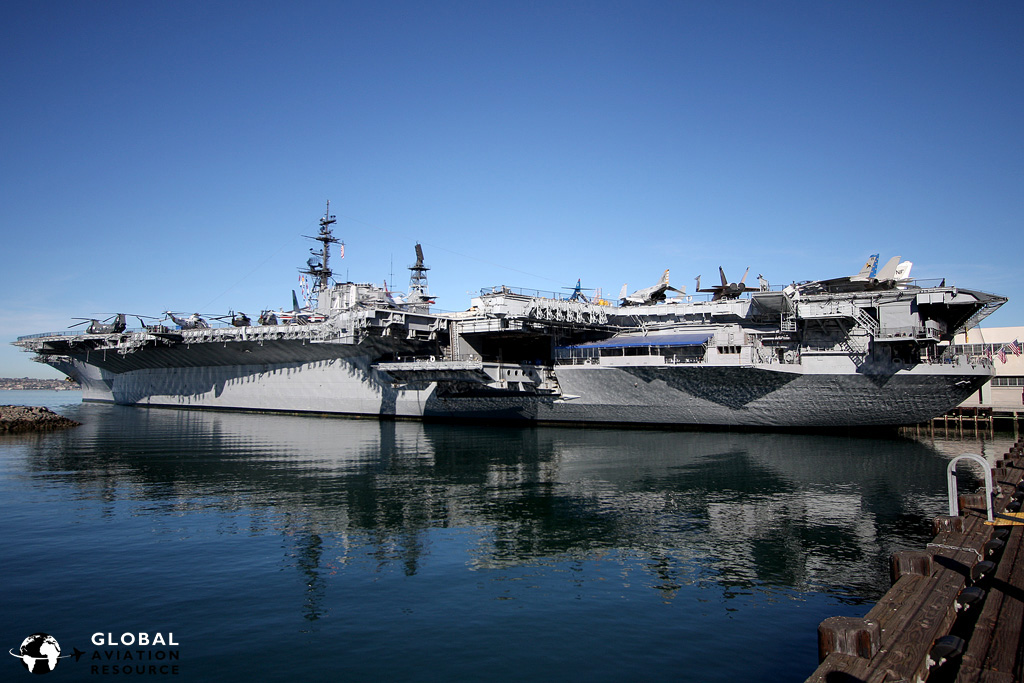
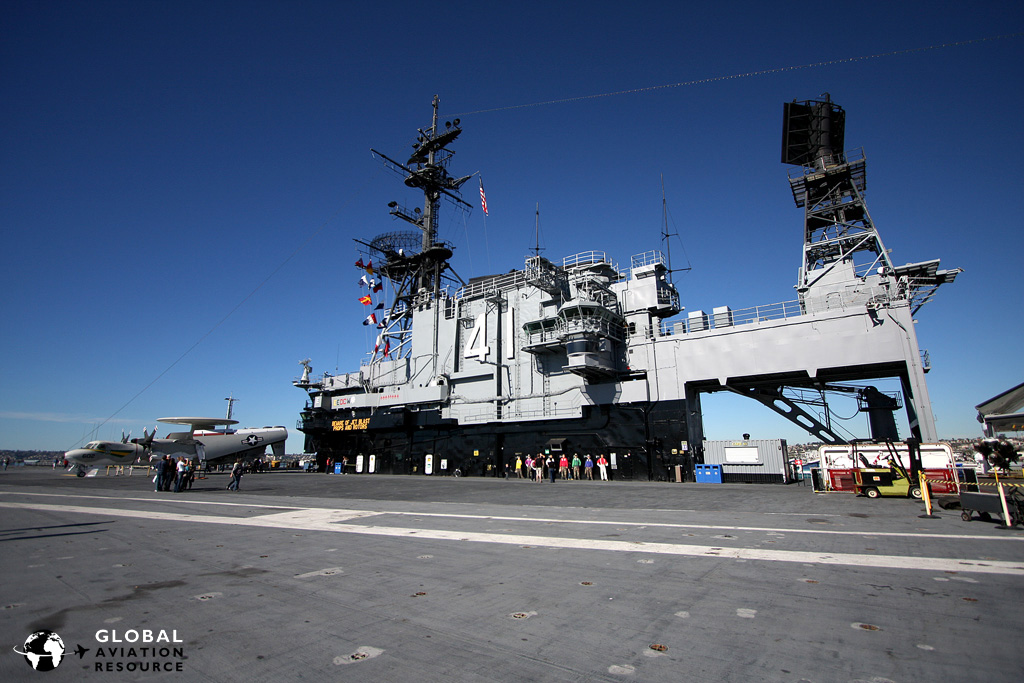
Given its naval heritage, San Diego is the perfect place for a museum dedicated to aircraft carrier aviation, and, since 2004, its harbour has been home to the USS Midway, a former US Navy aircraft carrier with an illustrious history dating back to WWII.
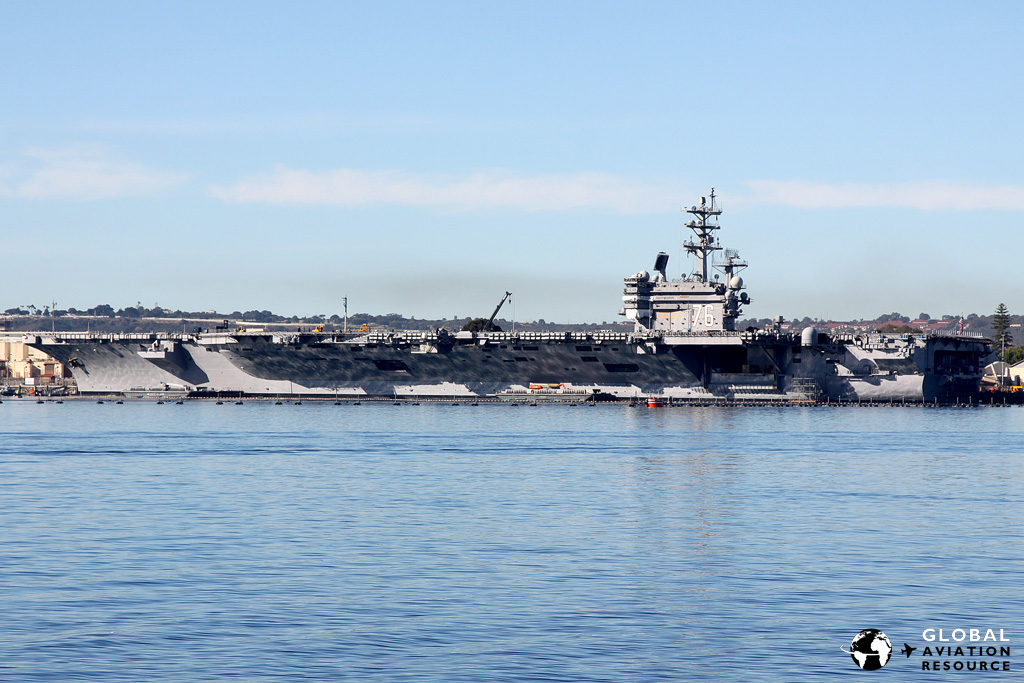
The USS Midway was laid down in 1943 and commissioned into service in September 1945, just too late to take part in WWII. The ship went on to serve for almost 50 years, including combat service in Vietnam and Desert Storm before retirement and decommissioning in 1992. Initially the ship was stored at the Navy Inactive Ship Maintenance Facility in Bremerton, Washington, but in 2003 preparations were made to reopen the ship as a museum. In 2004 she moved to Broadway Pier in downtown San Diego, opening to the public in June of that year.
Since then, the USS Midway Museum has become a major tourist attraction and attracts large numbers of visitors every year. Presently there are five former US Navy carriers on display at locations throughout the US – the size of the vessels and large areas of useable space above and below decks makes the ships popular as museums and also allows use for special events and functions.
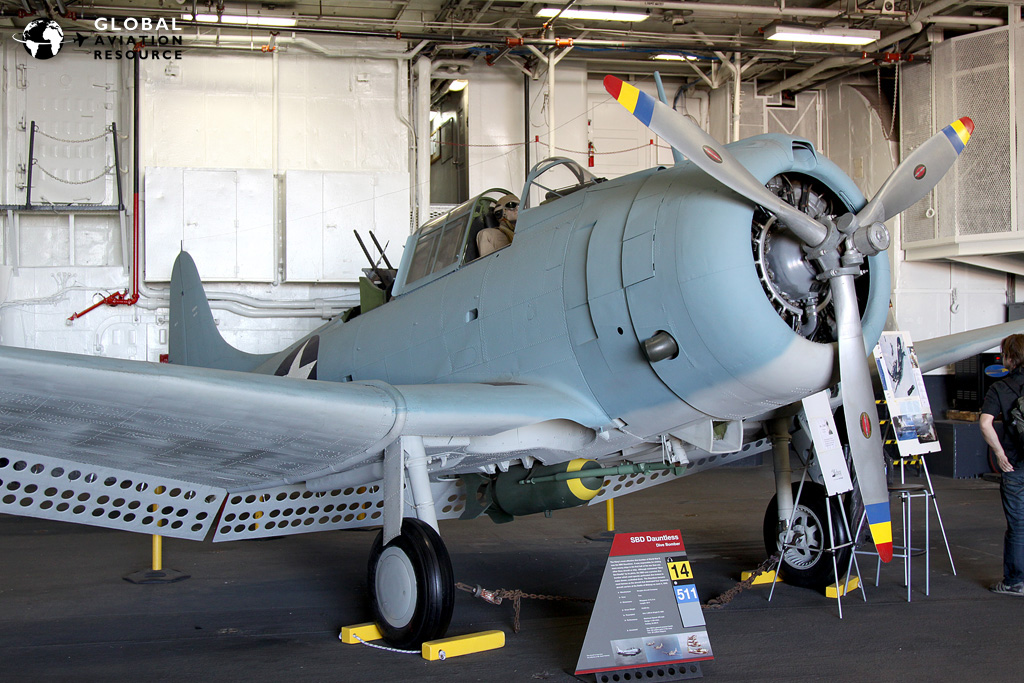
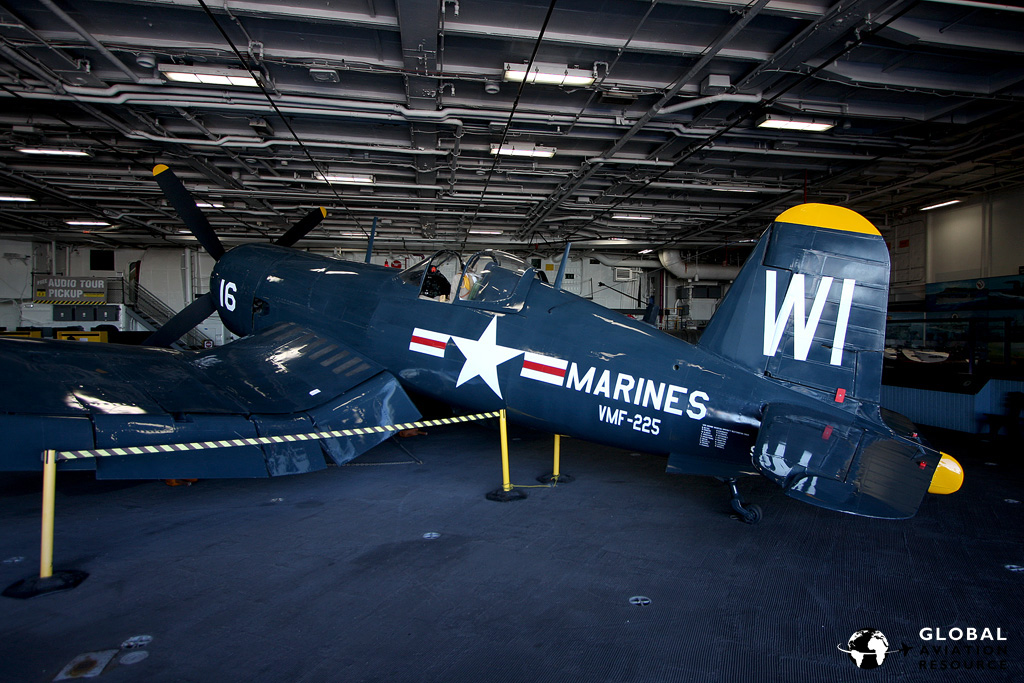
Entry onto the ship is via a gantry which leads to the hangar deck, which is home to the museum store, some flight simulators and an excellent restaurant. It is also home to some of the older aircraft in the collection, including a Douglas SBD Dauntless dive bomber, Grumman TBM-3E Avenger and a Vought F4U Corsair. Self guided audio tours of the lower deck areas are also offered – much of the ship is open to the public and it is extremely interesting to see how the sailors lived on board.
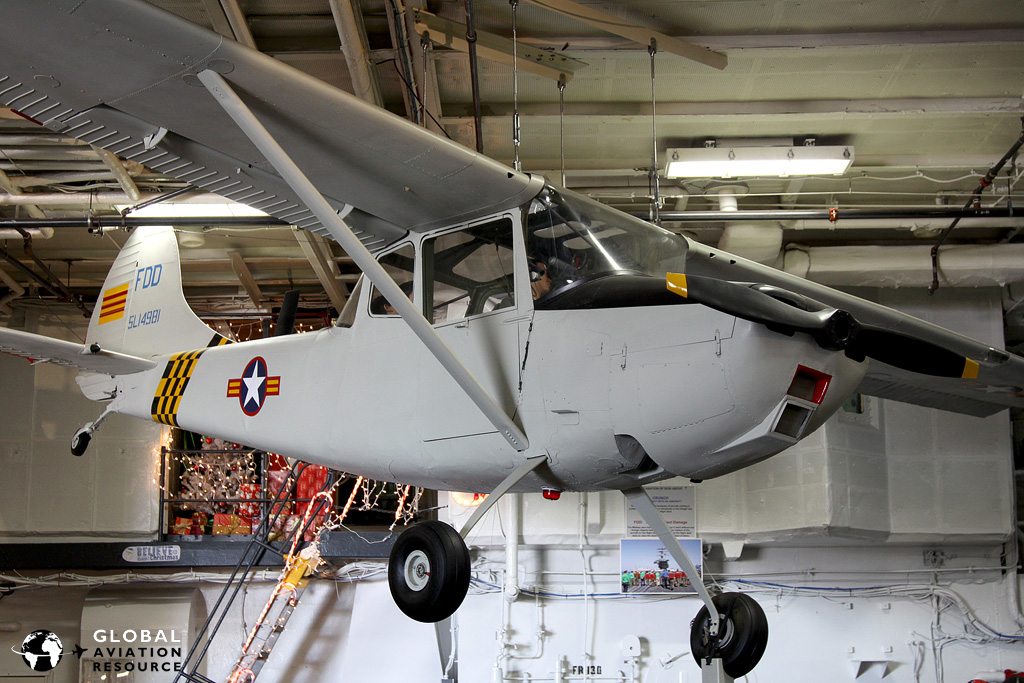
One very poignant exhibit on the hangar deck is a Cessna O-1 Bird Dog in South Vietnamese colours. In April 1975, the Midway was engaged in Operation Frequent Wind, the evacuation of Saigon. On 29th April 1975, a Cessna O-1 appeared over the Midway, flashing its landing lights. On board was South Vietnamese Air Force Major Bung-Ly, along with his wife and five children. The pilot dropped a message to the carrier below requesting the flightdeck be cleared so that he could attempt to land his aircraft. The Midway’s Captain, Rear Admiral Lawrence Chambers ordered the arrester cables removed and several UH-1 helicopters were pushed overboard to allow Major Bung-Ly to land safely. Impressed by his flying and his determination, the Midway’s crew later set up a fund to help him and his family settle in the US.
Moving up to the flightdeck, this is the area where most of the Midway’s aircraft are exhibited. All of the aircraft on display once operated from the decks of the US Navy’s carriers, with many of them carrying colour schemes representing units which were once part of the Midway’s air wing. They are all impeccably restored and presented, with crew figures inside the cockpits and weapons under the wings.
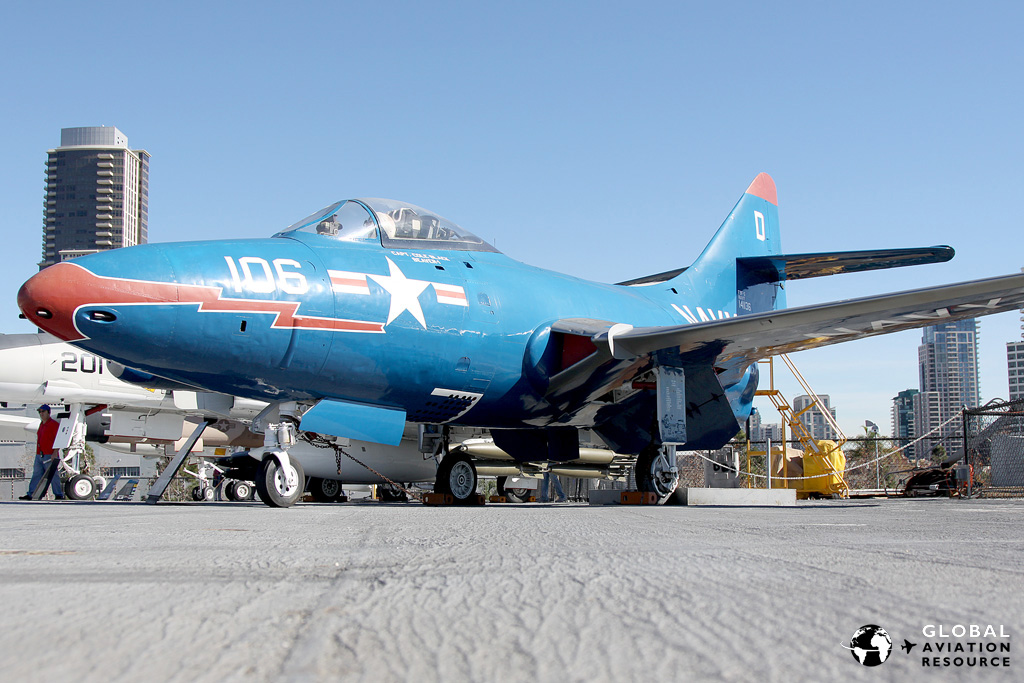
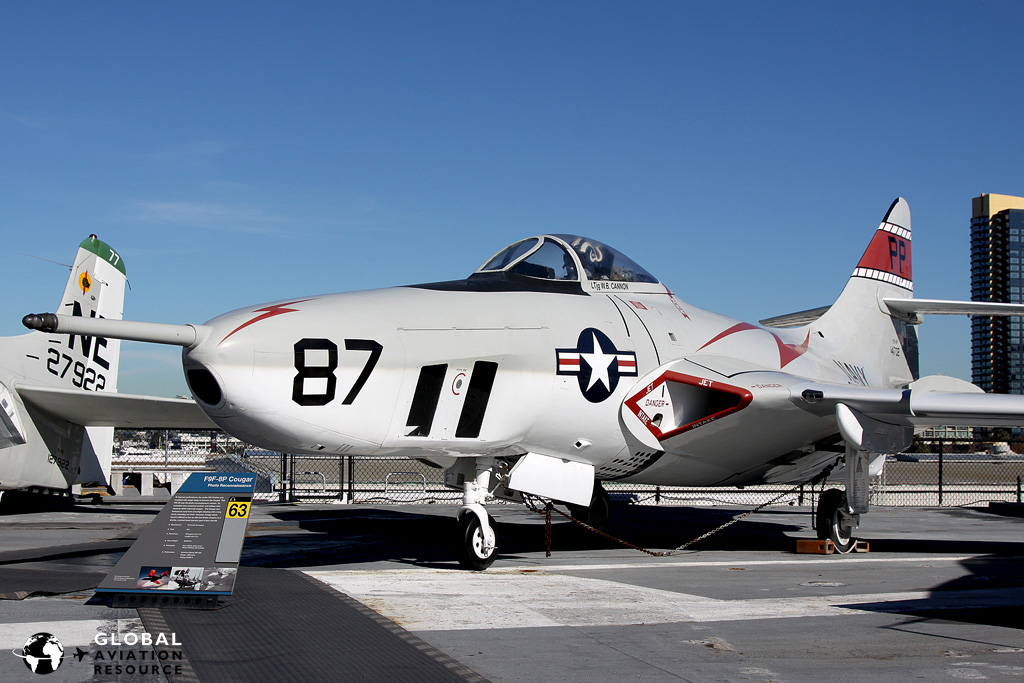
Amongst the older aircraft on display are a pair of Grumman jets – a F9F-5 Panther and a F9F-8P Cougar. The Cougar was an updated version of the Panther with a swept-wing. The example on display is the reconnaissance version of the Cougar, immaculately presented in the colours of VFP-61 ‘Eyes of the Fleet’.
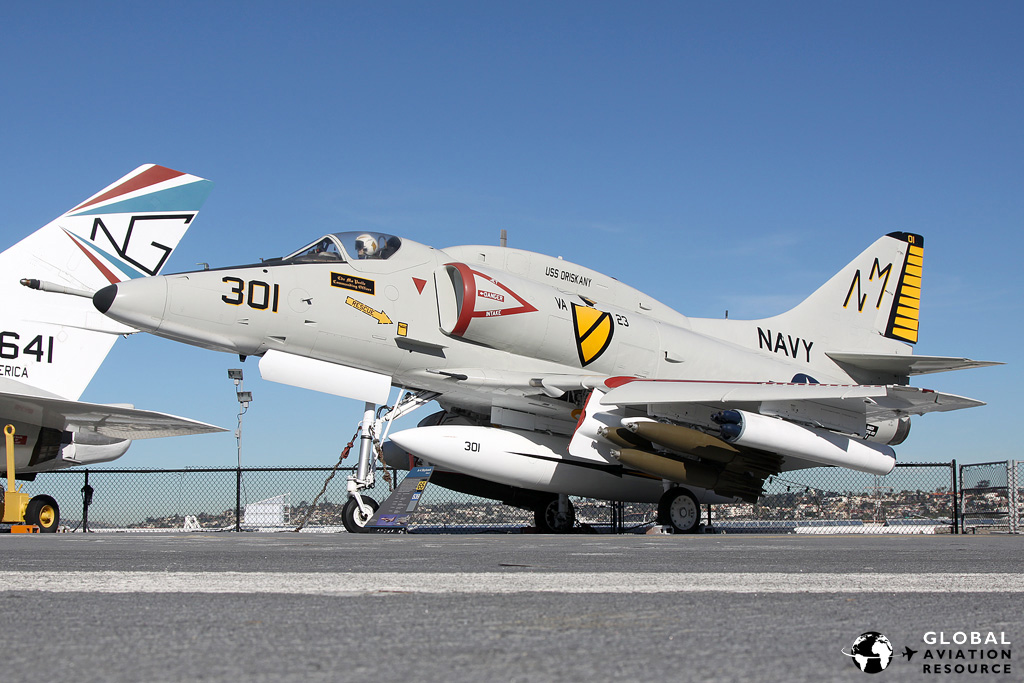
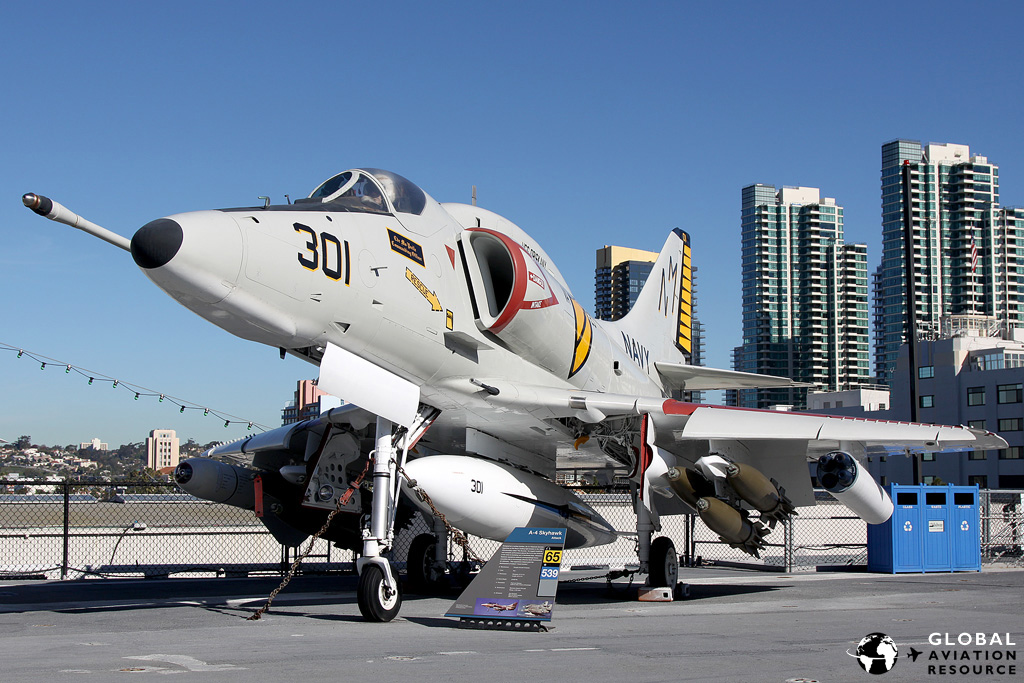
From a slightly later era is the museum’s beautiful Douglas A-4F Skyhawk, which has been restored into the colours it wore whilst flying with VA-23 from the USS Oriskany in the late 1960s. In addition to the spectacular paint scheme, the aircraft carries a full load of weapons including bombs, zuni rockets and a large AGM-62 Walleye missile.
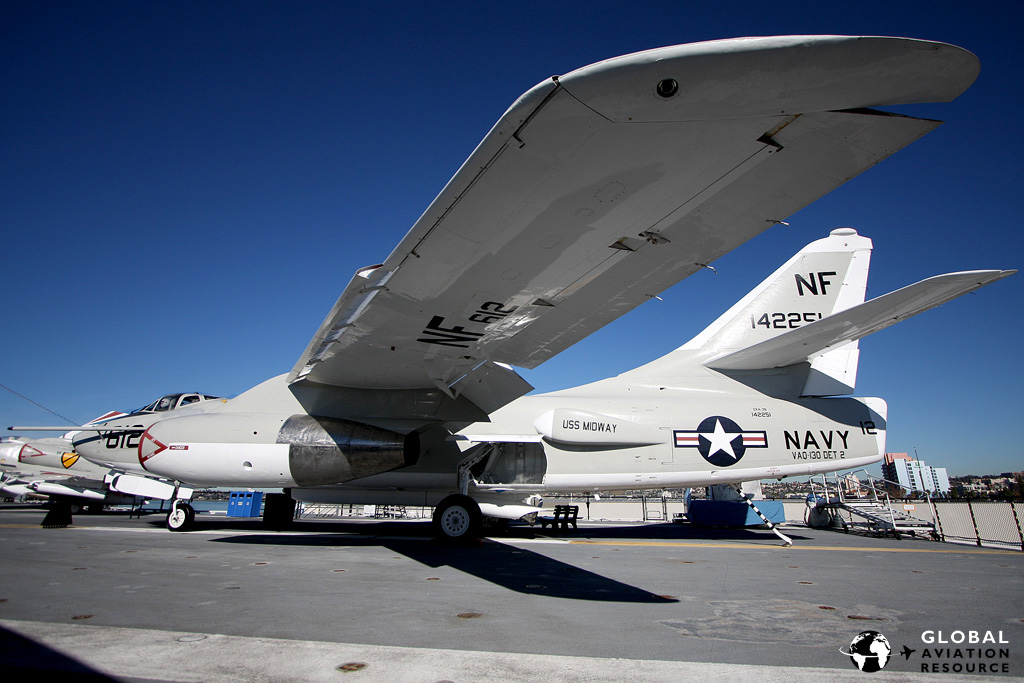
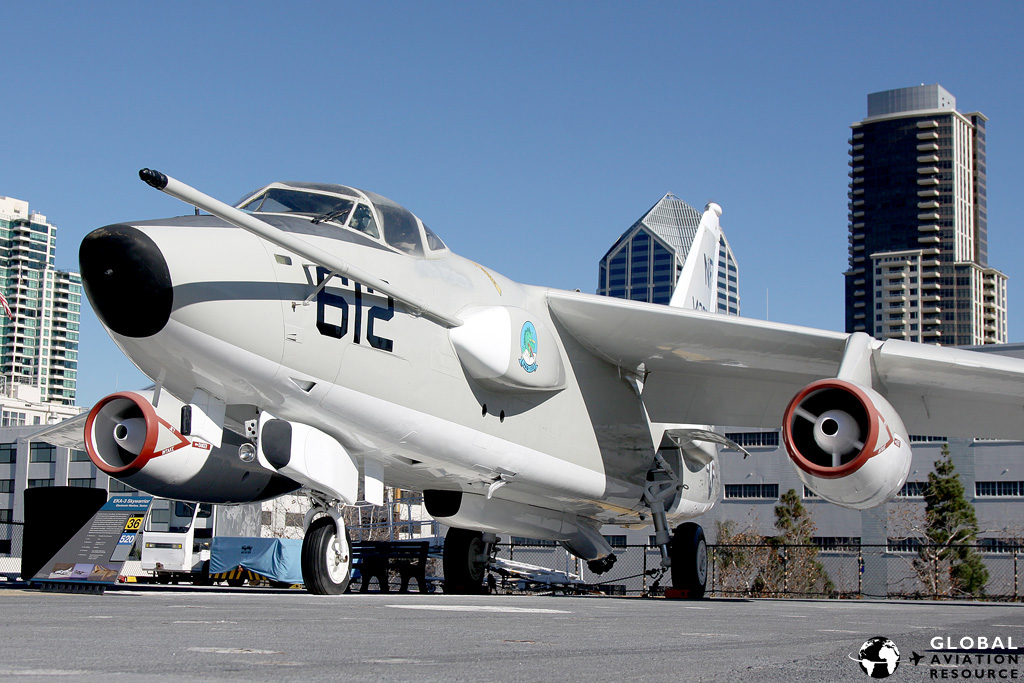
Another Douglas product on display towards the stern of the ship is the EKA-3B Skywarrior – another superb restoration in the colours of VAQ-130 ‘Zappers’, who operated the Skywarrior from the Midway in the early 1970s. The mighty Skywarrior was the largest aircraft designed for carrier use, and is still an impressive machine. Despite entering service with a nuclear strike role, the A-3 later found an extended career as a tanker and electronic warfare aircraft, both roles making use of its extensive load carrying capability.
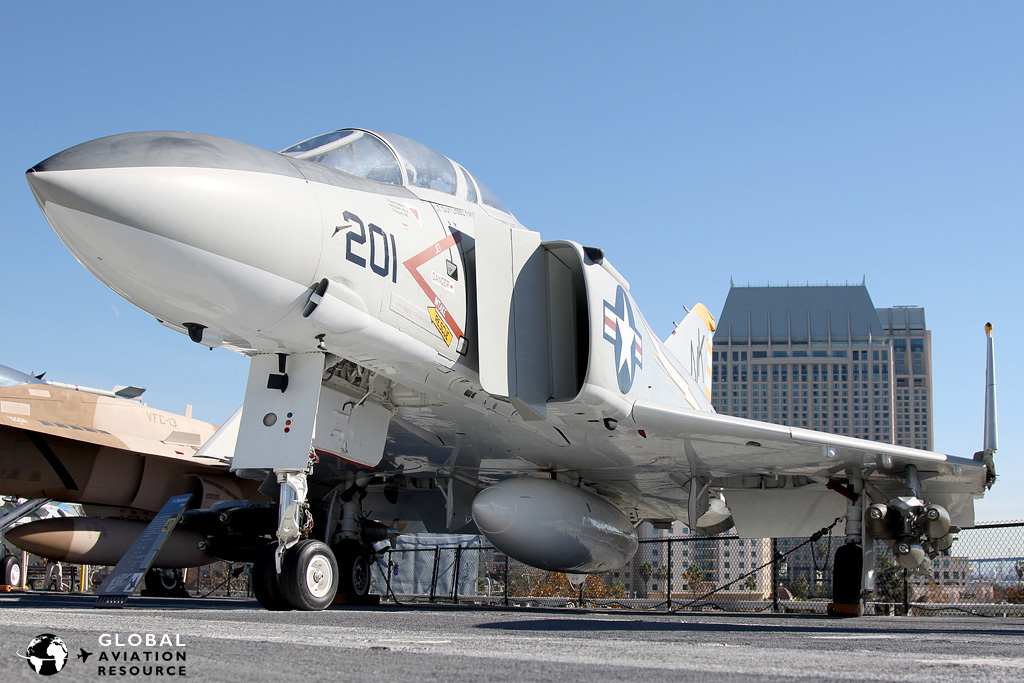
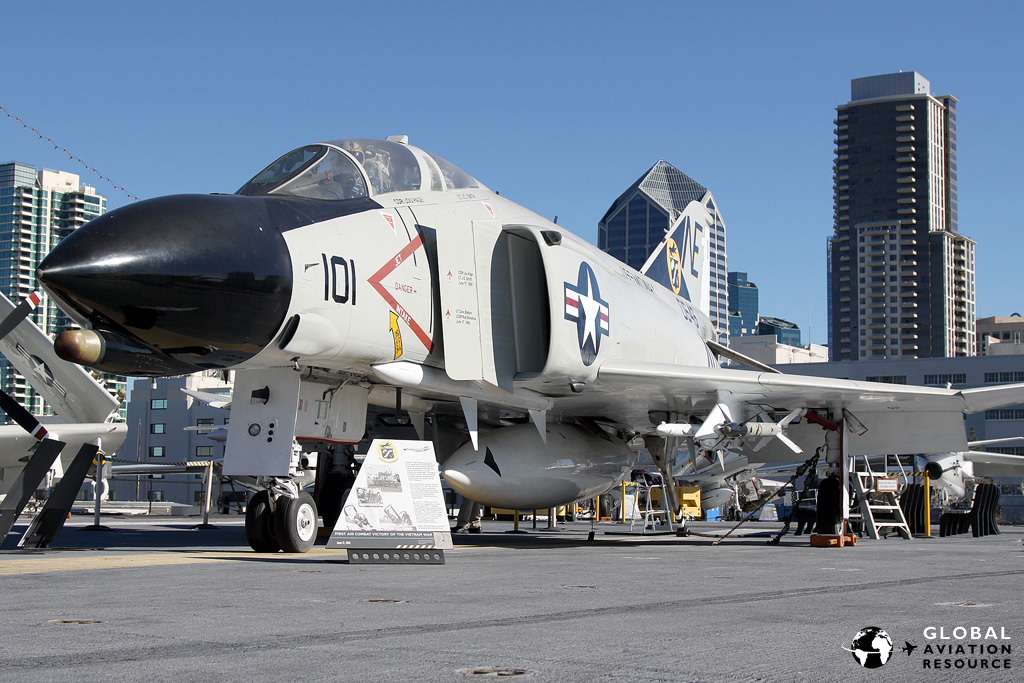
Of all the US Navy aircraft which served during the Vietnam War period, the best known is undoubtedly the F-4 Phantom II. The Midway has two Phantoms on display – an F-4S and an F-4N. The F-4N is a former QF-4N drone which operated from NAS Point Mugu. Prior to drone conversion it served with a series of US Navy and Marine Corps units.
Today it carries different unit markings on the left and right side to represent the aircraft which shot down the first and last aircraft of the Vietnam War. On the port side the aircraft carries the names of Cdr Lou Page and Lt J.C. Smith of VF-21 who shot down a MiG-17 on 17th June 1965; on the starboard side are VF-161 colours and the names Lt Vic Kovaleski and Lt Jim Wise, who shot down a MiG-17 on 12 January 1973 – the last air to air victory of the conflict. The F-4N is positioned on the deck as if it has just trapped the third wire – it is used as a backdrop for regular talks by retired aircrew who explain the process of landing an aircraft aboard a carrier.
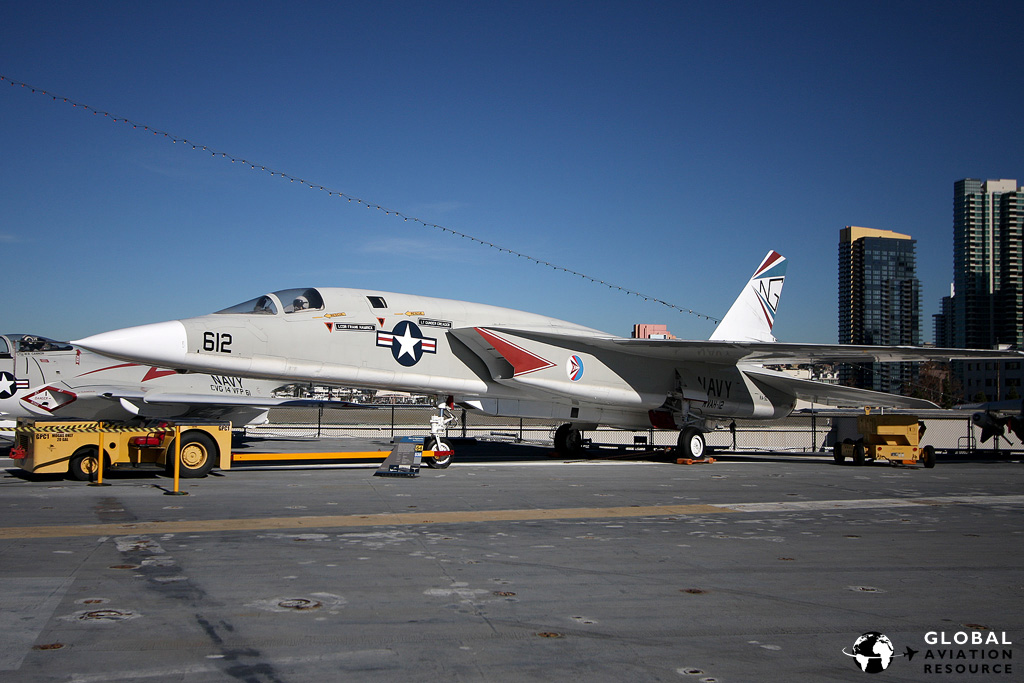
One of the most impressive aircraft on display on the Midway’s deck is the massive RA-5C Vigilante. Originally conceived as a supersonic bomber, the Vigilante later saw much greater success as a fast reconnaissance aircraft, with a raft of cameras and sensors. The Vigilante never operated from the deck of the Midway, with the aircraft instead being assigned to the larger Forrestal, Kitty Hawk and Nimitz class “supercarriers”.
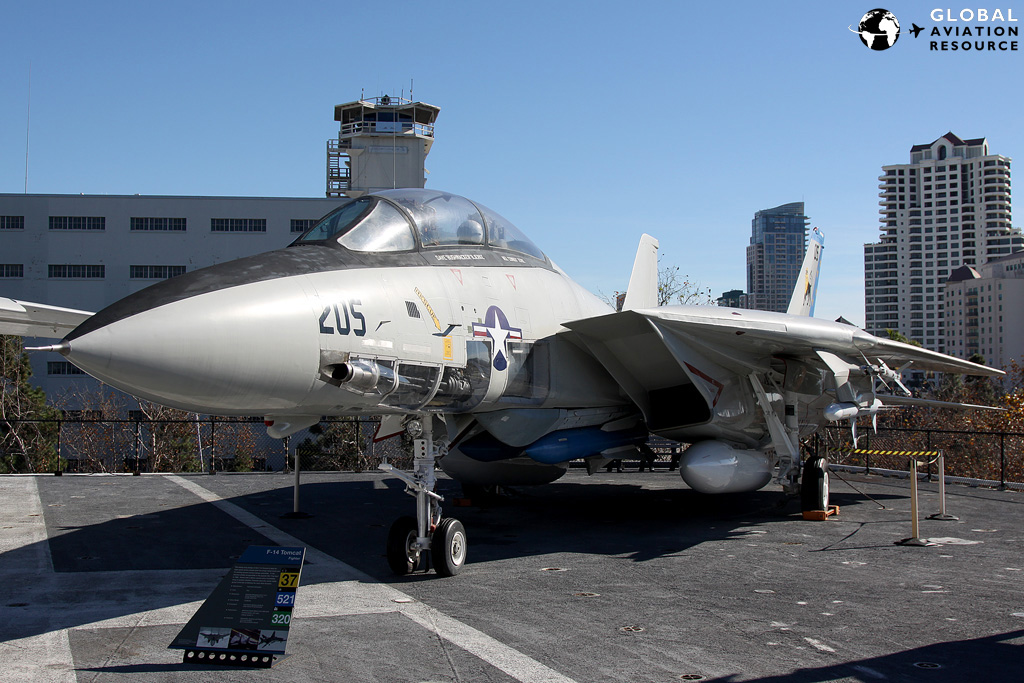
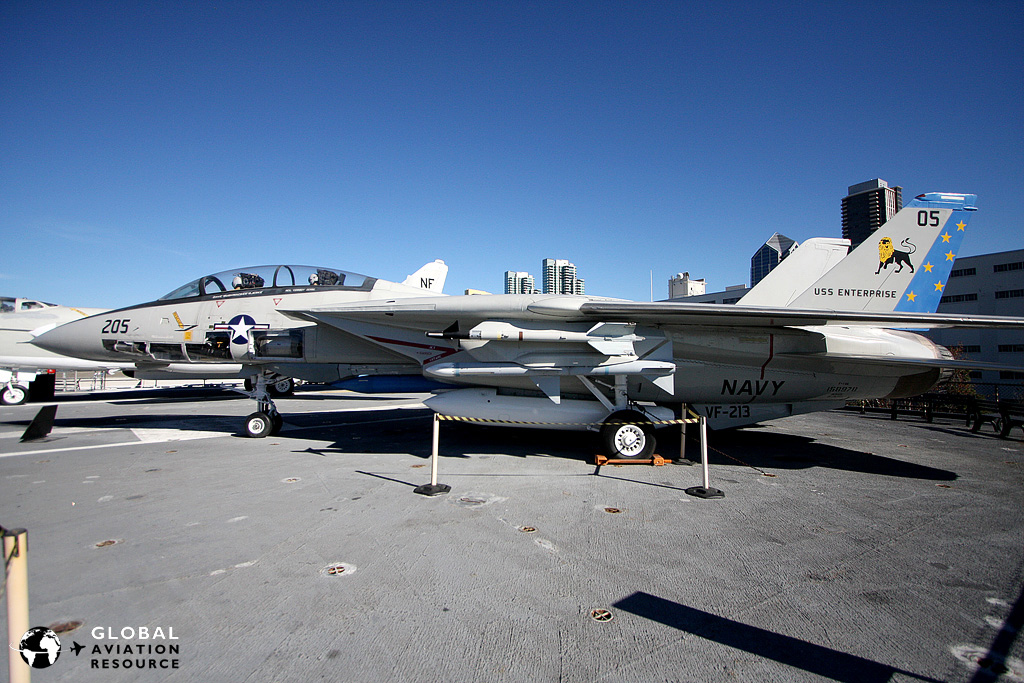
Another aircraft which never operated from the Midway’s smaller deck is the Grumman F-14 Tomcat. The Midway museum has an early model F-14A which was formerly the gate guard at nearby NAS Miramar, coming to the Midway when the airfield was transferred to the Marine Corps. Like many of the aircraft on display, the Tomcat carries different markings on each side – in this case VF-114 ‘Aardvarks’ and VF-213 ‘Black Lions’.
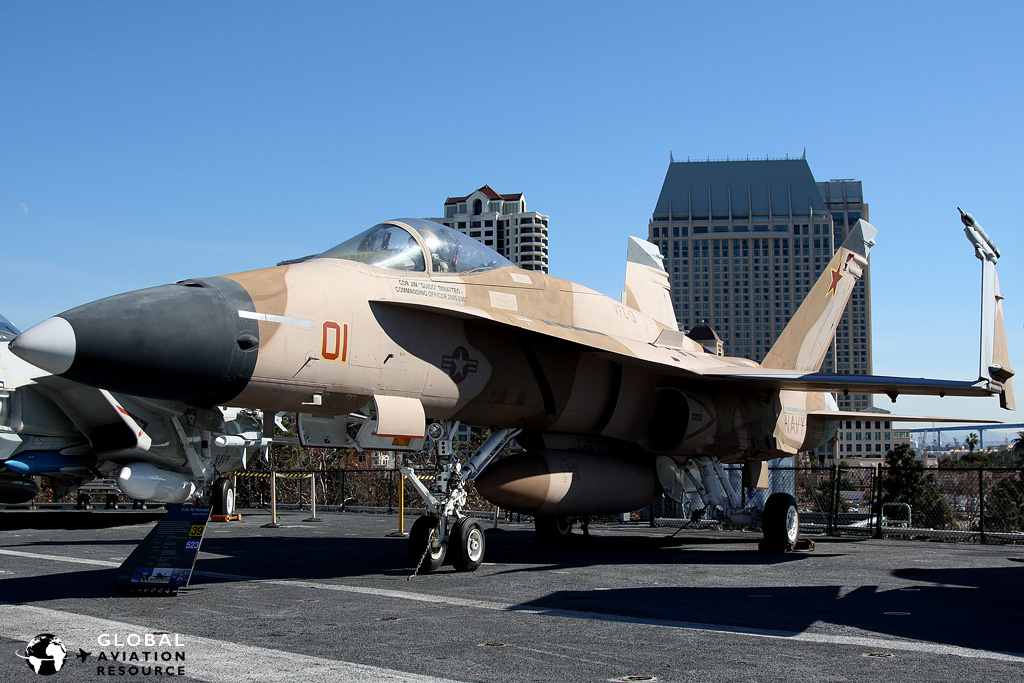
Mainstay of the Midway’s air wing during Desert Storm was the F/A-18 Hornet, so it is fitting that a Hornet should be displayed on deck. The F/A-18 carries adversary markings of VFC-13 ‘Saints’, with some subtle touches to make the aircraft’s lines resemble a MiG-29 more closely. The Saints operated the Hornet briefly before transitioning to the F-5E Tiger.
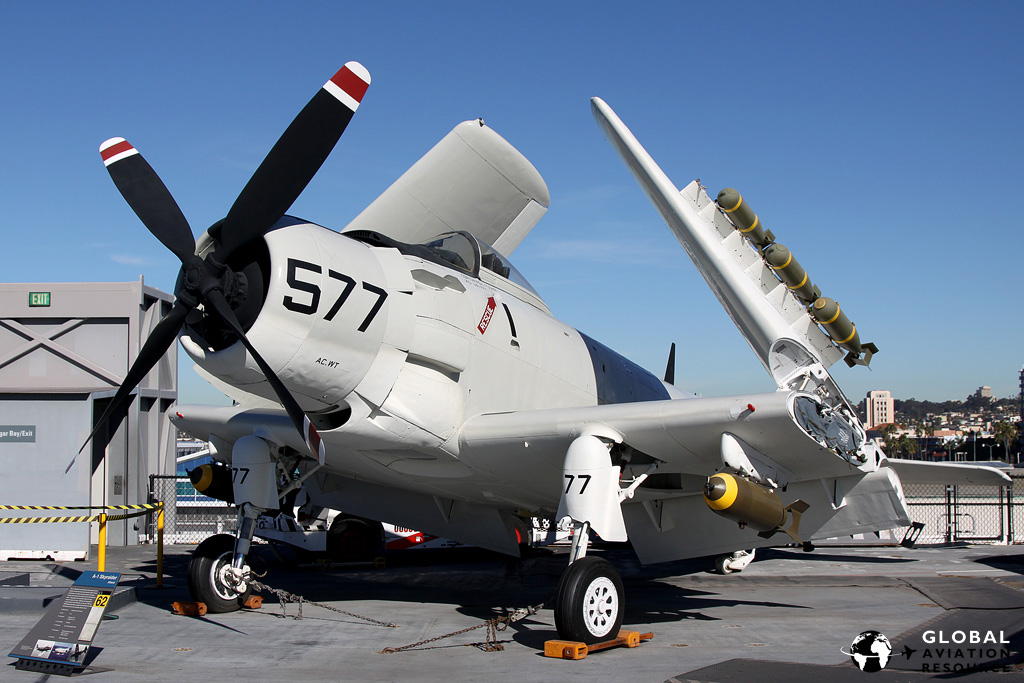
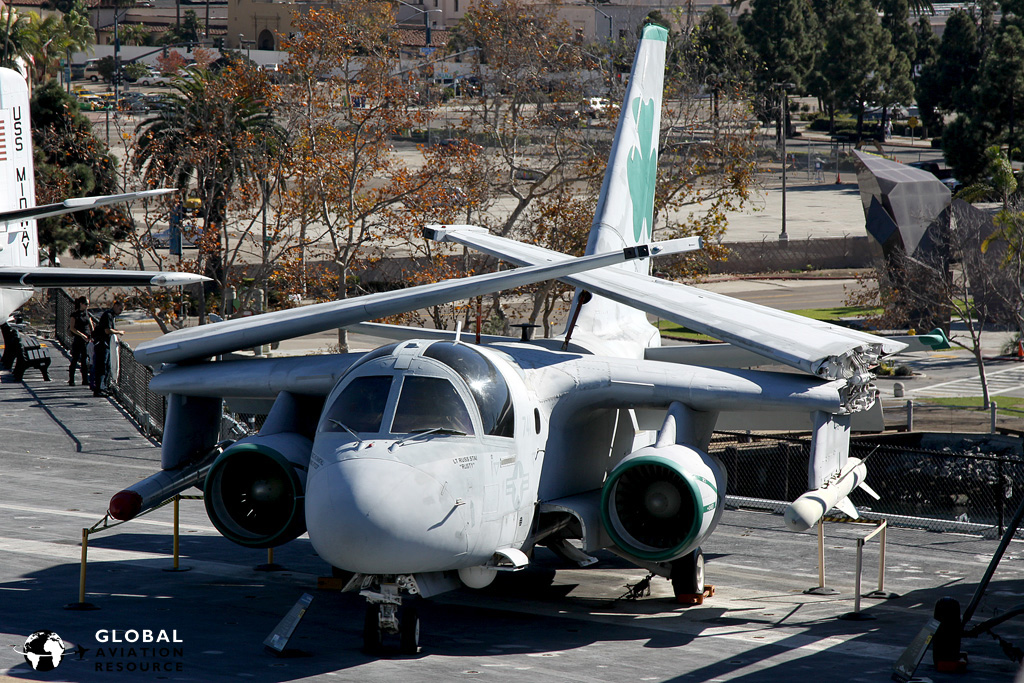
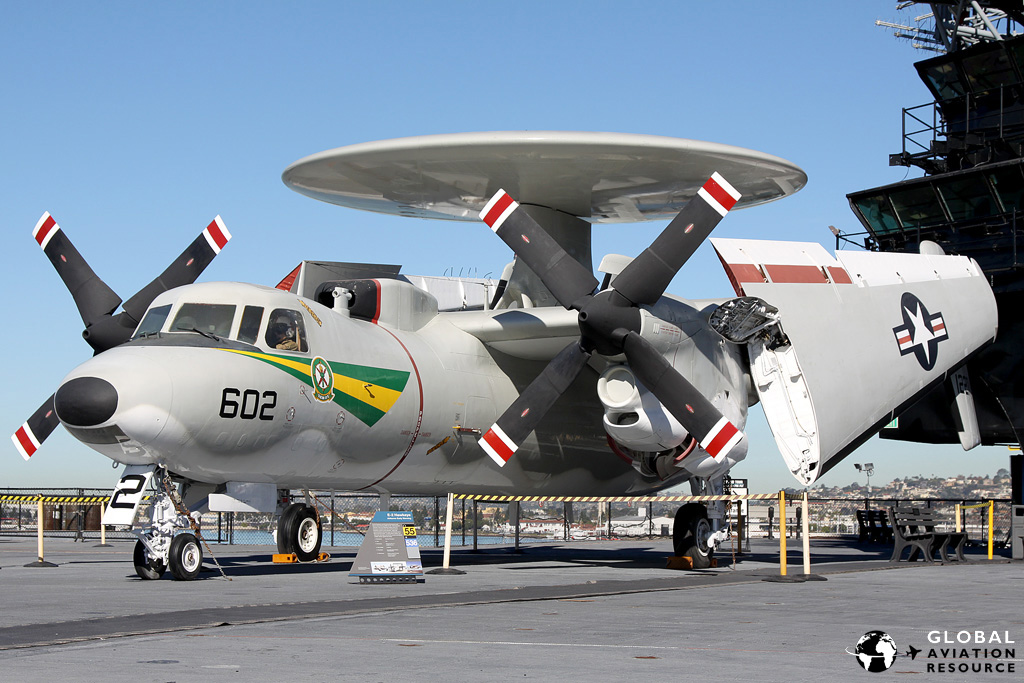
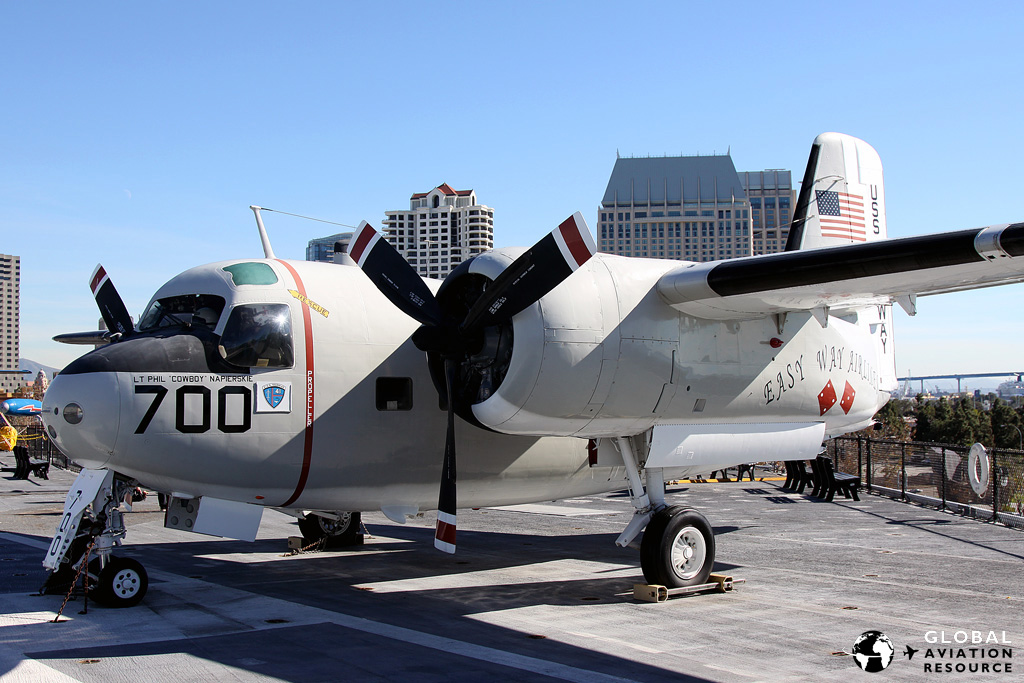
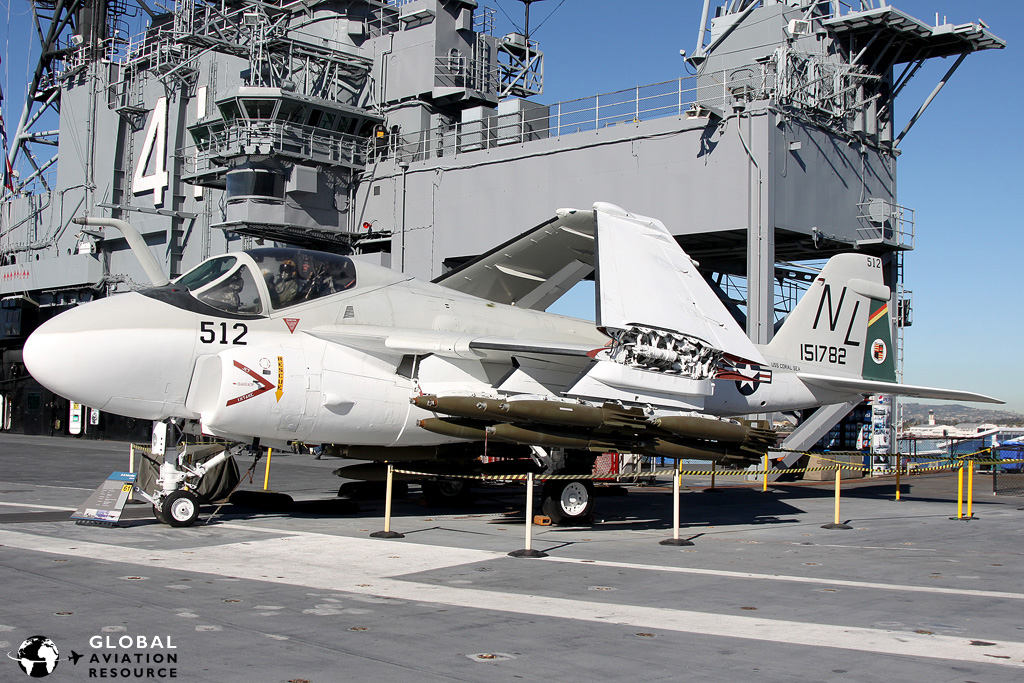
Moving forward on the ship, there are some further very smart aircraft, including an AD-4W Skyraider, an A-6E Intruder, a C-1A Trader and an E-2C Hawkeye. In common with almost all the aircraft on deck, these aircraft are painted in older US Navy high-vis colours. Wearing a more modern, toned down scheme but still impeccably presented is the museum’s Lockheed S-3B Viking. The Viking carries the markings of VS-41 ‘Shamrocks’, the S-3 training unit which was previously based at nearby NAS North Island.
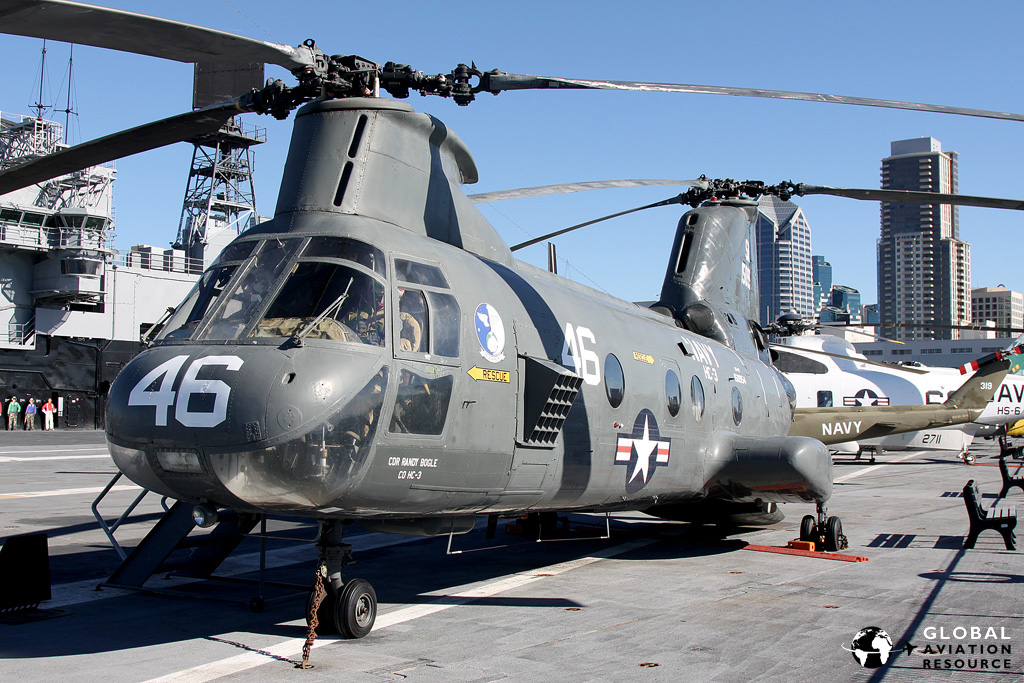
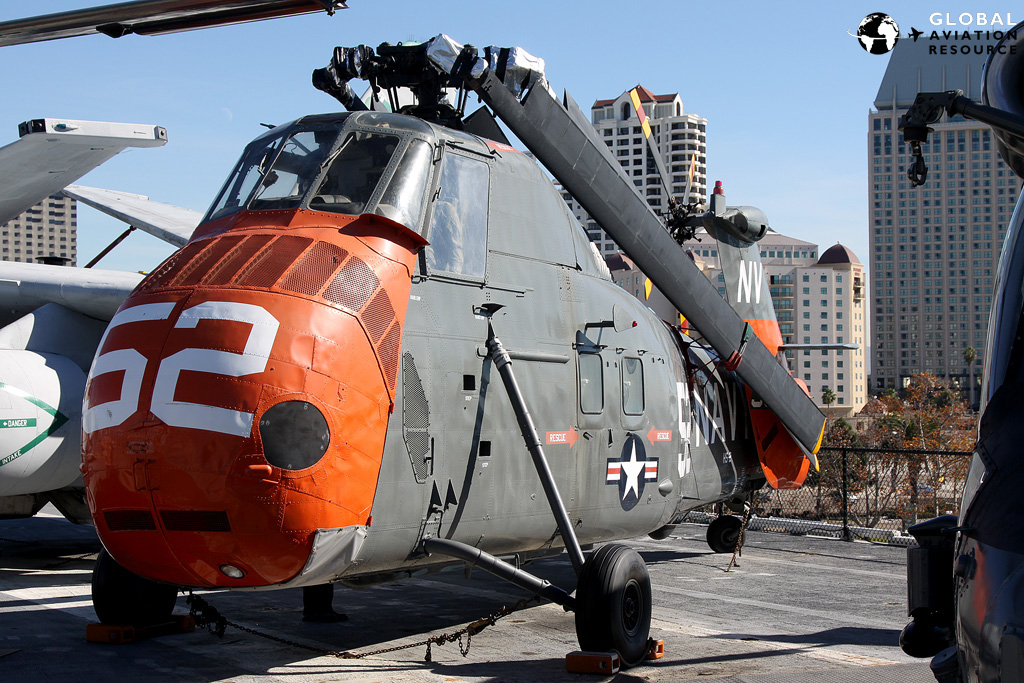
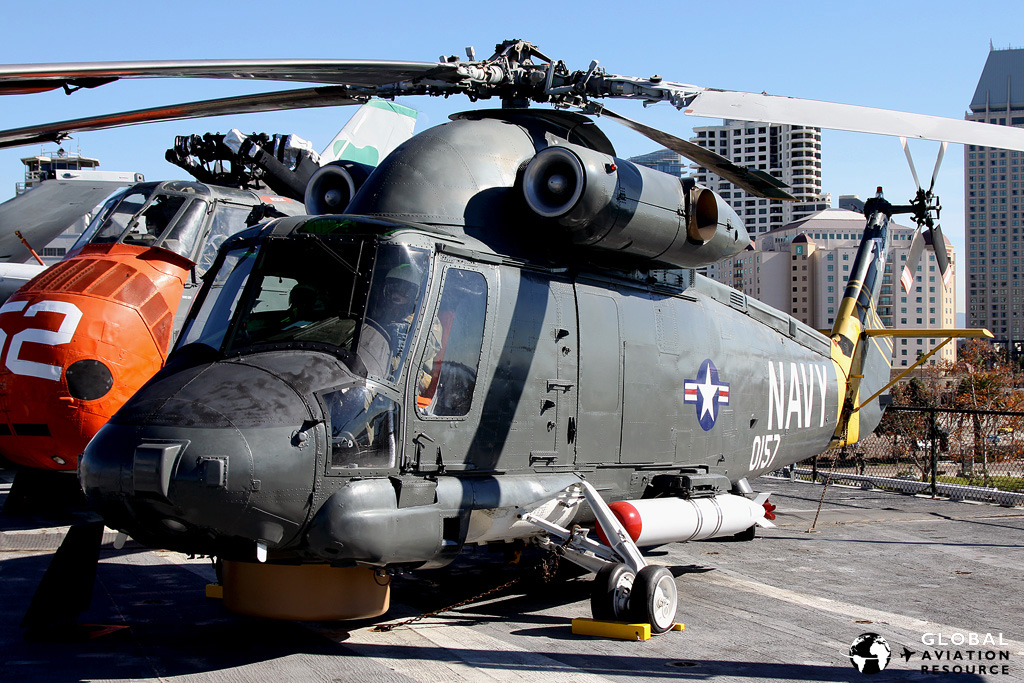
In addition to the jets on display, there are also several helicopters including a Kaman SH-2F Seasprite, a Sikorsky SH-3 Sea King and a Sikorsky HSS-1 Seabat (later redesignated SH-34G). Largest helicopter is a Boeing Vertol CH-46 Sea Knight. As well as serving with the USMC as a medium lift helicopter, the US Navy used the Sea Knight for “vertical resupply” of their ships.
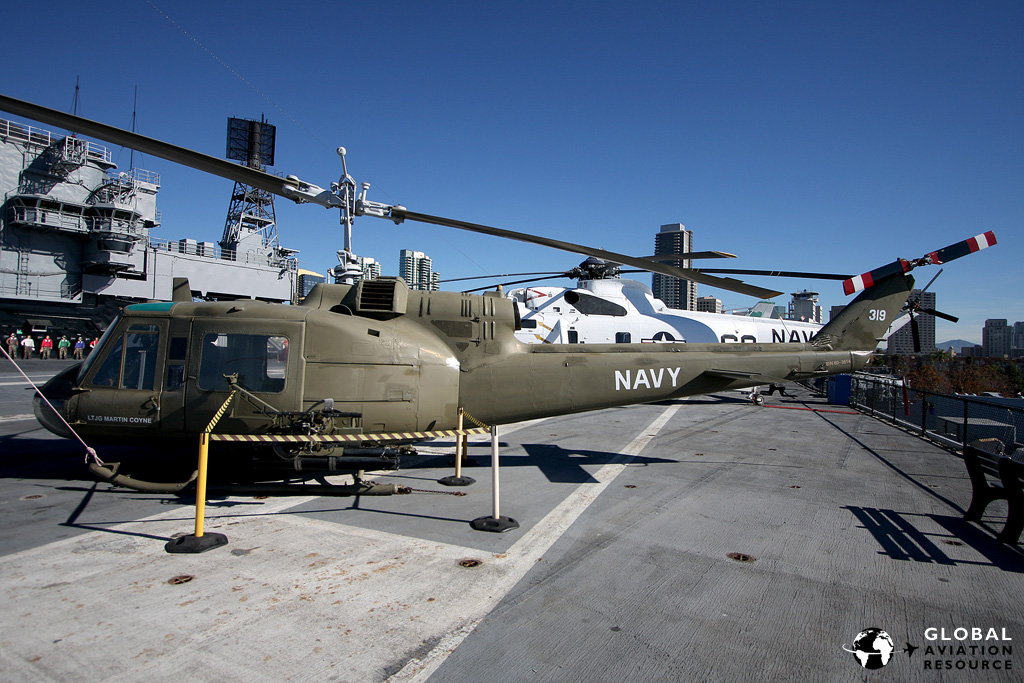
A slightly unusual exhibit is an armed Bell UH-1B Huey, a helicopter flown by HA(L)-3, the famous ‘Seawolves’. The Hueys were acquired from the US Army to provide support for patrol boat operations during the Vietnam War and were heavily armed with guns and rockets.
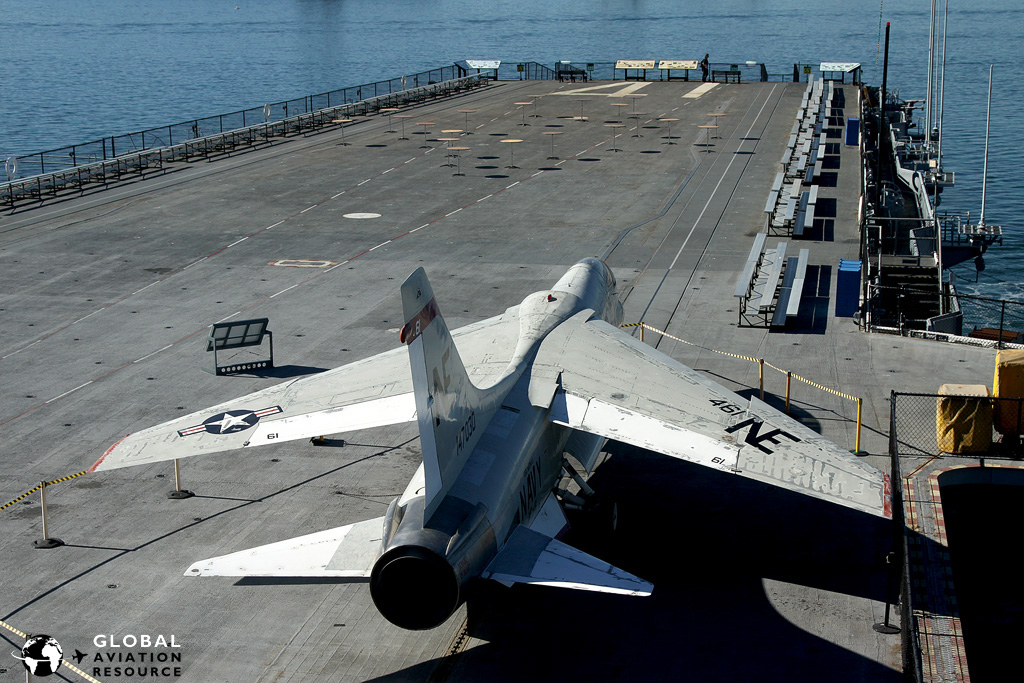
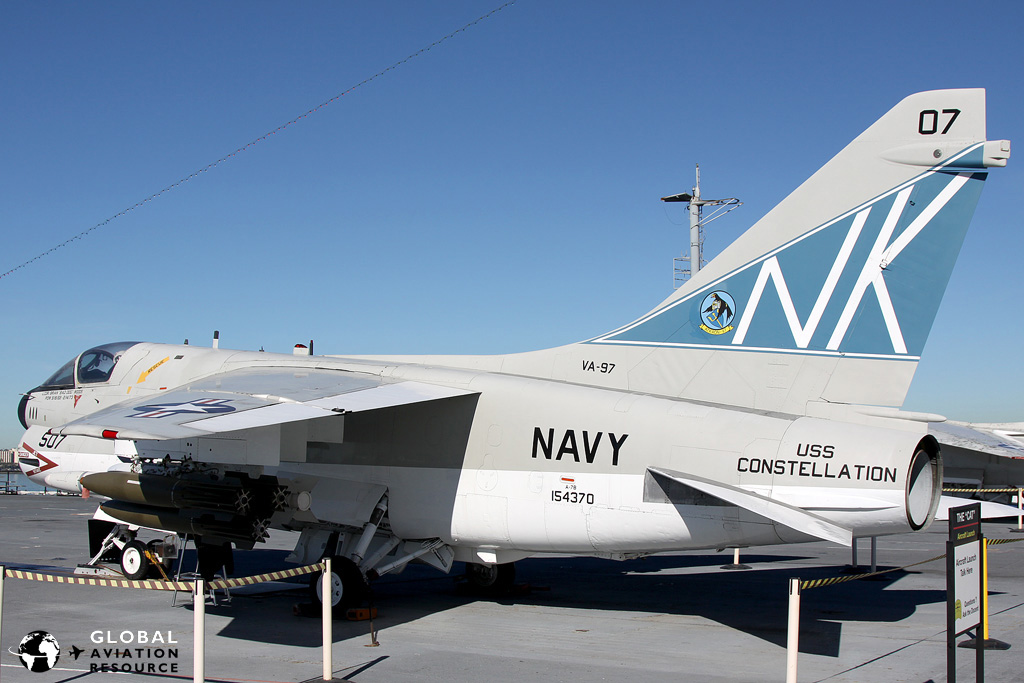
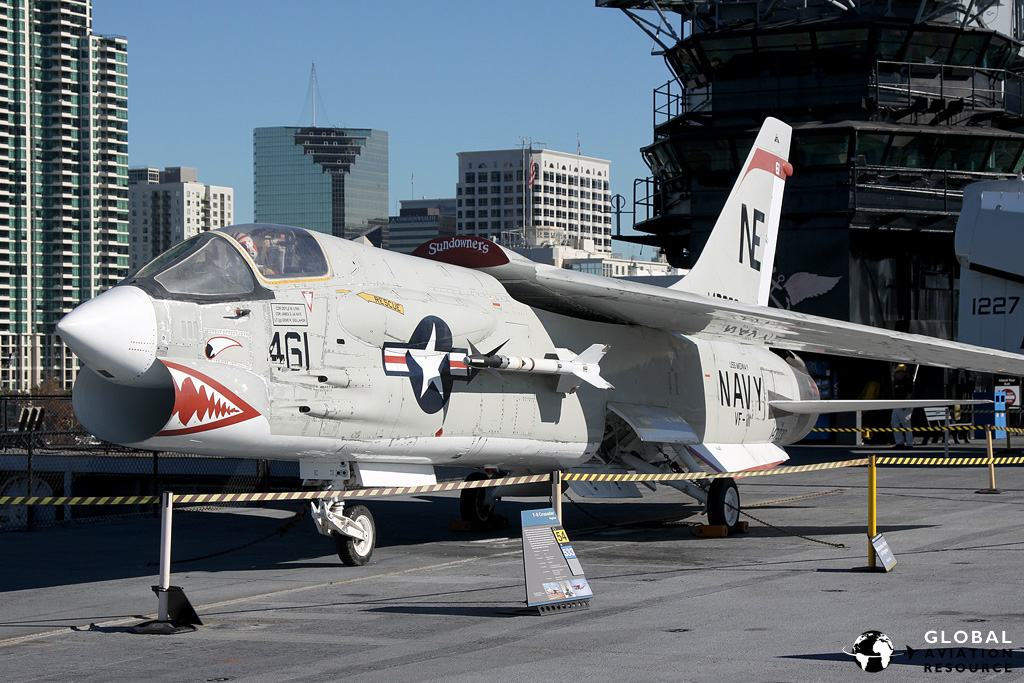
Positioned on the bow catapults and looking ready for launch are two closely related LTV products – an F-8J Crusader and an A-7B Corsair. Both aircraft flew from the decks of the USS Midway, with the F-8 being painted in the markings of the famous VF-111 ‘Sundowners’. At the time of my visit the F-8 was receiving some care and attention to improve its appearance. As with the F-4, museum volunteers are on hand with the aircraft to explain the process of launching aircraft from Midway’s catapults.
Of the five carriers currently on display in the US, I have been lucky enough to visit three, and I have been most impressed with the Midway, although the Intrepid in New York is a much improved museum since its recent refit. The US Navy currently has several other vessels in storage that may be donated to worthy museum projects and indeed it has been suggested that our own HMS Ark Royal could eventually be opened to the public. Any future museum project would be well advised to follow the example of the USS Midway Museum as their setup is excellent, and captures the atmosphere and history of the vessel perfectly.

If you would like to discuss using any of our imagery or feature content please contact us.