


Hendon's association with British aviation dates back over a century, to almost a decade before its relationship with the Royal Air Force came to fruition. It is therefore highly appropriate that the site of this famous airfield, which has long since passed into the annals of history, be chosen as the home of the RAF Museum London, housing a quite scintillating collection of aircraft, the majority of whom saw some form of operational service in the RAF.
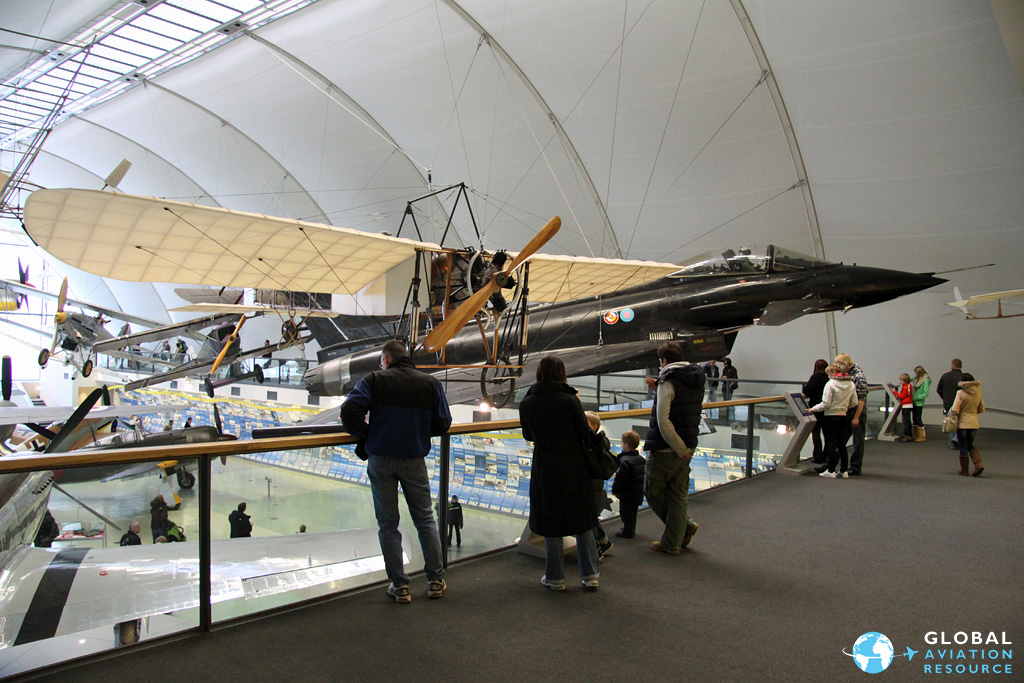
The main entrance of the museum is via the relatively new Milestones of Flight hall, housing a smorgasbord of aviation history's most prevalent, technologically and historically important designs. 'Milestones' brings the RAF Museum London into the 21st century; for the first time at Hendon, aircraft are exhibited in the dynamic, vibrant style that is a characteristic of modern air museums ('Airspace' and the American Air Museum at Imperial War Museum Duxford come to mind, not to mention Hendon's sister-ship museum at RAF Cosford). Entering the hall via the first floor balcony, the visitor is immediately met with the striking contrast between the Blériot and Eurofighter Typhoon DA2, both suspended side-by-side at eye level. Serving to highlight the terrific technological disparity between these two hallmark aircraft, the juxtaposition of the Blériot's early-20th centry 'stick and string' design and the Typhoon's sleek, aerodynamic figure tell the remarkable story of the boundless development that flight has undergone since the 1900s.


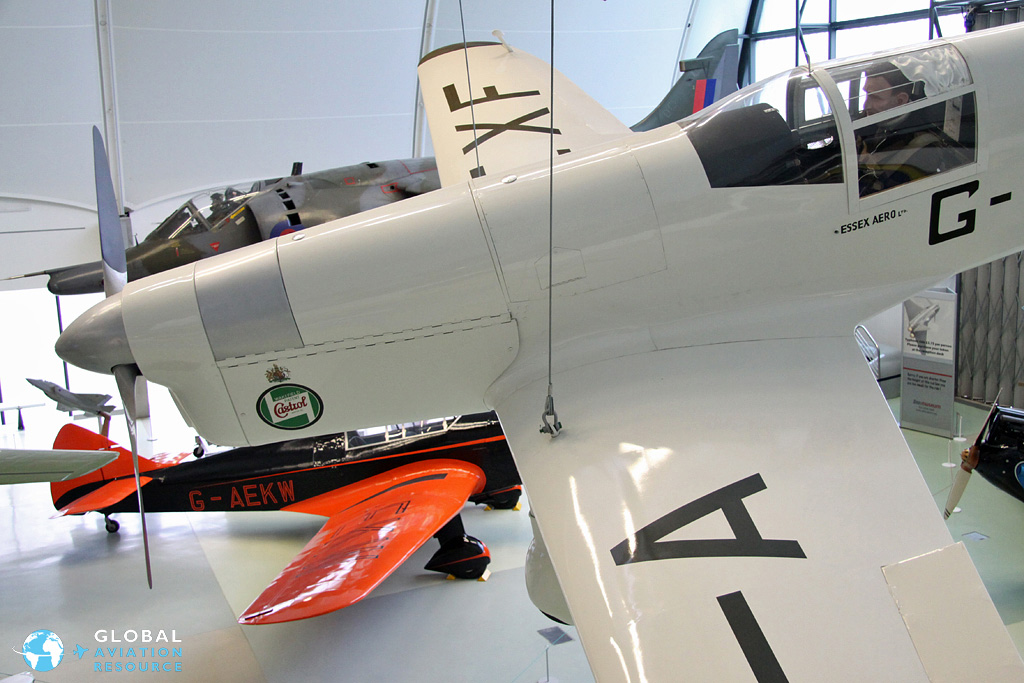
I'm not usually the biggest fan of museums that suspend some of their key exhibits from the ceiling, but Milestones seems to strike a healthy balance between original, electrifying presentation and displaying their aircraft to maximum effect. Milestones is an art gallery of sorts. Each aircraft has been positioned deliberately and carefully, ensuring that a plethora of angles can be explored, thus bringing these dormant exhibits to life; the likes of Percival Mew Gull, Sopwith Camel and Hawker Hart attest to this, their theatrical postures adding both character and drama to their stillness.
Photographically, Milestones offers unique angles from both the gallery and the ground floor, with each aircraft lit adequately by a mixture of natural and artificial light, which eliminates many of the problems photographers may encounter during the later stages of their visit to Hendon. Furthermore, unlike the 'aerial' exhibits at Duxford, you won't find any intrusive structures or impossible angles here - thankfully, Hendon seem to appreciate the importance and rarity of its collection in this hall in particular and they have made sure to display their aircraft to the visitor's advantage.

The next port of call, after a short walk into the main building, is the Bomber Command Hall. My first impressions of the Hall on this occasion were mixed. The addition of new and visually stimulating information boards is a most welcome one; a marked improvement over the aging hand-typed information panels that accompany exhibits at many museums, and further evidence that the RAF Museum has made significant steps towards engaging its younger audience. Certainly, the improved information boards seem to be aimed more at children, utilising an abundance of graphics, images and colour to inform - they aren't intrusive in the slightest and on the basis of the fair-sized audience they seemed to be commanding whilst I was there, they would appear to be a success.
Unfortunately, these positive developments are offset by the empty, dirty and generally scruffy opposite corner, which once housed the Vickers Valiant before it was moved to Cosford. That this corner is one of the first things you see when you enter the Hall doesn't give visitors the finest impression, it has to be said. I appreciate that Hendon is in the midst of some redevelopment and organisational changes insofar as their exhibits go, but leaving part of your museum looking something akin to a building site isn't particularly wise. It is inevitable that building work will result in debris of some sort which needs to be cleared, but this corner of the Hall has remained the same for over a year...


Thankfully, the quality of the aircraft exhibited in the Bomber Command Hall make up for this initial shortfall. Centrepiece of the Hall is, appropriately, the Avro Lancaster, flanked by her World War Two kin including B-24 Liberator, B-17 Flying Fortress and B-25 Mitchell. The Hall features a tremendous range of bomber and ground attack aircraft spanning some 90 years of RAF history; from the 1914-1918 era F.E.2b replica to the likes of Buccaneer and Tornado GR.1; illustrating the full spectrum of bomber development throughout the course of the 20th century's most significant conflicts.
Perhaps the most evocative of all the exhibits at Hendon is the Handley Page Halifax wreckage that lies in the Bomber Command Hall. Shattered, faded and yet still eerily beautiful, the Halifax remnants serve as a moving reminder of the sacrifices of Bomber Command during World War Two. This is one exhibit that needs no dramatic lighting, unorthodox positioning or interactive display boards - the Halifax tells its own story of loss and courage, bringing home the message without needing to rely on gimmicks or heavy-handed sentimentality.


Moving into the main display hall, it's hard not to be impressed by the sheer number and variety of aircraft on show. To list them would be pointless - checklists are in abundance online, including an excellent illustrated guide to each section of the museum on the RAF Museum London website - but to summarise, the aircraft have been divided into their own sub-genres: trainers, helicopters, bombers, maritime and fighters all feature, with dozens of aircraft on show, some of which are open to the public. One of Hendon's strong points is the contrast between each section of the museum. Indeed, this 'Historic Aircraft Hall' has the feel of a classic air museum; aircraft are positioned conservatively with less imagination and more formality than the modern, vibrant Milestones of Flight hall that captures, perhaps, the thrill and exhilaration of aeronautical development. In turn, both of these contrast effectively with the somber tones of the passive, reflective Bomber Command Hall and the foreboding darkness of the Battle of Britain Hall.
This is where we come to what must surely be the most contentious area of the RAF Museum London. Certainly, the Battle of Britain Hall houses a host of unique aircraft (the Luftwaffe line-up is particularly impressive) and there is little argument that, in that respect, it offers one of the most comprehensive Battle of Britain collections in the UK. Where else can you see the likes of Heinkel He-111, Messerschmitt Me-110, Junkers Ju-88 and the intimidating, workmanlike Junkers Ju-87 Stuka? The primary argument here is simply to do with the lighting of the Hall. Hendon is notorious for having poorly lit exhibitions; which is to my mind something of an exaggeration given that much of the museum is lit perfectly adequately for photography, should that be your interest; and the Battle of Britain Hall is the key player in that particular debate.


It's quite clear why the Battle of Britain Hall is controversial amongst certain quarters of the enthusiast community. Indeed, photography in this Hall is very difficult (though not necessarily impossible) if you do not have a tripod with you to enable longer exposures. Even discarding the photographic qualms, there is a perfectly valid argument that keeping such rare aircraft in near darkness (the He-111 sits in a corner with barely any light hitting the front of the aircraft, for example; the fuselage and tail section sit in almost complete darkness) is, to an extent, counter-productive as the logical approach would be to display these exhibits as clearly as possible, as per the Milestones of Flight hall, rather than shrouding them. I was lucky when I visited in early January 2011, in that the Battle of Britain video presentation was not being shown in the Hall, meaning that the Luftwaffe aircraft were actually fairly well lit. This would appear to be something of a one-off, as I've since heard from others who have visited that the presentation is up and running again and, as a consequence, the lights have been all but turned off!
Yet, it's hard to deny that the Battle of Britain Hall has a unique atmosphere. In a similar vein to Cosford's Cold War exhibition, this Hall's dark and somewhat solemn feel portrays the chill and intimidation of the era. Further, the wreckage of the Hawker Hurricane that sits opposite a wall listing the names of every pilot who died during the Battle of Britain is unquestionably powerful and thought provoking in its simplicity. I suppose your opinion of the Hall will ultimately depend on what you want from the museum. There is arguably no 'correct' way to display aircraft in museums and to my mind, using lighting to generate atmosphere falls within the same category of controversial as Cosford's stunning use of aerial suspension to capture the fears of a generation. Maybe I'm reading too much into it, but I can certainly see the creative logic behind presenting the Battle of Britain Hall in this particular manner.


It would be remiss not to mention to often overlooked jewel in Hendon's crown; while it may not have the flashiness of Milestones of Flight, the Grahame-White Factory houses some of the RAF Museum London's most prized antiques. Originally built by Claude Grahame-White in 1917, the building was the United Kingdom's first aircraft factory; the site at Hendon includes the surviving quarter of the original building, while the rest of the Factory has been constructed to the original specifications with the original fittings back in place. The collection housed within this fantastic building covers the first years of powered flight, from the Blériot XXVII to the Vickers Vimy, by way of such gems as a Hanriot HD1 rotary engine biplane fighter and the distinctive Caudron G3. The Factory is only open to the public between 10am and 12pm daily and I would encourage any potential visitors to plan their trip to include a visit to this building - you won't be disappointed!
There are, as with many museums, gripes regarding the lighting and positoning of some aircraft for photographs - which will likely always be an issue with no resolution possible due to financial constraints - but it's important to keep in mind that Hendon caters largely for the general, non-enthusiast populace rather than your camera wielding enthusiast.


 GAR wants to interact with its readers so if you have a question for the author or a comment to make on this feature, please click on the button below. The best comments will appear right here on GAR.
If you would like to discuss using any of our imagery or feature content please contact us.