

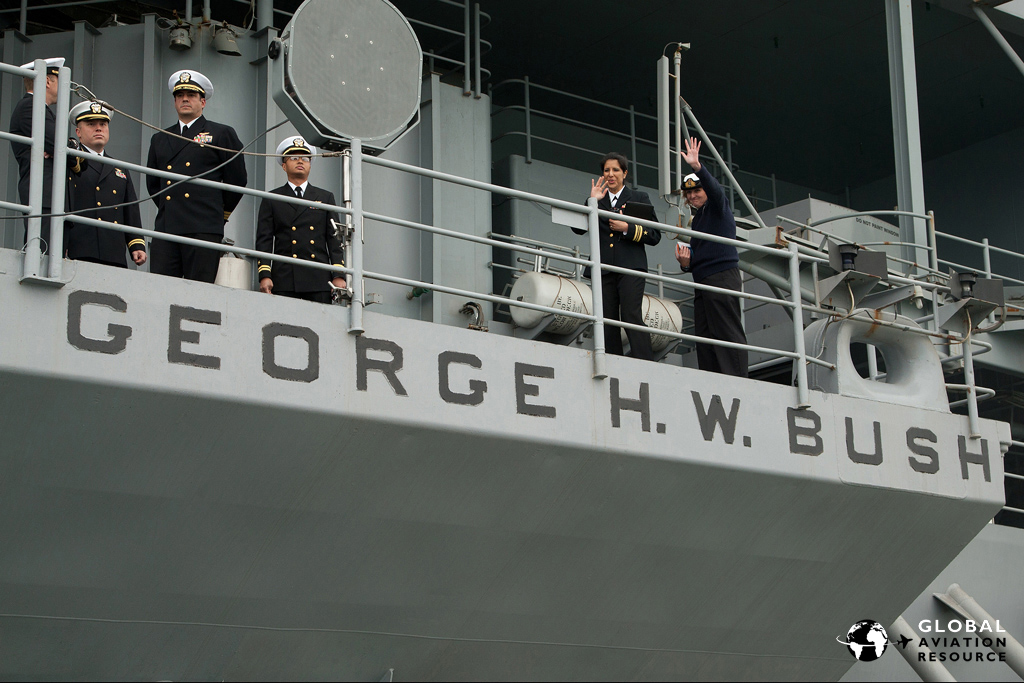
The USS George H.W. Bush (CVN-77) is the tenth and last ‘Nimitz’ class aircraft carrier for the United States Navy and its homeport is Naval Station Norfolk, Virginia. Named after the 41st president of the United States of America, himself a naval aviator in World War II, the ship’s callsign is Avenger after the TBM Avenger flown by Bush during that conflict. With an overall length of 1092 feet and a top speed of 30 knots, the nuclear-powered ship can potentially operate for 20 years without the need to refuel. In fact the ship will only ever refuel once in her planned 50 years of service.
The contract to build the ship was awarded to Northrop Grumman Shipbuilding Newport News on the 26th January 2001. The ship was christened on the 7th October 2006 with former president George H.W. Bush attending the ceremony, becoming the first US president in history to take part in the christening of his own ship, ahead of its official delivery to the USN on 11th May 2009.
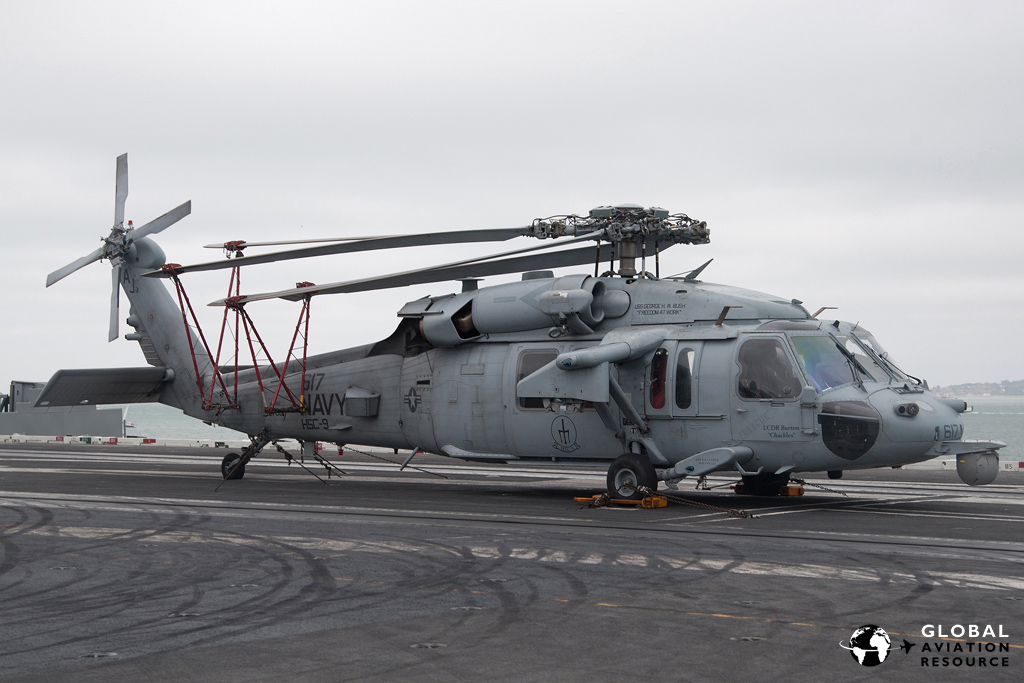
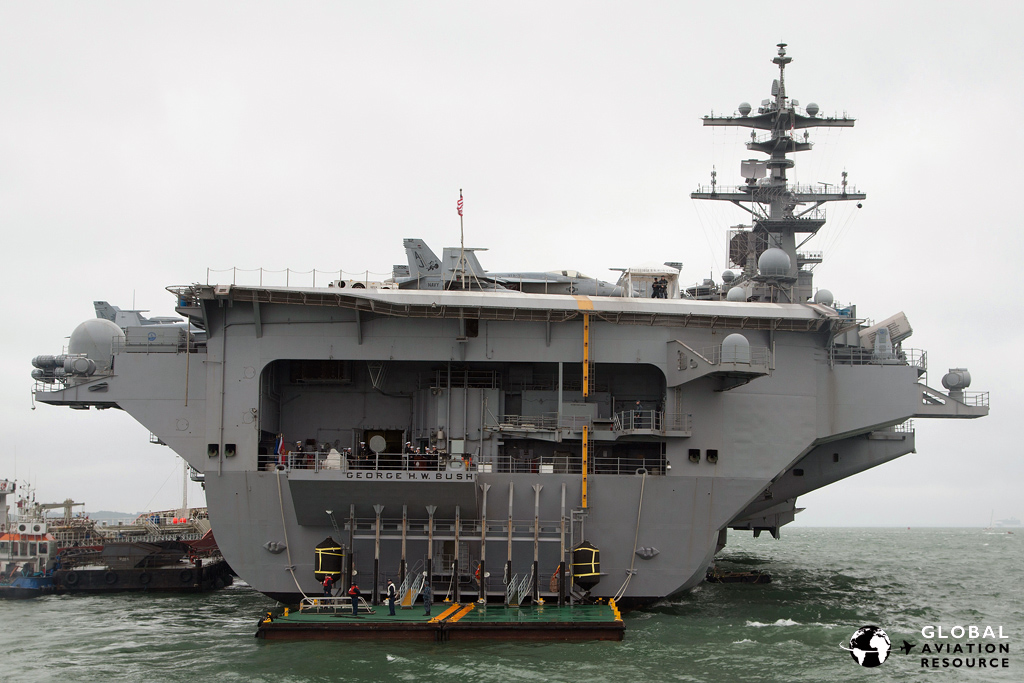
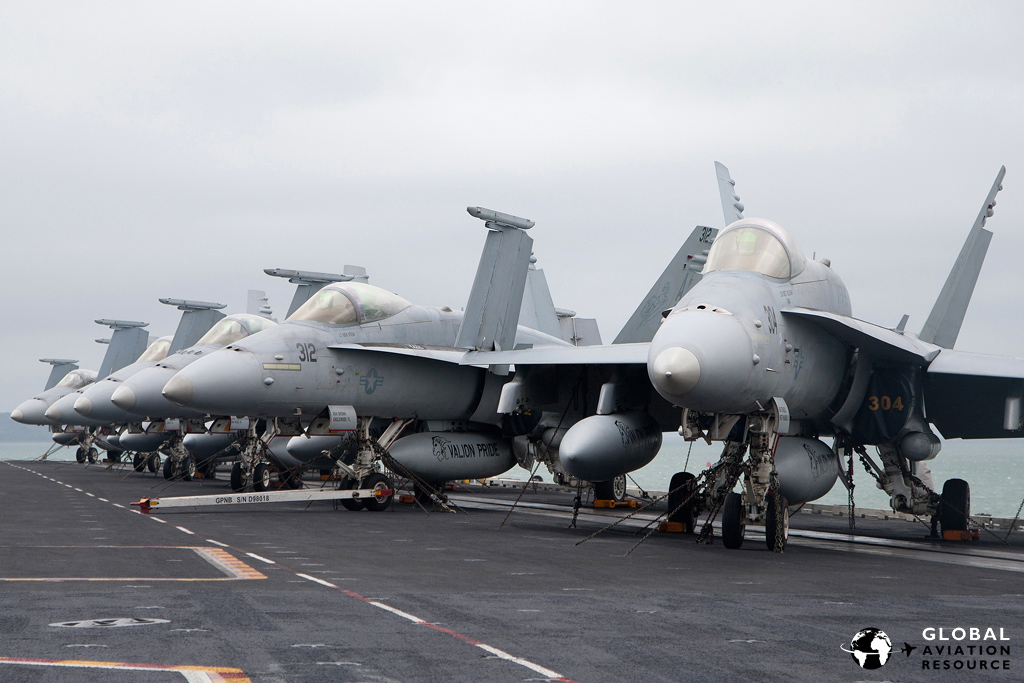
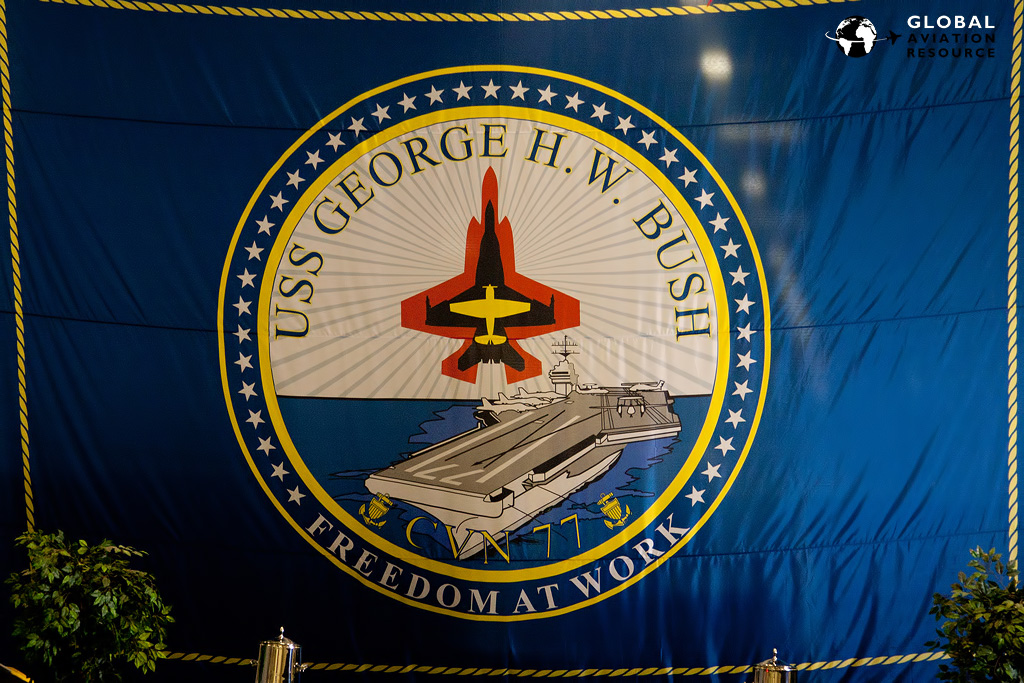
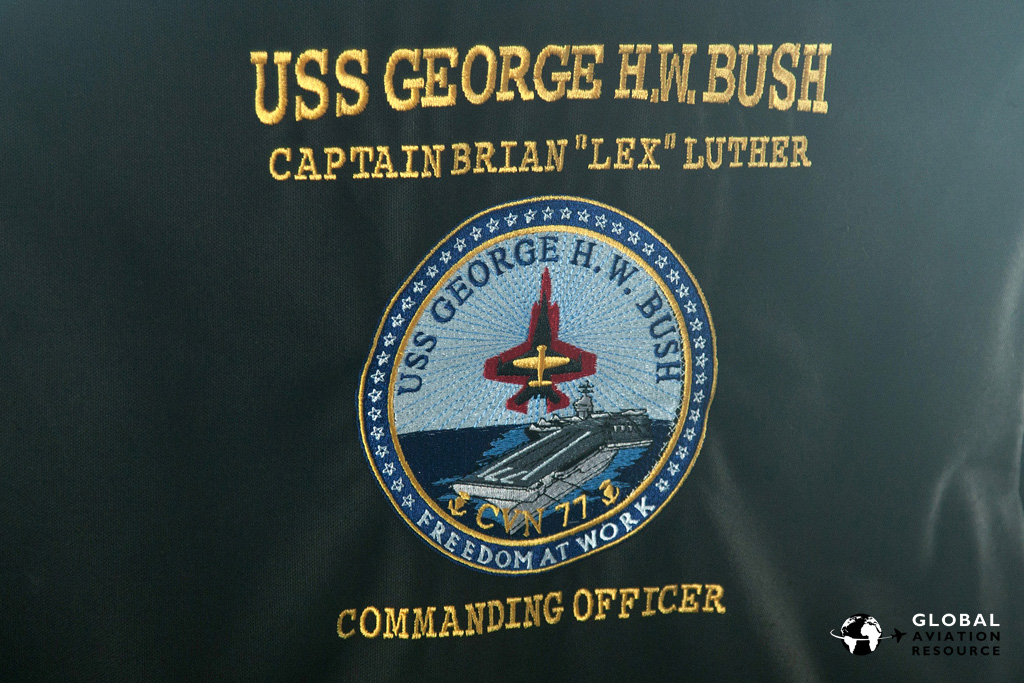
The $6.2 billion vessel includes re-forged steel from the support columns salvaged from the wreckage of the Twin Towers of the World Trade Center. The motto of the ship is ‘Freedom at Work' which was taken from the inaugural speech by President Bush in which he said, “We know what works; Freedom works. We know what’s right; Freedom is right.” Approximately 5,500 personnel are on board during a deployment with a Carrier Air Wing (CVW) embarked.
Being part of Carrier Strike Group 2 (CSG-2), the ship falls under the command of the first female to command a United States Navy carrier task group, Rear Admiral Nora Tyson. Commanding Officer of the ship is Captain Brian “Lex” Luther. Alongside the carrier on its maiden overseas deployment are guided missile cruisers USS Gettysburg and USS Anzio and guided missile destroyers USS Truxtun and USS Mitscher, with the Gettysburg acting as the strike group’s air defence co-ordinator. The USN provides Combat Commanders with six ready to deploy carrier strike groups within 30 days of the request being made.


On the 4th October 2010, CVN-77 departed Naval Station Norfolk, Virginia to begin its Tailored Ship's Training Availability/Final Evaluation Period (TSTA/FEP) in preparation for subsequent combat deployment. TSTA is an assessment of shipboard training and the ability of the crew to train themselves to standard. FEP looks at the crew’s ability to conduct combat missions, support the air wing operations and deal with casualty control and casualty control situations.
The group departed for its first overseas deployment on the 11th May 2011 having undergone an intense work up period of training including a Composite Training Unit Exercise (COMPTUEX) and a Joint Task Force Exercise (JTFEX) and required sea certifications. Ultimately CSG-2 was declared as being combat ready on 21st February 2011.
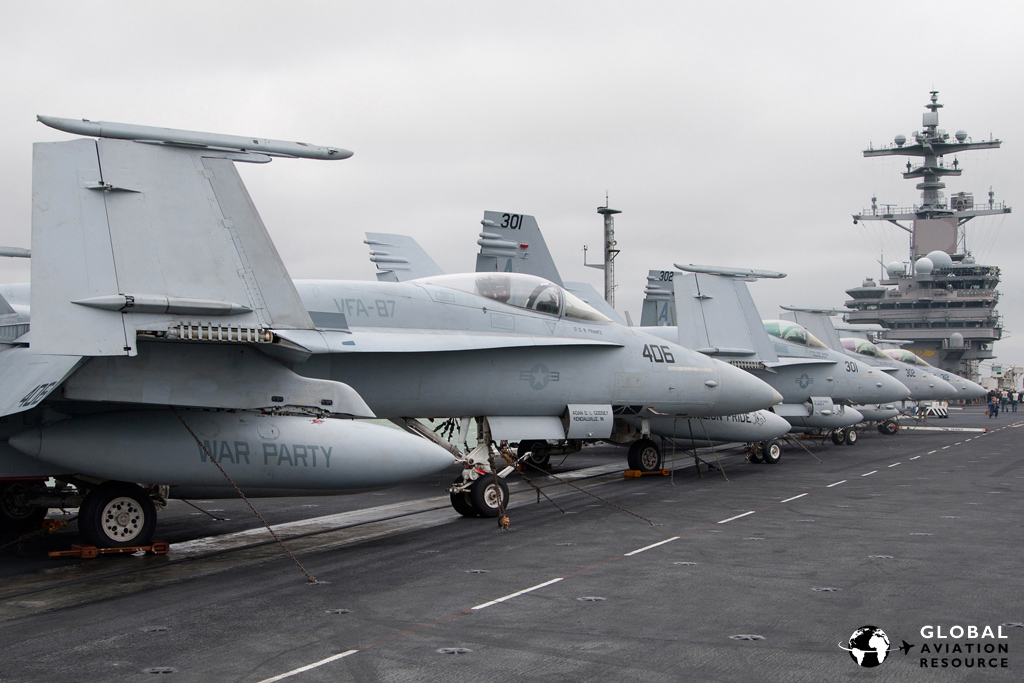


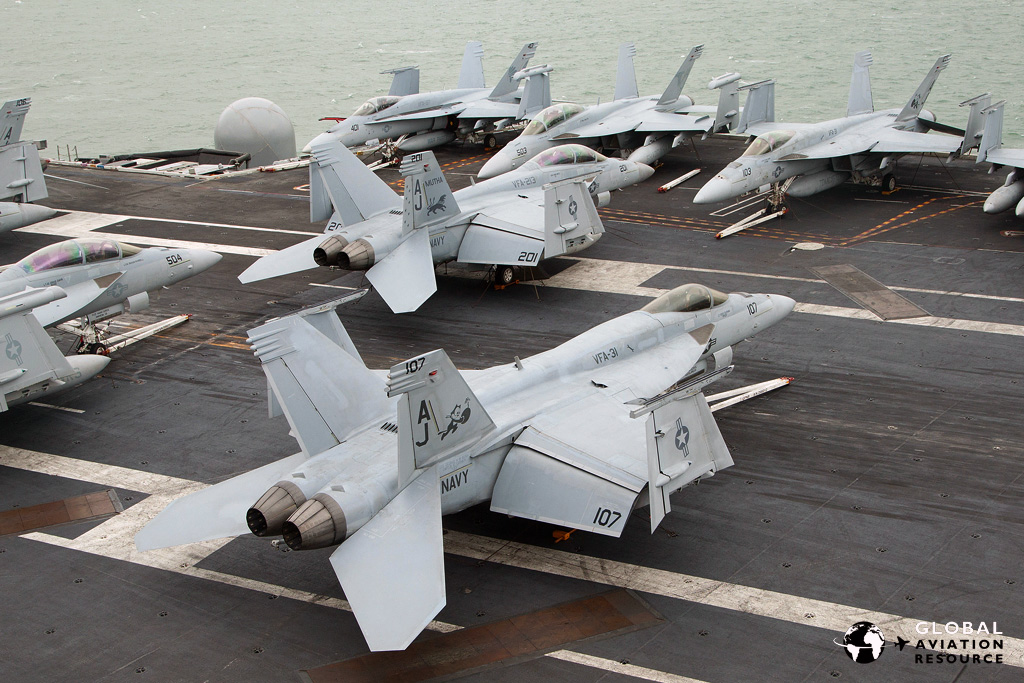
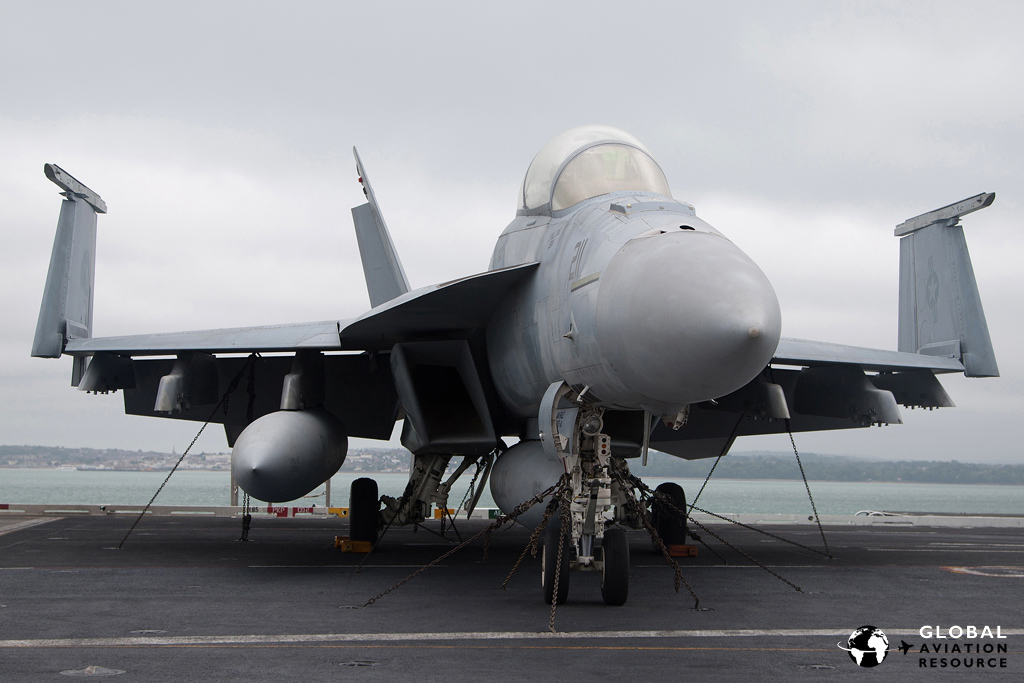
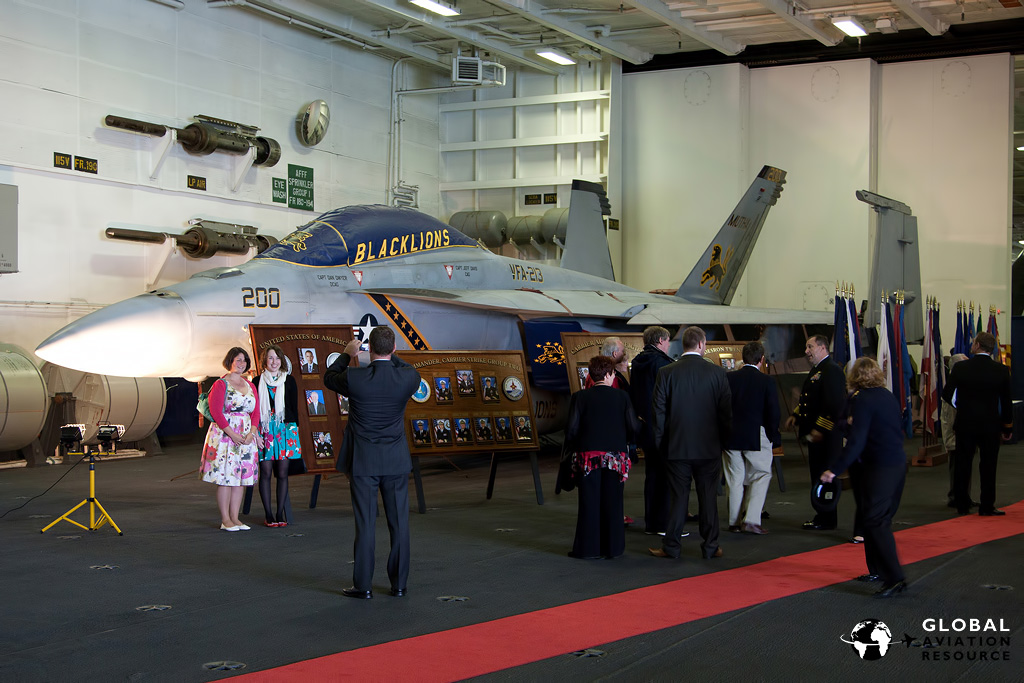
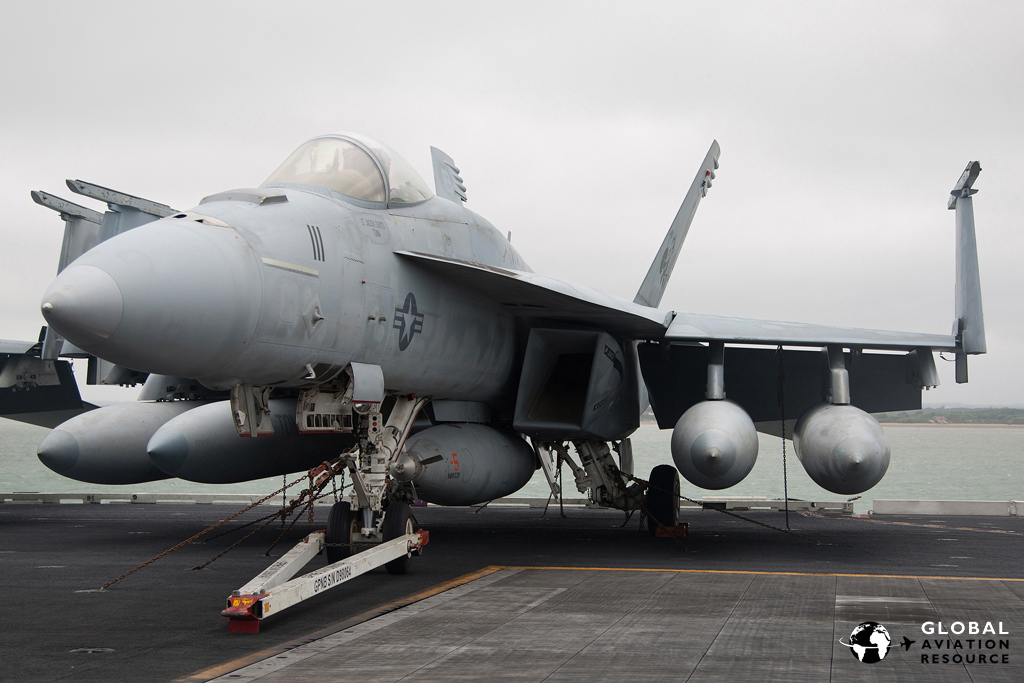
CVW-8 is assigned to CVN-77 under the command of Captain Jeffery A. Davis. The strike fighter squadrons on board all come from NAS Oceana, Virginia, comprising VFA-15 'The Valions' (flying the F/A-18C), VFA-31 'The Tomcatters' (operating the single-seat version of the Super Hornet, the F/A-18E), VFA-87 'The Golden Warriors' (and its F/A-18A+ aircraft), and VFA-213 'The Black Lions' (a user of the two-seat Super Hornet, the F/A-18F).
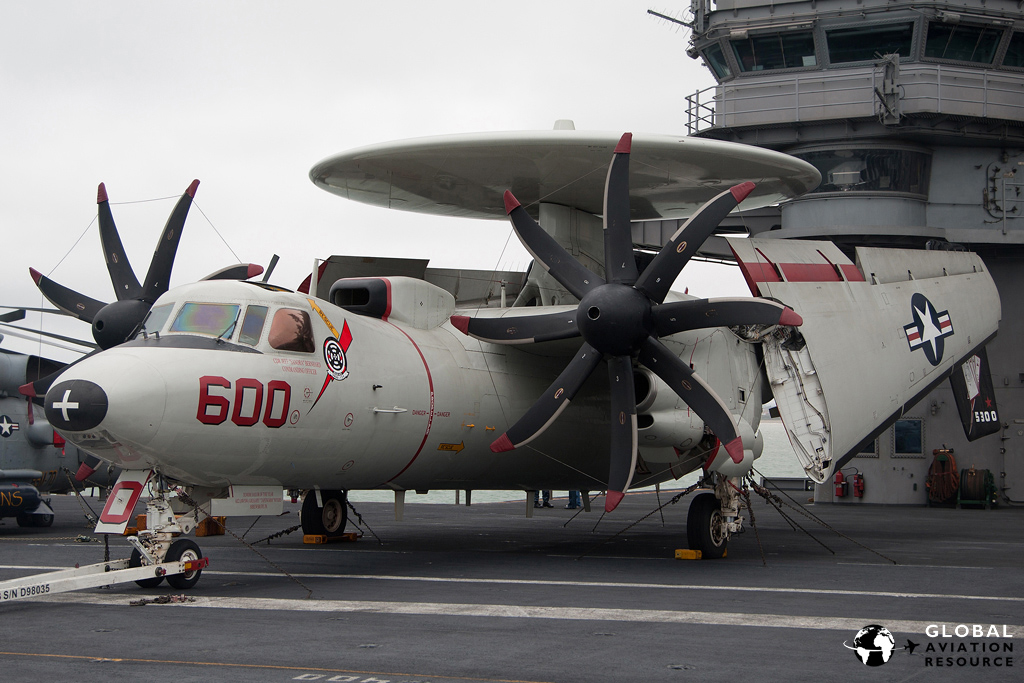
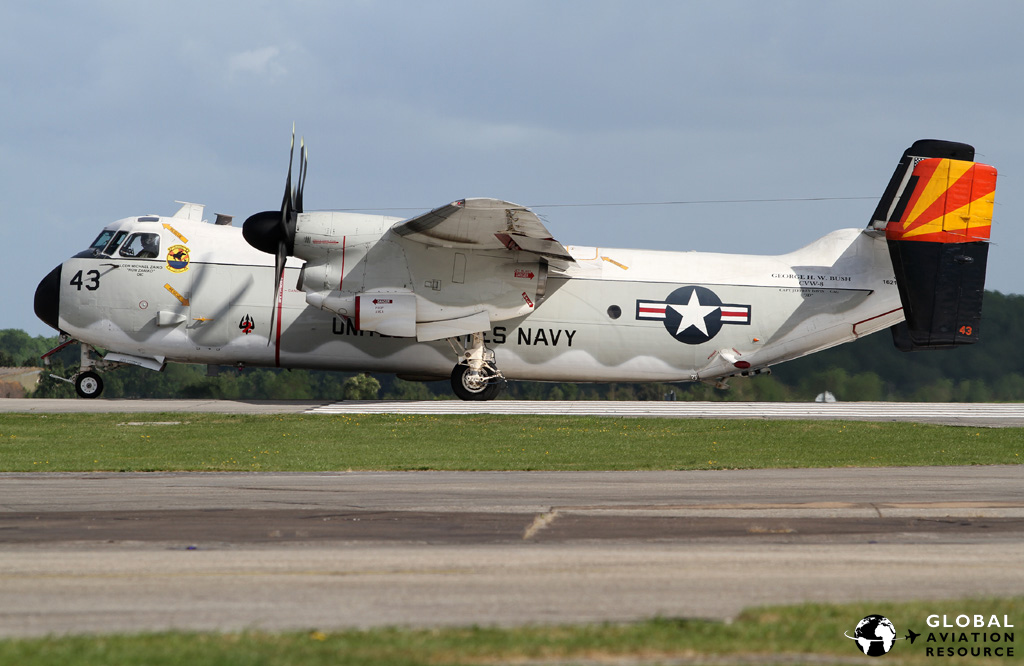
Of particular note aboard the ship were the EA-18G Growlers of VAQ-141 'The Shadowhawks' from Naval Air Station Whidbey Island, making their first overseas deployment since replacing the EA-6B Prowler in the Airborne Electronic Attack role. The airborne early warning element is provided by the E-2C Hawkeyes from VAW-124 'The Bear Aces' and the logistical support element is given by VRC-40 'The Rawhides' and its C-2A Greyhounds, both of these units hail from NAS Norfolk. Naval Air Station Jacksonville, Florida, provides the rotary element of the aircraft on board with variants of the MH-60. HSM-70 'The Spartans' flies the MH-60R Seahawk, while HSC-9 'The Tridents' operate the MH-60S Knighthawk.



The primary mission of the aircraft carrier is to respond and be deployed to specific theatres around the world at short notice. However, there is also a role in terms of the building of relationships with America’s allies, building partnerships and establishing trust between nations in peacetime, prior to crises situations occurring. Thus the carrier provides a mix of both raw power and compassion depending on the situation in progress.
This can be achieved through participation in multi-national military exercises such as Saxon Warrior and through strategic port visits. Up close, there is certainly no denying that the impressive stature of a USN carrier is a formidable symbol of America’s global reach in the theatre of combat. The carrier allows the USN to execute the six core capabilities of maritime strategy – forward presence, deterrence, sea control, power projection, maritime security and humanitarian assistance/disaster response.

On 19th May CSG-2’s assets commenced participation in Saxon Warrior 2011, a joint United Kingdom and United States Navy exercise supported by NATO allies designed to develop theatre specific combat capabilities. The exercise also provided the units on board CVN-77 with vital work-up for their forthcoming deployment to support operations in Afghanistan.
Other nations contributing to the action included the UK, France, Germany, Sweden, Canada and Spain. During the period of 19th May-26th May inclusive, some 60-90 combat and support missions were flown per day and during the night. The South West of the UK has seen intense activity with the Castlemartin range and RAF Chivenor used as part of the scenarios being played out. RAF Lyneham and RNAS Yeovilton have also played host to aircraft from the ship.



If you would like to discuss using any of our imagery or feature content please contact us.