

Monday, 1st August, and as I drive through Fairford towards Douglas Bader House, headquarters of the Royal Air Force Charitable Trust Enterprises, I can't help but smile, albeit slightly ruefully - it's very warm and the sun is breaking through a thin layer of cloud, just what was needed two weeks or so back over the entire show weekend in fact!


So why am I here? Well, the Air Tattoo is always a show that generates a good deal of opinion. They all do of course, but, as one of the world's highest profile airshows, RIAT naturally generates more than most and this time round, in the event's 40th anniversary year, there has certainly been a lot said since the last aircraft flew home.
RIAT isn't immune to the issues facing airshows across the globe but being the "largest and most diverse celebration of military aviation" rather makes it a hostage to fortune and for one which has always been seen as THE show for dedicated enthusiasts, some seem to wonder why it isn't the same as it was 10, 15, 20 or even 30 years ago.


Too much sponsorship; too much non-aviation related entertainment; not enough aircraft; the concert from Alexandra Burke; poor value for money; an event which doesn't focus primarily on the enthusiast anymore; a flying programme which should have been amended to work around the awful weather that affected the event on the Saturday. These are just some of the issues noted post RIAT 2011 - although sadly they haven't always been raised in such a matter of fact fashion, and many people have noted that the strength of feeling has, on occasion this year, perhaps gone too far.
These, then, are the areas that I want to broach with Tim - giving him the opportunity to have his say, and, having been shown in to his office and with formalities complete, we set about working our way through them. I start by asking him to tell me what the Air Tattoo actually is and how much it has changed over the past four decades? This by the way, if you haven't scrolled down the page, might be a good time to make a cuppa and get comfortable - we're about to cover a lot of ground!


"The original IAT concept was that it was a gathering of NATO aviators and their aeroplanes, to let the public see the excellence of aviation. It was a charitable event to benefit veterans from the two world wars and was really an opportunity for everyone to have some fun while raising money for the Royal Air Force family.
"It has had to change over the years - of course it has - but I would like to think that at the core of the Air Tattoo remains a bunch of people who believe in aviation, military aviation in the main, and want to drive that message forward, sharing what our military does for us and what the taxpayers get for their money."

Is it therefore, in any sense right, or fair, to compare the Air Tattoo of 2011 with the shows of years gone by?
"Well, we always talk about the good old days, don't we, in every walk of life. Nothing is quite the same is it - Mars bars are smaller and schools aren't as good, for example! I do believe that the current Air Tattoo has maintained its strong spirit but yes, times have changed and so has the Air Tattoo - looking back is no problem for me as long as it doesn't hinder us going forward.


"Bureaucracy is a huge consideration but, and I almost dread saying the words, so is health and safety, and that alone requires lots of effort to ensure the event is demonstrably safe. In the old days there was no rulebook. We just put a few aircraft out, put ropes and stakes up, let the public in and a bloke turned up to sell beer and gave us a cut - and I'm pretty sure he didn't even have a licence! There was no real formality to it and we were probably running risks in all sorts of areas. However, common sense always prevailed when it came to safety. Now we have to follow many sets of regulations for everything we do and that ties up a lot of time and a lot of money.


"I don't want this discussion to sound like I'm making loads of excuses because, believe me, if we could run the show with an airfield totally full of aircraft I'd be very happy, but it just can't be like that anymore unfortunately, for a whole raft of reasons.
"We are as passionate about aviation as ever though and work just as hard as we've always done to attract aircraft participation."


OK, so let's move on to the audience. Over RIAT 2011 some 138,000 visited the show but, looking at everyone on site, who are they and why are they there, I ask?
"First there are the military chiefs, the aircrew and the engineers. One way or another they are responsible for the aircraft being at the show so we have to make it really good for them so they want to come back, or, in the case of the high ranking officials, if they haven't brought aircraft, persuade them to do so next year.

"Industry people come in their droves, mainly, but not exclusively, from the aerospace world. They rub shoulders with each other and talk to the visiting military chiefs (17 of whom were at RIAT 2011) and do all the networking that they need to. Without industry sponsorship money and support from the military - the UK's and from abroad - the show doesn't exist. It is important that I emphasise, though, that we are not a trade show and this is what makes RIAT so important to our sponsors; it is truly a gathering of like-minded people who can discuss issues without the added pressure of sales targets to worry about.
"Next is the volunteer team, and those people have to want to come and feel that they are playing their part in making RIAT what it is and as such supporting our parent, the Royal Air Force Charitable Trust. This is the group which is probably most affected by some of the heavy criticism on some enthusiasts' forums. When it's raining out there on a bleak and windy airfield, it can be pretty demoralising for them, and for me too!


"Next of course is the paying public, and first I would like to mention the Friends of the Royal International Air Tattoo (FRIAT) which is clearly a hugely important group of dedicated supporters. These people want to soak up the RIAT atmosphere for three, four or five days and see all the aircraft arriving, displaying and then departing. Our job is to try and give them the best value for money that we can. This year we built in a new Thursday walk-about opportunity for uncluttered photos to be taken, which went down very well.
"There are enthusiasts of course who can't attend as FRIAT members for whatever reason, and here we try to make sure that they have every opportunity to see and photograph what they want to with the minimum of obstructions such as background clutter and blue cones. That's not always easy!



"It is very difficult to define this next group which I suppose you could call the 'general' public. The feedback questionnaires have been coming in from this group following this year's show and what's been interesting is that clearly the event attracted a lot of new visitors this time round, many of whom were totally bowled over by RIAT and said that there was almost too much to do and how much they had enjoyed it. Previous attendees are equally complimentary, albeit all would have preferred better weather!
"There's an interesting comparison here with the enthusiasts who say that there aren't enough aircraft at RIAT any more; those people who were perhaps used to seeing wall to wall KC-135s, C-130s and P-3s in the 70s, 80s and 90s, when the world could afford to do that. They see the show as being a bit thin these days whereas, on the other hand, there is a big group of our visitors saying that there is too much, but they still can't wait to come back next year."


Overall then, a real mixture of attendees, all of whom offer up a truly polarised range of feedback from their visit to the event - and Tim isn't quite done yet either.
"We must not forget the British military of course. The Royal Air Force, Royal Navy and the Army all attend, as do numerous civil servants, many of them as our guests, and it is industry sponsorship which helps us to do that. The benefit to them, from a defence diplomacy perspective, meeting foreign air forces, the senior staff and such like, is absolutely immense. This aspect is also valued by our hosts, the United States Air Force, which also has numerous senior representatives attend each Air Tattoo. This group is of course highly influential to us, if RAF Fairford is to be made available for the Air Tattoo to take place.

"What does all this mean from an overall financial perspective therefore? Well, in terms of the money from RIAT that goes in to the charity and does great things like supporting Air Cadet expeditions or promoting air mindedness and providing welfare support through its sister charities, for example, the Air Tattoo also promotes UK PLC, and that, in the eyes of the Ministry of Defence and British industry, has immense value."
So where does all that leave the enthusiast community, the group which perhaps provides some of RIAT's most vocal feedback?


"Well, they clearly aren't the only people who attend the show but they are very important to us as is their support and their feedback. We want to know what they want to see and, if we can, we'll try and get it for them - assuming it is still actually flying of course and if it has to be bought, is affordable!"
But you cannot ignore the number of enthusiasts versus the number of 'general' public and this is the point this part of our discussion seems to be heading towards. If RIAT took away much of the non-aviation related activities - the fun fair, traders, the concerts and the music - and stripped out the participation that many enthusiasts see on a weekly basis, what would the impact be on the show as a whole?


"It would have a huge effect in terms of attendance. From the very first IAT in '71 and all the shows we've run since, a significant part of the make-up of the overall crowd is the general public.
"The Brits are turned on by aviation and, while we don't rely solely on British visitors of course, you have to appeal to the whole family and not just those who come for the aviation. At that first show we had arena displays and a modest number of trade pitches alongside all manner of attractions to entice the whole family. Sometimes the aviation enthusiasts in the family can't come to RIAT unless the rest of the group can come too, so it's extremely important that we continue to do this.

"I wouldn't want to try and give an exact percentage but I would say that over 85%, possibly even 90%, of our audience are NOT solid aviation enthusiasts, so we have to offer them alternative entertainment, and striking the balance between that and the raw aviation can be tricky. Our fun fair for example is a quarter of the size it used to be. It was an important revenue generator some years back but we felt that maybe the balance was wrong and that we needed to appease the enthusiasts, so we made it smaller.
"Let me, if I may," Tim continues, "give one instance of where we completely failed in this regard this year.

"Basically we had all manner of sounds from exhibits and the concerts that, on mumerous occasions, completely swamped out the sound of the beautiful aircraft which were displaying for those who wanted to see AND hear them. For a variety of reasons the balance of the system went completely wrong. We had areas where people couldn't hear anything and then areas where it was a cacophony of sound, so that needs to be looked at before RIAT 2012 as it impinged on the aviation too much and was, generally, rather unpleasant.
"Going back to the point though, the model for the Air Tattoo could not work financially without those other attractions as there are not enough aviation enthusiasts to make an Air Tattoo viable with only that group purchasing tickets.


"We actually abandoned the arena displays for a number of years and it had a negative impact on our audience. What do you do if there is inclement weather and nothing is flying? You need more than static aeroplanes - you have to have something dynamic which keeps people feeling entertained and happy."
Was booking Alexandra Burke one step too far, however? That was the question many enthusiasts were asking this year and, although her exclusive Sunday lunchtime concert clearly attracted a large audience, was this a decision which tipped RIAT's airshow / family entertainment balance? Should - could - that money have been spent on aircraft instead?


"First and foremost, the feedback from enthusiasts, notably from the FRIAT members about the show generally, has actually been very warm this year, bordering on good I would say, but yes, there has been a lot of criticism about us booking Alexandra Burke. As a marketing exercise, and if you want to be really cynical about it, it generated a vast increase of web exposure for RIAT in areas that we wouldn't normally see.
"We are still assessing the audience numbers and we do have an aerial image which, believe it or not, we are using to count the heads! My original guess was that the concert would maybe attract 1000 people or so and at the moment it's actually looking like somewhere between 6000 and 9000 in total that were there watching her perform. And yes, I was one of them!


"It was essentially one of those things that we felt we needed. We have a problem in that we have had to cap the number of people who can attend the show because the local roads can only cope with so many vehicles and, traditionally, we have sold out, or got close to selling out, on the Saturday, while Sunday is normally much quieter. Many of the enthusiasts are here on Thursday, Friday, Saturday and Sunday etc, using the Park and View facility, FRIAT and such like, but it's not always easy to get people here just on the Sunday for a long day when they've got work to go to on Monday.

"So, we wanted to try and attract more people for the Sunday, a new audience if you like, that was our aim. Spending the money was a judgement made as part of our overall marketing spend. It was a trial and we are assessing whether it worked or not because we did sell more Sunday tickets but the exact reasons why are not yet clear. A straw poll definitely showed that more young people did come with their parents because of the concert which was good for promoting air mindedness, one of the show's aims. We have staged concerts before at the end of the show, and we shall be sitting down and looking at whether we go ahead and do something similar again. Increasing our audience to achieve greater revenue is critical to the show's continuation.


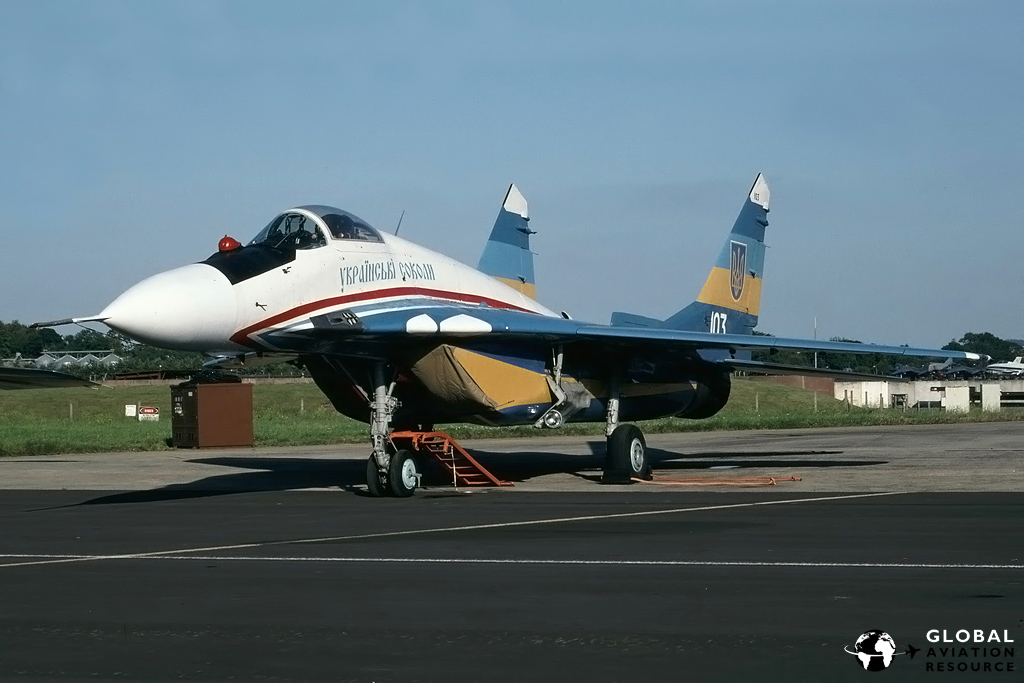
"Should we have booked another aircraft instead? Well, at the same time as we made that decision to book Alexandra we decided to pay a similar amount for the Su-27 and Il-76 to come to the show. We don't normally do that - we need air forces to attend because they want to and pay their own way, with a budget available to do so. It's not anything like as clear as 'should we book Alexandra Burke or a MiG-29?' It just doesn't work like that."
It is slightly frustrating, in my mind anyway, to see complaints about a concert on one day at RIAT when you look at the UK airshow scene and the overall variety it provides for enthusiasts. MiG-29 and Aeronavale role demo at Yeovilton, Thunderbirds at Waddington and then A-10, Rafale, C-27, Eurofighter Typhoon, Italian Tornado and Turkish F-16, for example, at RIAT. Surely no show, in this day and age, has a God given right to wrap up the entire most-wanted list under one roof, and isn't that, in reality, actually a strength of the industry in this country?


It is the sheer amount of work that goes in to creating RIAT and the massive desire to put on a good show which shines through during this interview, and I wonder how on earth Tim, his permanent staff, and all those loyal and hard working volunteers who run the event feel when, among all the criticism, it is suggested that actually they just don't really bother with the enthusiasts any more. That's got to hurt hasn't it?
"It really does and it is so far from the truth that it's unreal. It's an airshow, we know it's an airshow, we know it's a military airshow - although we believe there is room for civilian participants too - and aircraft therefore are at the core of the entire event. Our marketing and sales teams know that we need aircraft to sell the show to sponsors and potential spectators; the FRIAT team knows that it needs aircraft to maintain the loyalty of our FRIAT members.


"A team of three people work all year ONLY to secure aircraft and they are supplemented by me, the Operations Director and also our protocol team, helping to oil the wheels with visits to embassies and overseas headquarters for example. Our contacts, built up over 40 years, are excellent and we all work tirelessly to achieve all we possibly can.
"The Eurofighter Typhoon came about because of our close relationship with BAE Systems and the fact that we had told them that a Rafale would be displaying and that neither the RAF nor any other air arm, would be able to provide a Typhoon for display. Pleasingly, the company went well over and above their original sponsorship commitment by funding pilot Mark Bowman the simulator time to work up a display and then the actual flying hours to continue his work-up for the final approval. I don't think any other UK airshow could have achieved that this year. And what a display it was!

"On the other hand, we were promised, without question, two Spanish Mirage F1s. Then, for whatever reason, the circumstances changed and the aircraft went to static only and were then ultimately pulled. We can't criticise the nation involved, even though you've got a signed piece of paper confirming their attendance, because they were coming out of goodwill; they had wanted to be here. And then, to add insult to injury, the Great British weather then precluded the Patrulla Aguila from displaying at all!
"We had met up with the Greek F-16 team too and they wanted to come, lovely people, but I couldn't really get my head round how it could be justified bearing in mind what their country is going through financially. I wasn't totally surprised when they finally cancelled.


Let's talk about Saturday……..
"Rain, rain rain - I could have cried when I looked out of my window in the morning!"
There's been huge debate, and some real vitriol, on the subject of Saturday's flying programme and the fact that some of the 'stars' of the show didn't appear once the weather had cleared. Many seem to think that some of those acts which did appear should have simply been bumped in favour of those who missed out due to the weather. Why didn't that happen?


"The Flying Display Director and the Flying Control Committee, when they realised how bad the weather was going to be, proposed a revised flying programme for the afternoon which involved picking the 'stars' and rescheduling the programme for them to display in the afternoon. I initially thought 'well done, you haven't wasted any time', but then I started thinking about the implications. What are 'stars' anyway and surely everyone's idea of that would be different?
"How would I have told a participant, when they had already seen the programme, that we were moving them from a slot where the weather would be good, in to a slot where it would be bad so they couldn't fly and that someone would be taking their place? How could I then face the heads of the air forces involved and explain why we had decided that their aircraft were not 'stars'? I felt sick!


"I just couldn't justify it and so chewed it over with my Chairman, a wise and experienced non-executive director (volunteer) and others and they all agreed - God has to play God, and I should not stand in for him! It was a very useful exercise, but the offence it would have caused, well, it might have made some of our spectators who know about aircraft happy to see them appearing this year, but not so happy when those other nations didn't come back next year. One of those no-win scenarios.
"I did ask that all display aircraft start up and taxy on time so at least the commentary team had something to talk about and so they could possibly take advantage of any break in the weather, but not too many of the participants were happy to do that, and I honestly don't know why. That's something we're looking in to as it would have given people something to see and hear in the absence of actual display flying."

The situation, as has been mentioned in numerous posts giving feedback on the forums, apparently wasn't particularly helped when spectators were told just how good the displays they were missing had been the previous day or would be the following day, many of them of course attending the show on Saturday only.
"I had not read this but given it takes us a good couple of months to wrap up everything from a show and given that we're already well in to the 2012 event, we can't possibly read everything that's being said; but that does sound a little insensitive. I appreciate the challenge for our commentary team filling the air time when there isn't much flying going on, but I accept that such a comment could be a little hurtful. In the future we need to get the crews to taxy their aircraft when the weather is too bad for flying! It's not always easy for commentators - it can be a lonely job at times!"


Just to add, on the subject of the flying programme, that RIAT has obviously now moved towards an identical programme for the two days of the event. This, as Tim explains, is for a variety of reasons.
"It hasn't always been like that and has varied in the past. We sometimes used to chop and change to give teams a chance to close the show on one day or another for example. Then we ended up with situations where we had too many aircraft for them all to display on both days so some, and we did this with aerobatic teams as well, would display on one day only. Perhaps understandably, this caused huge offence because they had come to Fairford to fly for the duration of the show. So we now work on a scenario where once we're full, we're full, and we try to keep it identical on both days


"This makes sense from a 'getting better' perspective as everyone knows where they are for the whole weekend, also from a safety perspective and for visitors to the show; they get a fair crack of the whip whichever day they are attending.
"It is just a great pity that many of the display aircraft have now extended their display routines so much, reducing the number of 'acts' the programme can contain. We started out with seven minutes for a solo display, to include take off and landing time. It was great as it left the audience wanting more, rather than some of the 12 or 14 minute routines that can perhaps induce the occasional yawn factor!"


And what of the future? How does Tim see RIAT progressing as we look towards the next chapters in the event's history?
"First, I am not sure that everyone is aware that this (RAF Fairford) is a standby airbase, with no active duty personnel, which is handed over, lock stock and barrel to us to man-up as an operational airfield and convert into a public entertainment venue. That is a huge undertaking even before a single aircraft has even arrived, and I sincerely hope that the base remains as a USAF facility and that the current goodwill we enjoy with our hosts continues.

"We will always strive for better and endeavour to maintain the Air Tattoo brand. Air forces across the world have been decimated by defence cuts, and we are never going to get back to the days of rows and rows of tankers or transport aircraft, not to mention the F-104s and such like; that simply isn't going to happen. So, to ensure we can secure as many military aircraft as are possible, we plan to adapt to the circumstances and will redouble our efforts on the procurement side. In a recent letter from the RAF's Chief of the Air Staff, he clearly tells me of the high value he places on the Air Tattoo and when we invite foreign air forces to RIAT his photograph and his words of encouragement will again feature prominently in our promotional literature.
"We will continue to listen to the feedback and accept that not everyone wants to hear of the problems we might face, but simply want to buy a ticket and see what they want to see - and that if they don't they might well go elsewhere. I totally accept that.


"We will endeavour to demonstrate real value for money and entice those that currently remain outside the fence to buy a ticket and come in to the show, for the all the obvious reasons. The more people who take this 'free ride', the more difficult it is going to be for us to run the kind of event they want us to deliver; and of course, common sense shows that congregating in numbers underneath any flying display activity is unwise and that the proper place to view the Air Tattoo is from south of the crowdline - on the airfield.
"We want everyone to enjoy the show and we want them all to come back and buy more tickets in following years. This is a great charitable cause and our team of 3000 will continue to work its hardest to make sure the Air Tattoo is the biggest and the best military airshow in the world!"


It's good to hear that RIAT is secure at RAF Fairford with currently a rolling Memorandum of Arrangement stating that the show will go ahead assuming the base is not being used on an operational basis; a memorandum which actually lists RIAT as one of the site's three core missions. One oft made suggestion in these difficult times is that the event could be run on a biennial basis but Tim confirms that with a significant permanent staff of around 40 needed to run RIAT alongside numerous other overheads such as an annual insurance bill of £400,000 (and an equivalent amount for RIAT policing incidentally), covering those costs without a show running in any given year would be impossible.
"Likewise, for the authorities to sign over RAF Fairford to us to run, from air traffic control to emergency services to aircraft refuelling to messing and accommodation for our 3,000 strong volunteer team," Tim adds, "they need to see us maintaining currency in airfield management and demonstrating that we are worthy of their trust."


The airshow side of the business has branched out beyond just RIAT, and Tim notes that they recently ran the airshow at East Fortune with an aspiration for elements of the team to return to working with more seaside events and also possibly in the Middle East. All positive from a commercial perspective but not enough to sustain a year with no Air Tattoo itself; while Tim also voices a concern that the volunteer base may drift away if the show was not run on an annual basis.
Finally, after a marathon interview session and, hopefully, a broad enough range of issues covered, I ask Tim to look ahead to 2012 and what we might be able to expect from the show?

"Her Majesty's Diamond Jubilee should definitely help with regard to participation, there's no doubt about that. We saw that in 2008 with the RAF's 90th anniversary and the presentation of its new Standard by Her Majesty, even though we didn't manage to display the aircraft at the weekend! We have a good rapport with the Farnborough team and we do try and ensure that we maximise the opportunities that working back to back can bring. Historically that is helpful and works in both directions, for us and for them.
"One big challenge will be the Olympic Games, not so much in terms of security which seems to be quite well balanced at RIAT now, but more in terms of the kit we need - grandstands, toilets etc and the availability of our volunteers - including our trusty Air Cadets, many of whom might still be at school given the show is a week earlier than normal.


"The operational theme of SkyLift where we are merging the tankers with the haulage aircraft, both fixed and rotary wing, is also quite timely, with many new aircraft being procured at the moment. We have planted the thought with many of the Chiefs who were here this year that some careful planning of their cross-country training needs in that first week of July might make it easier for their aircraft to take part.
"We had a very warm response from the Chinese PLA VIP contingent attending the Air Tattoo who would love to bring their indigenous aircraft to RIAT before too long and, as you can imagine, the Ukrainian Air Force Chief, himself a true aviator, and having been bombarded with requests from my team, gave very positive noises that they would love to return and fly the Su-27."


Any issues with its departure?
"It was rather impressive wasn't it? I'm not aware of any ongoing concerns and, while impromptu aerobatics are frowned upon, it appeared to be carried out in a safe and reasonable fashion.
"Overall, I'm cautiously optimistic that we'll put on an excellent show next year. We will certainly give it our very best shot"



If you would like to discuss using any of our imagery or feature content please contact us.