


It all began again at Old Warden on May Day; the start of another five months of airshows at the famous grass aerodrome in the middle of the Bedfordshire countryside. It was looking like a fine start - the public debut of the Polikarpov Po-2, a flypast from the Battle of Britain Memorial Flight's Douglas DC-3 Dakota (which would be forced to cancel due to strong winds at RAF Coningsby) in its new paint scheme, a strong visiting contingent in the form of the F-86A Sabre, Yakovlevs and Antonov An-2 and your usual smattering of locally based Shuttleworth Collection favourites.
Throughout the 2010 airshow season, I put forward a fair bit of hopefully constructive criticism of the Shuttleworth Collection's marketing and promotional efforts that saw key events and set pieces practically ignored in the pre-show publicity, to the detriment of their airshows, some of which certainly appeared to draw smaller than average crowds - even those with a unique selling point, like September's 'Meet the Pilots' event. It was in my view a disservice to all the staff and volunteers and I had hoped to see development in that area in 2011.


It was encouraging, therefore, to see the Shuttleworth Collection's first major event of 2011 - the Spring Air Display - receiving plenty of local media coverage, including a fine promotional television spot on East Anglia news. The renewed marketing push certainly seemed to pay off on May 1st, with a near capacity crowd of 3000 filling Old Warden to the brim.
Indeed, I don't remember the last time I had to queue to get into the airfield; not, it is worth pointing out, that the queues were anywhere near the level experienced at some other venues. It was all very pleasant anyway, sat in the car with the windows down watching the Ryan PT-22 Recruit dipping about the circuit, mixing it with visiting civilian aircraft as llamas and ostriches looked on from the adjacent field, more nonchalant than nonplussed. Evidently they're used to the local air traffic.


Days like May 1st, with a practically clear blue sky and dazzling sun - whose recent appearances at Old Warden have been all too fleeting - beaming down on the airfield, seem somehow made for aviation. As ever with British weather, there was a caveat in the form of an increasingly strong, gusty wind blowing straight at the crowd. Normally a light breeze is perfectly manageable and even welcome, but on this occasion, the winds were gusting to a somewhat precarious 30 knots on occasion. It clearly wasn't going to be a day to see the Edwardian aircraft fly!
Nevertheless, the Shuttleworth Collection had assembled a fine blend of aircraft with a strong Russian theme; appropriate not only for the May Day date, but for the long awaited debut of the Collection's latest antique gem, the Polikarpov Po-2. Aesthetically, the Po-2 isn't perhaps the prettiest pearl in the Shuttleworth Collection stable. It lacks the graceful lines of the Hawker Hind and Sea Hurricane and it certainly doesn't have the subtle splendour of the Gloster Gladiator. Yet, in its own very Russian way, the Po-2 has oodles of traditional 1940s Soviet agricultural charisma, much like the Antonov An-2 that superseded it.


With a production run lasting from 1928 to 1953, making it one of the most produced biplanes in history with over 40,000 manufactured in the 25 years the aircraft was under construction, the purposeful and uncomplicated "Kukuruznik" (or "corn cutter" in roughly translated English) was clearly doing something right.
In military service, the versatile Polikarpov Po-2 served with distinction on the Eastern Front and later in the Korean War, where it was highly effective in the reconnaissance, liaison, ground attack and psychological warfare roles. Armed only with 50 or 100kg bombs (up to a total weight of 350kg), the Po-2's impact as a light bomber paled in comparison even to the damage a Junkers Ju-87 Stuka or Messerschmitt Bf-109 could inflict.


The Po-2's real strength was in the element of psychological warfare: attacking out of the darkness in the middle of the night, Po-2s would skim across the ground at only a few feet before climbing steeply and throttling back, cutting the engine to enable the aircraft to glide towards the German forces, silent save for the sound of wind whistling through the Po-2's wing bracing wires. Insofar as material damage went, the harassment raids were generally unsuccessful. However, the psychological impact of these night stalkers was an unmitigated success, hounding German troops throughout the night and denying them rest during their only time for respite. Luftwaffe fighter pilots also had a unique challenge when engaging the Po-2s, with the Polikarpov's standard cruising speed being something akin to the stall speed of a Bf-109 or FW-190!
In the latter conflict, the Po-2s would often fly night raids against allied troop concentrations and military installations, earning it the nickname 'Bedcheck Charlie' from the United Nations forces. As a night ground attack aircraft, the Po-2 was highly effective, with its primitive 1920s wood and fabric construction barely registering the aircraft's presence on the radar screens of allied fighter aircraft.


One of the practicalities of the design was that it was comparatively cheap and simple to manufacture compared to larger fighter aircraft, making it somewhat expendable and easily replaceable in the event that an aircraft was lost in operational service. Coupled with the aircraft's low speed, making it a difficult target for anti-aircraft gunners and allied fighter aircraft in the same vein as the Fairey Swordfish, the Po-2 was a surprisingly potent foe that perhaps deserves more recognition that it receives - something that the Shuttleworth Collection's Polikarpov may be able to rectify to an extent.
The Shuttleworth Collection's Polikarpov Po-2 was restored in New Zealand before joining the Collection in the UK, where it underwent further extensive restoration work to bring it to airworthy condition, leading up to the aircraft's first flight in the hands of new Chief Pilot Roger 'Dodge' Bailey in early 2011 (Dodge also flew the Po-2 at the Spring Air Display). The Polikarpov's official public unveiling (though it had been on display in the Collection's hangars since its arrival in the UK) and display debut took place on 1st May in the presence of Russian Air Attaché, Colonel Mikhail Klimuk, who christened the Po-2 with a glass of Smirnoff vodka before the flying display began!


As an airshow performer, the Po-2 isn't perhaps the most dynamic of aircraft - it is, after all, a 1928 biplane design! However, it does have its quirks, with a very impressive rate of climb and a wonderful into-wind slow speed pass at almost stall speed (a la the Fieseler Storch) that set it apart from the pack. Add to that the agricultural churn of the engine (it sounds bizarrely similar to a throttled back Polikarpov I-16 Rata to my ears) and you have a distinctive and extremely rare aircraft that can't be seen anywhere else in the UK.
I for one am delighted to see it fly at last and I look forward to hopefully seeing the 'cat and mouse' dogfight - if it could be called that! - between the Po-2 and F-86A Sabre that was planned, and unfortunately canned, at the Spring Air Display. Maybe next time the winds won't be quite so restrictive!


Further complimenting the Russian theme built around the Polikarpov Po-2's debut were welcome Old Warden returns by the Yakovlevs display team and the Antonov An-2, an all too seldom seen aircraft operated by the An-2 Club at Popham aerodrome in Hampshire. The former defied the gusty conditions, presenting a terrifically precise formation aerobatic sequence of loops and rolls performed the Yak 52 and Yak 50, with Jez Hopkinson and Nick Barnard at the controls on this occasion.
Their seamless close formation work appeared to the naked eye to be impervious to the winds, with the Yaks painting the faultless sky white with their smoke trails - particularly effective against a blue backdrop - before breaking into their individual routines and tail chase sequence, culminating in their version of the ever-popular 'heart', eliciting a round of applause from the crowd. Their brand of duo aerobatics is perfect for the intimate Old Warden venue, where their display can really make an impact.
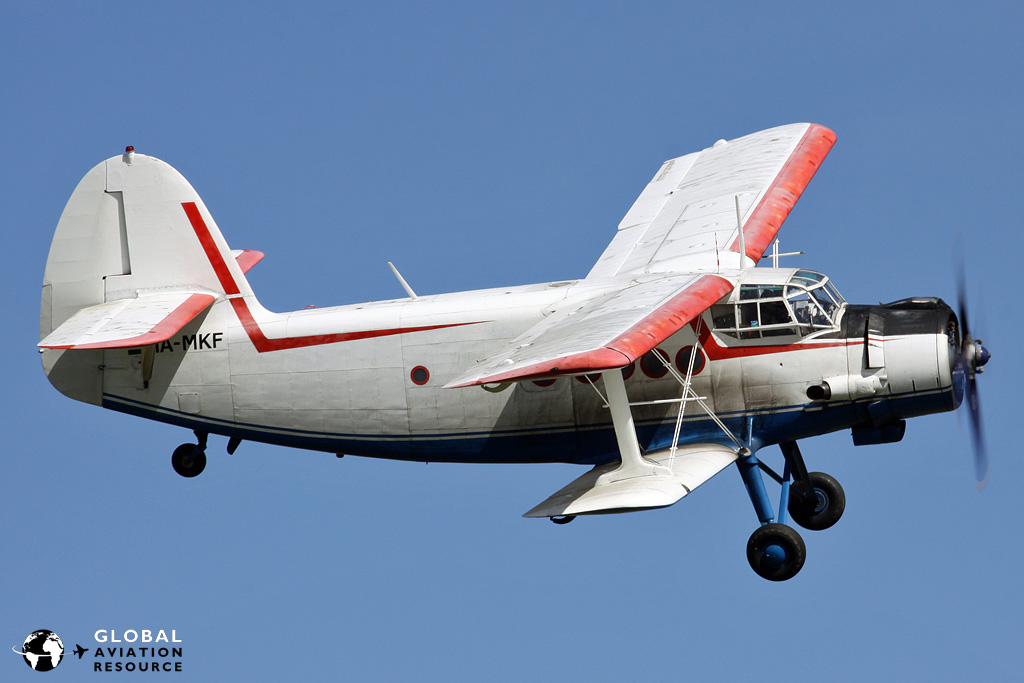

Highlight of the day for me simply had to be the storming performance - and it was a performance! - from the An-2 Colt, flown in spectacular fashion by James Black. An aircraft the size of the An-2, with a wingspan of almost 60 feet (that's some 10 feet larger than an A-1 Skyraider and only seven feet shy of a B-25 Mitchell's wingspan, for comparative purposes) looks absolutely gargantuan when measured against the far smaller and more delicate biplanes flown by the Shuttleworth Collection.
It's a real beast, gunned along by a 1000hp Shvetsoz nine cylinder supercharged radial engine with a maximum speed around the 160mph mark and a spectacularly low stall speed - indeed, An-2 pilot Bill Leary told me last year that the An-2 doesn't really have any stall characteristics as such, it simply loses height and speed until it lands!


Opening the An-2's display is the impressively short take off run as the world's largest single engine biplane lunges into the air, followed by a turn downwind where the aircraft built up considerable speed for a flypast along the crowdline at about as high a speed as the Colt can manage.
The high point of the An-2's display was another 'high speed' run into a steep climb at around 45 degrees, bleeding off speed and bringing the aircraft to a virtual standstill facing into wind. The close to stall speed "hover" may be the Storch's party piece, but the An-2 takes it to a whole new level. Seeing a biplane of that size almost stationary, power cut and ever so slowly descending before throttling forward and moving away in one fluid, uninterrupted motion is a superb demonstration of the capabilities that belie the aircraft's size.


While the An-2 and Po-2 used the headwind to their advantage in order to showcase the slow speed handling characteristics of the types, many of the Shuttleworth Collection's older residents were grounded by the conditions. Light and comparatively fragile aircraft such as the Comper Swift and the Great War rotary duo of Sopwith Triplane and Pup are more susceptible to the elements and even a mild gust of wind could spell disaster if it caught the aircraft at the wrong moment.
No chances are taken at Old Warden and with it being the first of a dozen airshows staged by the Collection in 2011, there will certainly be many other opportunities to see all the aircraft put through their paces later in the year. The cancellation of the Sopwith pair's display slots did allow pilots Trevor Roche and Dave McKay to talk through the process for priming and starting a rotary engine, with the Triplane and Pup positioned in front of the crowd for engine runs.


It isn't often the public are able to witness this process as the World War One fighters are often prepared and operated from either the other side of the airfield on the smaller cross runway, or to the far right of the airfield, well out of public view, to enable them to take off directly into wind. Having two of the Collection's pilots commentating on the start up sequence adds a whole new perspective to the work that goes in to flying these wonderful aircraft.
Indeed, it also places a greater emphasis on the work of the engineers, whose steadfast dedication often takes place behind the scenes and out of the public eye. It's important to appreciate the work they do throughout the year and demonstrations like this go some way towards bringing their efforts to the forefront.


With the programme restructured to make allowances for the various cancellations - Hind, Gladiator, Bristol F2b, Comper Swift, Pup, Triplane, Tomtit, Blackburn B2 and PT-22 Recruit (though the latter two were not scheduled on the printed programme) - the show featured some of the aircraft more suited to coping with the squall.
Getting underway at 2pm, the display kicked off with the traditional and ever-popular barnstorming sequence, with Rob Millinship leading a quartet of trainers in the de Havilland Tiger Moth, followed in a stream by Dave McKay in Peter Holloway's Miles Hawk Trainer, Clare Tector in the Miles Magister and John Hurrell in the de Havilland Chipmunk.


The limbo dancing was, unsurprisingly, blown off the menu on this occasion, but we still saw the usual precision flower bombing and balloon bursting antics; the perfect light hearted way to start the proceedings. The Chipmunk would later return to fill the gap left by the World War One aircraft with a balletic performance of entwined loops, barrel rolls, stall turns and half cubans that illustrated the Chipmunk's aerobatic prowess to good effect in the hands of Chris Huckstep.
Further RAF trainers were represented by the beautiful Avro Tutor, an aircraft with all too little time left on its engine and all too few spares to keep it flying once its engine inevitably reaches the end of its service life. The pilot on this occasion was Pete 'Willy' Hackett, a former Tornado F.3 display pilot from 1997-8, who put the Tutor through its paces in as good a routine from this aircraft as I can remember, combining gently elegant turns and photo passes with more vigorous display axis-changing revolutions courtesy of the aircraft's ailerons.


Also flying an excellent display in spite of the winds was Sir John Allison, who commandeered the de Havilland DH-60X Hermes Moth though a series of low passes that offered some interesting photographic compositions thanks to the airfield's surrounding trees. It was clear from the way the Moth was buffeted around that the pilots all had a lot to contend with.
There's a big difference between watching an aircraft display in less-than-perfect conditions thinking "They're making that look easy", but it's another altogether to be watching and thinking "Christ, that looks a bit bumpy". Hats off to all the pilots who persevered in the name of entertaining Old Warden's capacity crowd - you really wouldn't blame them, at this point in the season, if they decided to call it quits and stand down for the day.


Wrapping up the lighter segment of the programme was a brief appearance by Dodge Bailey in the striking art deco Desoutter high-wing monoplane (an aircraft that I'm undecided on - is it a belle or a beast?) and an even more fleeting glance at the SE5a, which aborted its display immediately following take-off owing to a developing fault with the aircraft's radiator. Changing the pace and jumping ahead to the 1950s was a storming display by Mark Linney in Golden Apple's F-86A Sabre.
Mark kept the Sabre at a restrained power setting so as not to rocket out into the next county when turning, instead keeping the F-86A firmly within the crowd's eyes at all times with a sequence of high angle wingovers, aileron rolls and topside passes. If you've seen the Sabre displaying elsewhere, you'll know how fine a display mount it is; at Old Warden, you'd be hard pressed not to fall in love with it. I'd wager there are very few, if any, venues in the UK where you'll be able to see the Sabre in such close quarters. It really is worth going out of your way to see, next time it is booked at Old Warden.


Bringing the show's content back to the 1940s were the pairing of Westland Lysander and Hawker Sea Hurricane, with the Lysander flying two displays to make up for some of the cancellations. Sporting its new Merlin engine, the Sea Hurricane gave its usual display of refined panache in the hands of Trevor Roche, with all the impactful manoeuvres you'd want to see from a 1940s fighter at Old Warden.
Warbirds generally look good wherever they fly, but at Old Warden the spectator is offered a different dynamic that creates more of an actual experience for the crowd. The amphitheatre and curved crowdline play to the Sea Hurricane's strengths, enabling it to underscore its best features to maximum effect - at other venues for example, the exhaust stains on the side of the fuselage would likely be lost to the naked eye. At Old Warden, they are prominent with each pass. At certain angles, you can even see directly into the cockpit!


Then you have the landing, the taxi in, the shut down, the pilot's disembarkation and the post-flight servicing from the engineers, all mere feet in front of you. This doesn't apply only to the Sea Hurricane; it extends to the entire Collection, visiting aircraft and all. Often, airshow crowds will be away from the action and won't be able to see the processes that precede and follow an aircraft's display, which makes Old Warden one of only a handful of venues where the audience can really be involved in the display.
The Shuttleworth Collection's Piston Provost is always a tremendous performer, with its display, on this occasion flown by Sir John Allison, mixing higher altitude aerobatics with lower level tight turns and close photo passes to demonstrate the aircraft's full flight envelope, its powerful Alvis Leonides engine and excellent manoeuvrability helping to illustrate the rapid development of the RAF trainer when contrasted with the earlier displays by the Tutor, Tiger Moth, Magister and Chipmunk.


With the Provost's final pass came to end of the display; abbreviated for sure, but highly entertaining nevertheless. It would be churlish to complain about the cancellations in light of the challenging conditions the pilots had to endure - safety should always be paramount and with any aircraft, let alone priceless gems like those operated by the Shuttleworth Collection, there is no reason to take any unnecessary chances.
What did fly filled just over two hours of the afternoon, and it was all as expertly flown as it always is at Old Warden. Beyond the flying display, there seemed to be something of an upbeat atmosphere about the place, perhaps owing to it being the first airshow of the season with people's spirits buoyed by the large turnout and perfect blue skies.


It was also a good opportunity to catch up with some of the people you haven't seen since 2010 and shoot the breeze with the more regular attendees, which is part of what this hobby should be about in my opinion.

If you would like to discuss using any of our imagery or feature content please contact us.