

Firstly, I know what you’re thinking - ‘What have you done with Elliott!?’. Well there’s no need to worry he was there too in his usual cheery capacity, setting up camp GAR (no jokes please!) with myself on the corner of the dog-leg crowdline to enjoy the afternoon's flying.
After arriving at the airfield just after midday I was shocked to hear about the crash of the Bucker Jungmann in a nearby field that had happened earlier in the day. First and foremost, the pilot escaped with only minor injuries, which was a relief to hear. It transpires that during a practice display the engine cut out whilst pulling over the top of a loop, leading to a forced landing in a rapeseed field, this caused the gear to shear off and the aircraft to flip over onto its back; it could have been a whole lot worse. It troubles me that this is yet another incident adding to the recent run of bad luck vintage aviation has had to endure over the last couple of months; let’s just hope the luck turns from here. Now, on with the show itself.

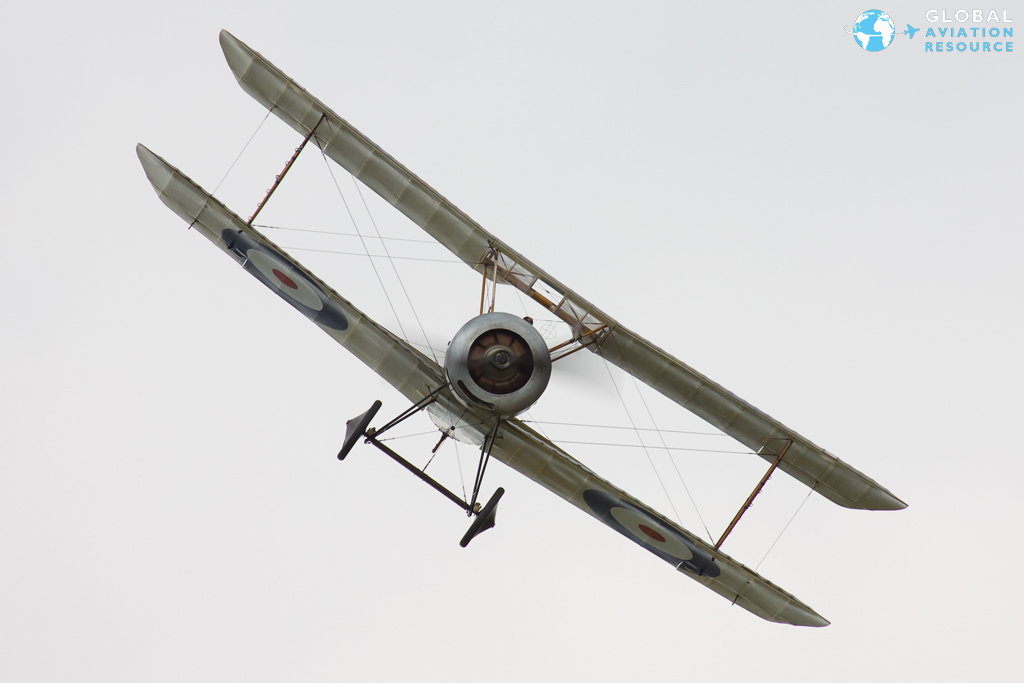
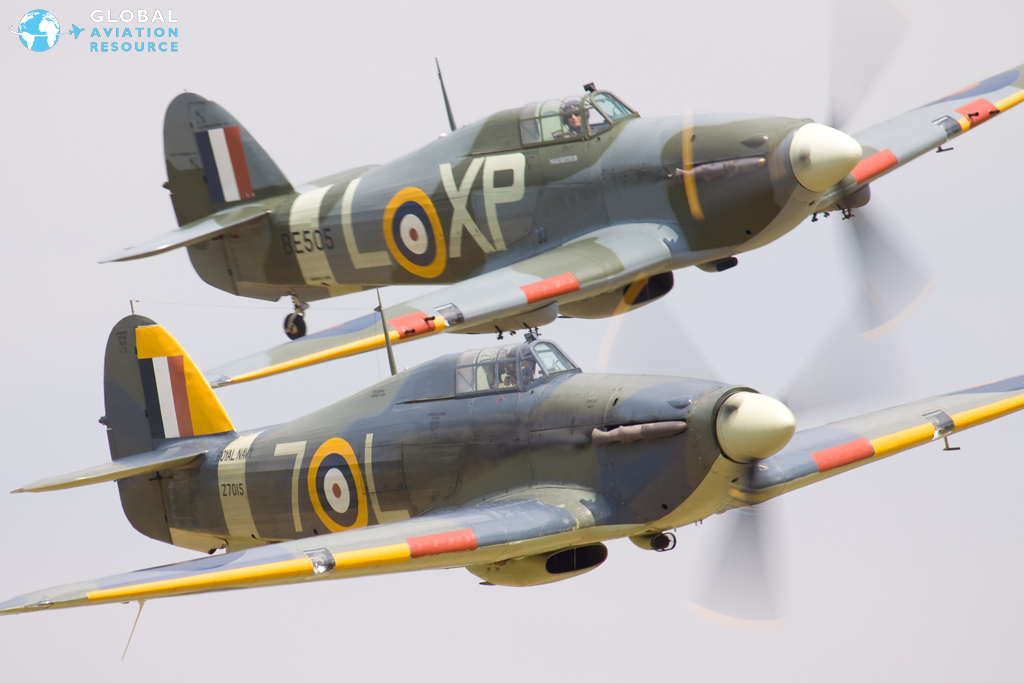
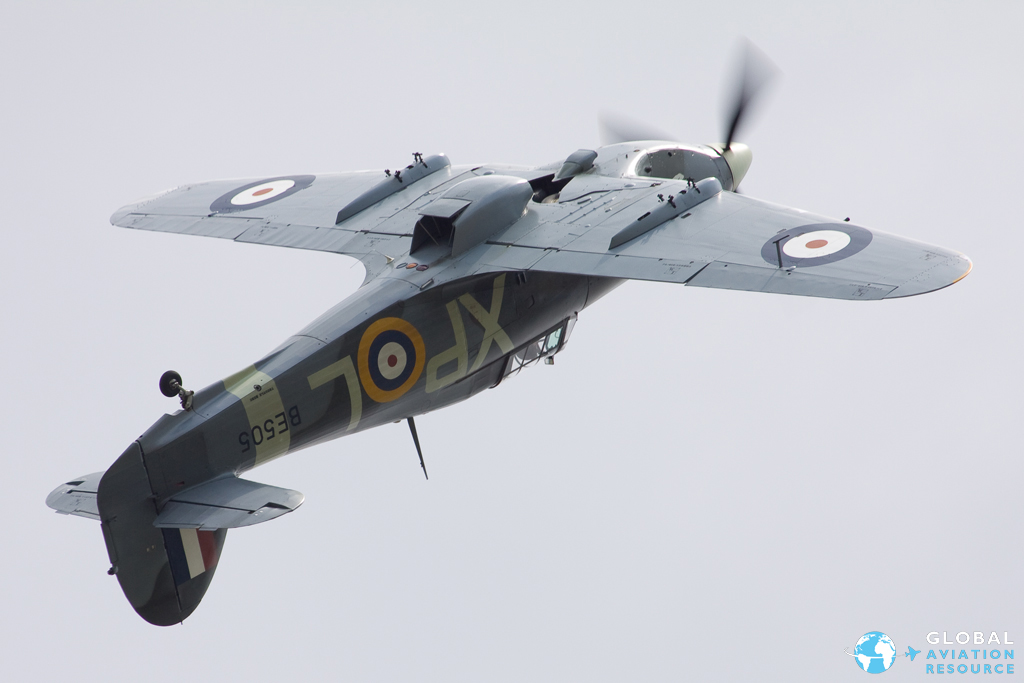
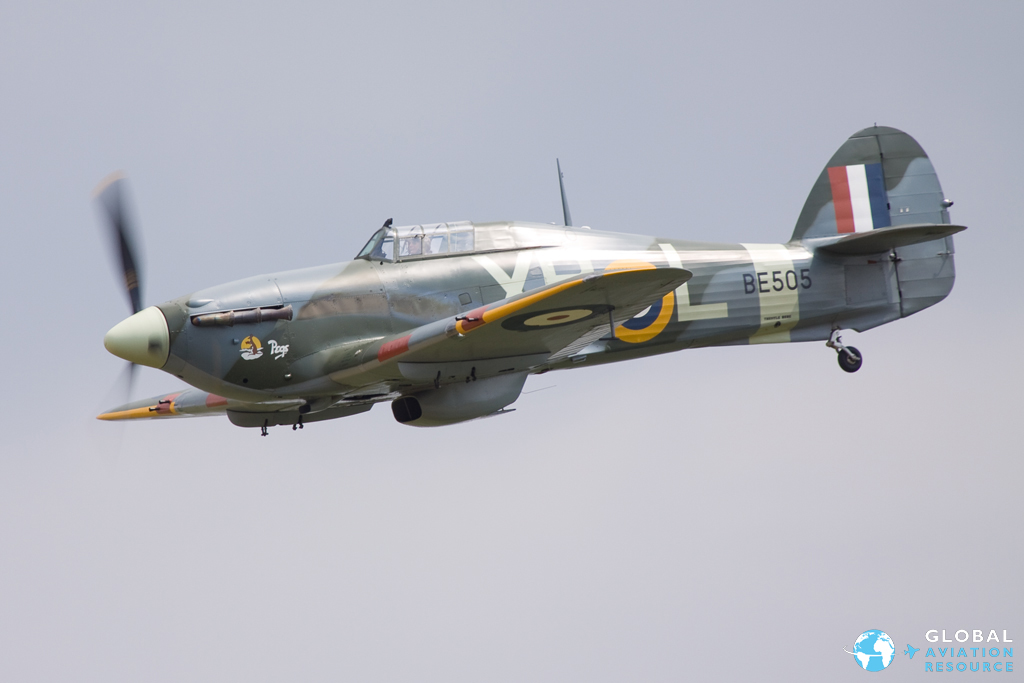
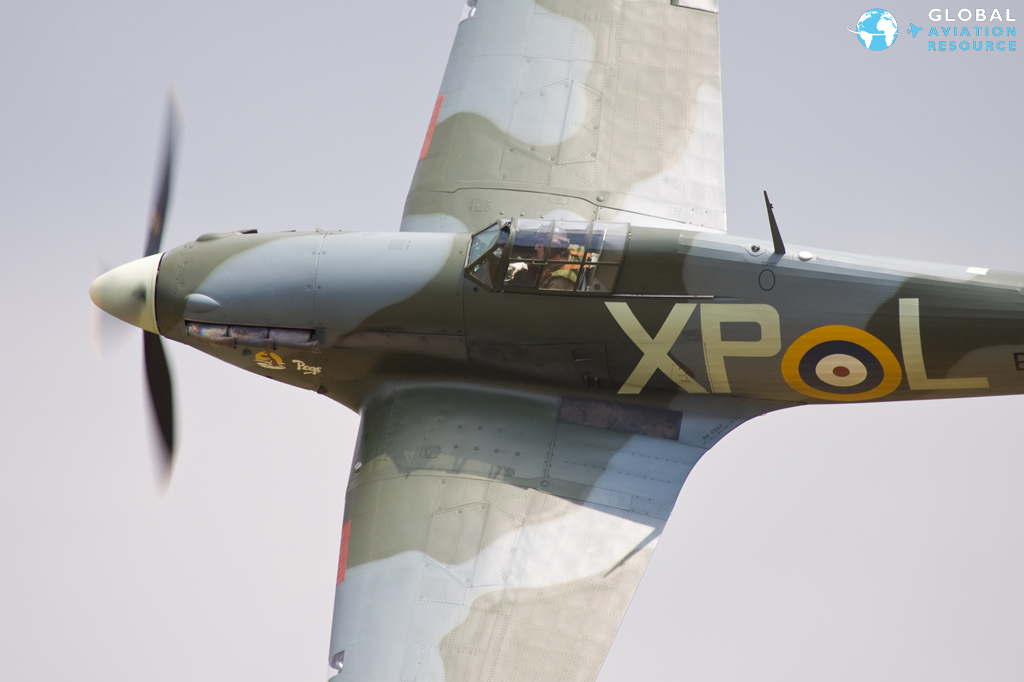
The line up featured plenty of visiting aircraft and was bolstered by two aircraft from the Hangar 11 Collection, with Peter Teichman flying the Hurricane IIb 'Pegs' and Spitfire PR.XI PL965. Pegs was the first up, performing some formation passes with Sir John Allison in the Sea Hurricane Ib before breaking into a solo routine. After returning to North Weald, later in the afternoon Peter brought back his gorgeous Spitfire for a cracking display, proving to be one of the day’s highlights. I believe Old Warden is the venue most suited to Teichman's displays due to the crowdline, with the way he effortlessly switches between the display axis with quarter clover manoeuvres and suchlike. It is always a plus to see a Spitfire over Old Warden too while the Shuttleworth Collection’s own Mk.Vb is undergoing restoration in Hangar 1.
The day had dawned with gin clear skies along with a rapidly rising temperature, but, as the day went on, more cloud built up until shortly after the show began, at which point it was almost completely overcast. Although this made the light very dull and flat, it did bring the temperature down to a more pleasant level.


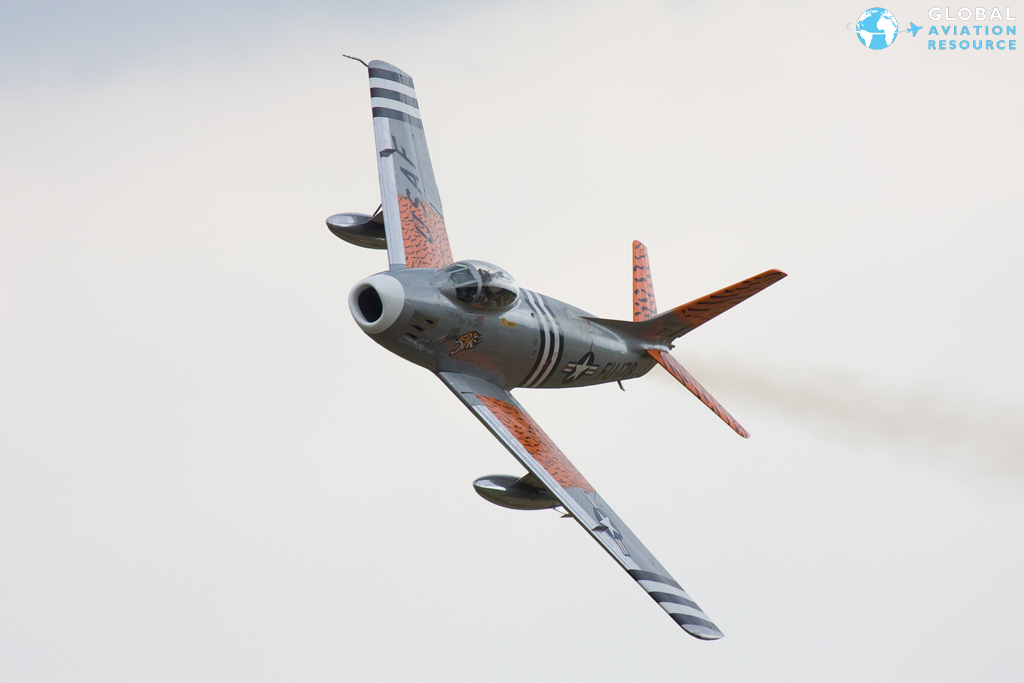
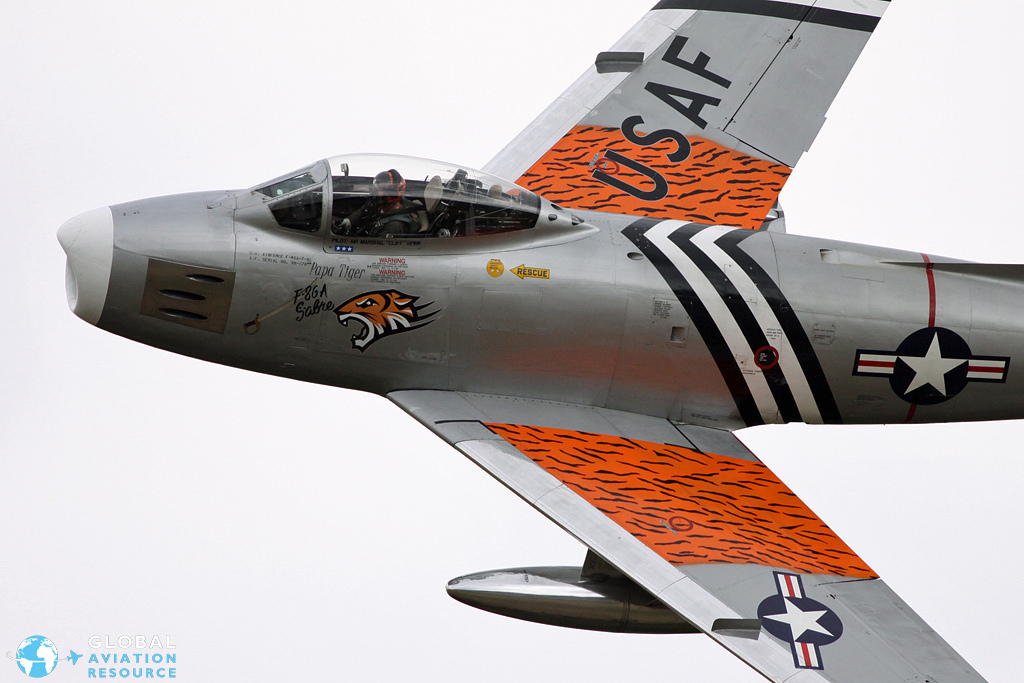
As the cloud arrived Cliff Spink brought with him the sole jet element of the show, flying in Golden Apple's F-86A Sabre (G-SABR) from nearby Duxford. The jet still wore the Tiger markings that were applied for the Cambrai Tiger Meet and it’s the first time I had been able to see it fly with them on, but I have to say I’m not a huge fan. Don’t get me wrong I understand why they were put on and that it must have taken some work to do so, but I for one am glad that they were removed a few days after its display at Old Warden.
One of the main highlights for me was the display by the Battle of Britain Memorial Flight Avro Lancaster, not just providing a flypast as has been common in the past. Seeing the Lancaster at smaller venues is a thrill, where the aircraft is a lot closer than normal and the full brunt of the four Packard Merlins can be heard as well as felt! I found myself noticing certain parts of the display a bit more, such as the bomb bay doors opening as the bomber approached crowd centre, head on, before banking round to reveal the bomb bay – something I can’t say I notice as much at larger venues like Duxford or Fairford.


It was during the training aircraft section in the middle that I thought the show dragged a little, which is a shame after having such a good start. I guess this is down to me having seen those same trainer aircraft at pretty much every Old Warden show I’ve been to. That said it was nice to see the Tiger Moth and Blackburn B.2 together, the two aircraft that competed to become the RAF's primary trainer in the 1930s, with the Blackburn having a side by side seating layout.
It began to pick up again shortly afterwards as we were treated to the very interesting pairing of the Westland Lysander and Peter Holloway’s Fiesler Storch, and not just the usual kind of pairing involving some formation passes and a tail chase, this was a really inspired piece of flying. The Storch stayed low, showing off its incredible slow speed flying characteristics whilst over the top, the Lysander bombed about, almost mirroring the Storch’s movements, which provided an interesting comparison between the two aircraft which played similar roles - albeit on opposing sides - during the Second World War.



Continuing with another interesting element of the display, three 1930s' biplanes took to the skies that, to my knowledge, have not flown together before – these being the Hawker Hind, Hawker Demon and Gloster Gladiator, performing a fantastic trio formation before a wheeling tail chase. The solo performance by Stu Goldspink in the Demon was the spriteliest display by the type that I’ve seen to date, really showing off how fast and agile the fighter version of the Hart could be. Maybe now that the machine has been on the airshow circuit for a few years we will begin to see this kind of display more often as Stu - the only pilot to have flown it so far - gets more familiar with flying it. There’s a real hunger for seeing these 1930s' Hawker biplanes in amongst the enthusiast community at the moment, especially as the numbers are slowly increasing, with HACs gorgeous Fury nearing flight at Duxford.
Shuttleworth’s shows usually have at least one vintage glider display, towed by the J-3 Cub, but on Sunday we were treated to no less than two, soaring around the Bedfordshire skies. The first to go up was the Kirby Kite which is one very pretty looking glider; it’s a British built glider with a slight gull wing appearance and very sleek lines. The second sailplane was the quirkily named 'Schneider Grunau Baby', resplendent in an attractive cream Luftwaffe scheme, which I think looks better than camouflage would have.

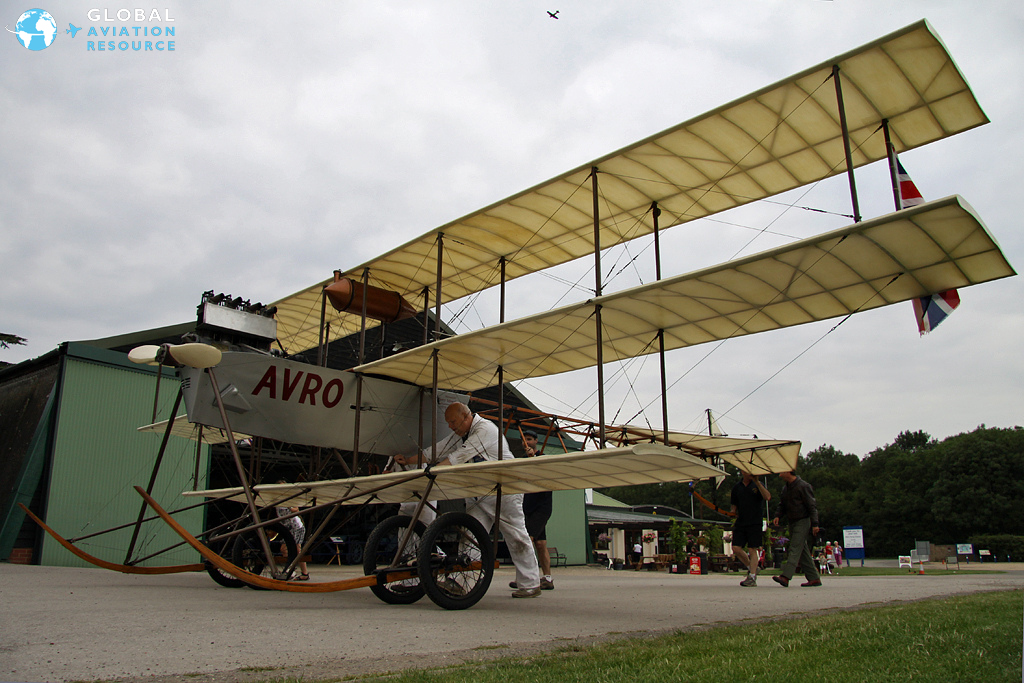
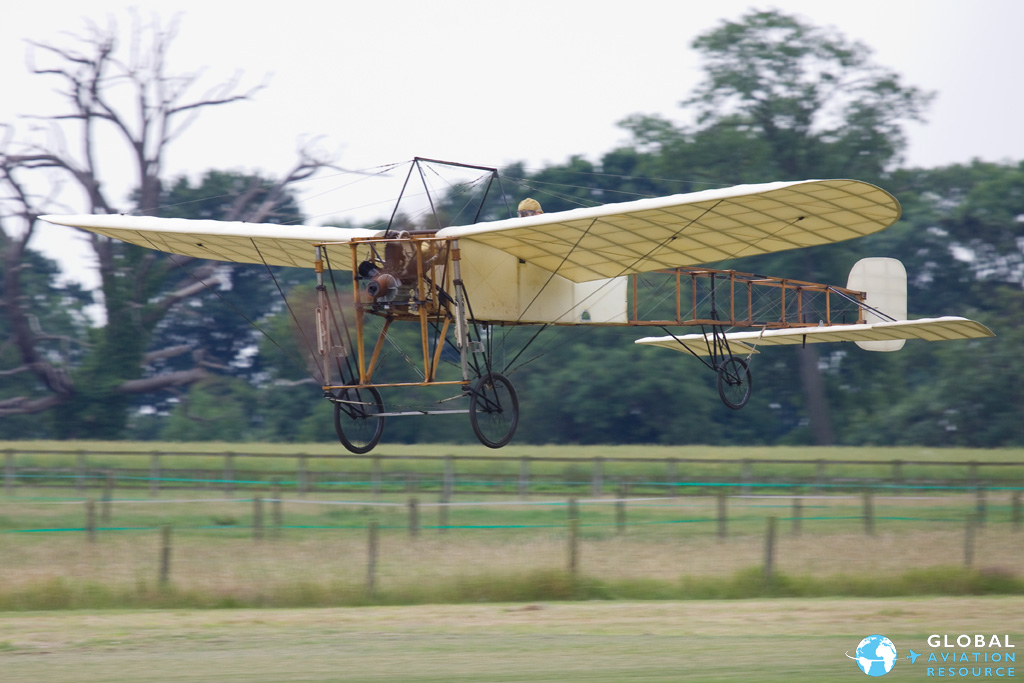
The Military Pageant came to a fine finish after Peter Teichman had landed in his Spitfire PR.XI and as the wind was virtually nonexistent; what we had all been praying for happened – the Edwardians went flying! First up was the Bleriot XI, the oldest airworthy aircraft in the world, making two graceful hops down the runway. We really are lucky to be able to witness things like this aren’t we? Keith Dennison followed with two hops in the Deperdussin, the second less of a hop and more of an actual flight, reaching considerable height down the runway! The Bristol Boxkite and Avro Triplane replicas snuck into the air from the short cross runway to mill around in the still summer evening air before the Blackburn Monoplane took the stage to complete the set. Watching the lazy figure of eights over the airfield by the Blackburn, I was reminded of that wonderful book 'Airborne' by the late Neil Williams and his account of flying this very aircraft at Old Warden.
That was not the end of the flying, however, and it always pays to stick around at Old Warden after the show has officially ended and the crowds have dissipated. The Avro Triplane and Bristol Boxkite took to the skies once more as two of the Collection pilots were having their check flights, and the Storch went up for a touch more hovering. After they had come back down it was time to watch some airplane pushing to end the day, with all hands on deck putting the aircraft away back in the hangars – seeing all the co-ordination and hard work put into every aspect of the Shuttleworth Collection shows is part of the charm of the place and is why I’ll keep returning to this little gem in deepest Bedfordshire time and time again.



If you would like to discuss using any of our imagery or feature content please contact us.