


I think it’s fair to say that the 2009 airshow season in the UK was a good one, albeit one that probably won’t go down as a calendar full of jaw-dropping highlights, but a solid one nevertheless.
Attendances increased significantly this year and numerous shows reported record crowds with Waddington, Cosford, Biggin Hill and Kemble among them. This may in part actually be due to the recession with families looking for cost-effective days out rather than booking holidays, but whatever the reasons it remains wholly positive news for the industry with airshows able to stand out from a crowded outdoor activity market. We have a great airshow heritage and are also fortunate enough to see a diverse range of modern and historic aircraft both on the ground and, most importantly, in the air, at UK shows. Coupled with the inevitable range of additional activities to see and do this makes the airshow an attractive day out which really does suit the whole family.

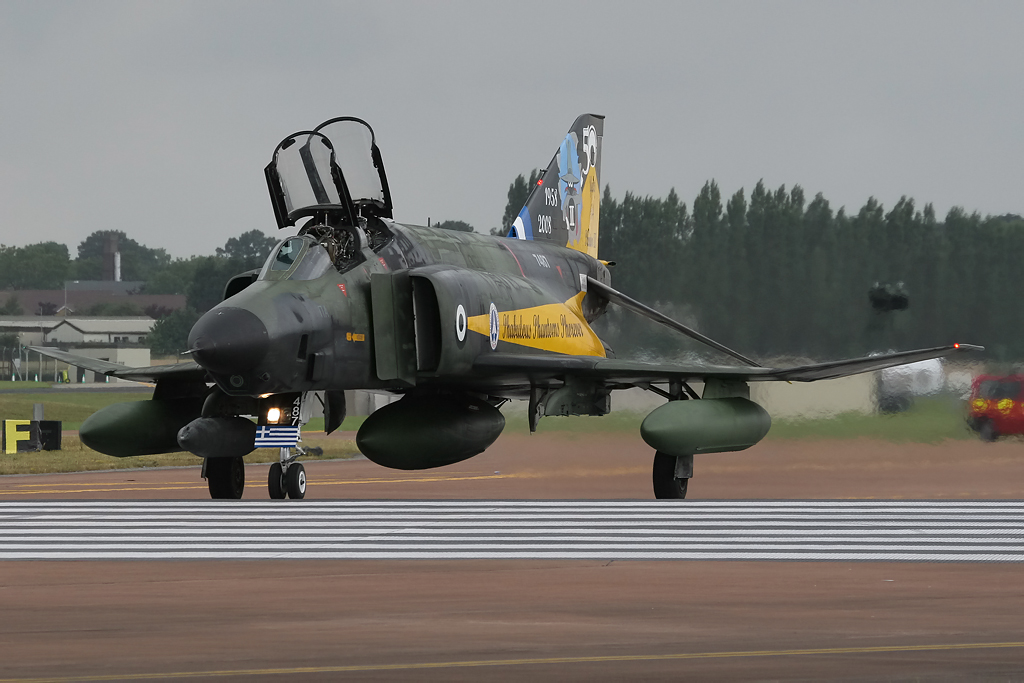


You can’t really start a review of the airshow year in this country without mentioning the weather and when I trawl my memory banks back to the beginning of the season I immediately find painful memories of sunburn at Cosford, which really was a scorcher, followed immediately by opportunities to top-up the tan at Kemble (on Saturday at least) and again at a very warm Waddington. A good start to the year, but one which wouldn’t last unfortunately, just as it never seems to these days!
After that, one word seems to come to mind – grey! Yeovilton suffered more than most with clag and threatening dark clouds which wrecked the display programme and eventually mustered a deluge of rain at the end of the day. Other shows did the reverse, notably Duxford which seemed to attract blue skies once its displays had pretty much come to an end. The early rain at RIAT on Sunday was nothing short of torrential and, just in case anyone missed it, returned at various intervals, leaving many wishing they’d attended the previous day. Overall though we didn’t do too badly weather-wise this year although no doubt the photographers will disagree with me as they strive for those perfect conditions in which to capture the displays, very few of which were cancelled for weather related reasons it should be noted.


As GAR has already covered exclusively this year we were blessed with a solid and effective line-up courtesy of the Royal Air Force in terms of hardware, nothing more and nothing less. The loss of the Tucano in dramatic pre-season circumstances, but fortunately without tragic consequences, was a great shame. This left a gap in terms of the training aircraft line-up but it was the cancellation of the Harrier solo which hit the airshow enthusiast hardest. Let’s face it, most airshow attendees may not have even realised that the Harrier would fly at ten shows this year and therefore won’t have been too concerned when it didn’t, but it was a big blow for those who applauded the aircraft’s welcome return, only to then learn of the cancellation.
Enthusiasts are already debating what we will see from the RAF next year and while an additional fast jet solo would be extremely welcome, if we are to assume that the Role Demo will not rise once again like a phoenix from the ashes of cancellation, it must be for the right reasons; not just to appease the aviation 'buffs' who form such a small percentage of airshow audiences. To suggest that the RAF ‘needs’ another solo fast jet display is to ignore the significant impact that the existing solos make and these are presumably the kinds of questions being asked in the corridors of power, if indeed it is even being considered.


The RAF’s remaining ‘At Home’ days were each blessed with sparkling weather and while all three offer a superb family day out and their value to the RAF is surely considerable, they remain something of an enigma for aviation enthusiasts who have been quick and harsh in their criticism of each show this season. Both Cosford and Waddington served up varied displays to record crowds with the full complement of support from the RAF solos and teams, while Leuchars delivered all but the Hawk solo and an unfortunately unserviceable Chinook.
The main criticism seems to be a lack of foreign fast jet participation although this argument would appear to ignore the fact that these shows are hosted by the RAF and to benefit the RAF. Indeed Leuchars provided the UK’s only Russian-built fast jet appearance this year in the shape of a Polish Air Force MiG-29, along with a Czech Air Force Gripen, while Waddington included participation from both the French and Belgian Air Forces with numerous others on static display. Even Cosford, hamstrung by a runway too short for most jets, attracted a Belgian Sea King with its search and rescue demonstration. That all three shows would like to confirm more foreign guests is undoubtedly true, but the hard work that goes in to trying to do this should not be overlooked or undermined.


Static displays by the military were as well-supported as one would expect in the current climate with Team Merlin from RAF Benson worthy of special praise for their enthusiasm, organisation and willingness to engage with the general public, despite the obvious pressures of their busy operational schedule. In many ways their engagement at this time has never been more vital and it must be hoped that they can continue to do so next year, despite their forthcoming deployment to Afghanistan. Another highlight was the 99 Sqn RAF C-17 which appeared at the Abingdon Air and Country Show. This goes down as a real coup for organiser Neil Porter as the aircraft’s arrival and departure formed part of the day itself and the C-17’s appearance turned-out to be the only one of its kind this year, with the likes of Kemble, Waddington and RIAT all missing out; albeit for very good reasons of course.
Two of the season’s most eye-catching acts came in the shape of the UK military’s rotary teams; the Royal Navy Black Cats and the Army Air Corps’ Blue Eagles. Both seemed to raise the bar this year in terms of their respective performances and it was disappointing for the Blue Eagles that they were forced to curtail their season early, although not as disappointing as it was to hear that the team is taking a break next season. The Apache is always an impressive performer and the Lynx, which both teams demonstrate, never fails to impress as it seemingly defies the laws of rotary flight! The Royal Navy was also well represented by the Merlin HM.1 which flew an impressive demonstration, albeit at a limited number of events, and is definitely one which would be welcome a little more often.


This year has seen us commemorating the centenary of Royal Navy airpower and the Fly Navy 100 airshow displays were keenly anticipated from the word go. Yeovilton was desperately unlucky with the weather and spectators saw only a cut-down version of the rotary and fixed wing ‘balbo’ with no fast jet participation. RIAT was far luckier and saw the complete line-up, although the lack of airframes from the Royal Navy Historical Flight was a huge disappointment all season. Bad luck loomed large with the Swordfish, Sea Fury and Sea Hawk all unserviceable and out of action for the aforementioned events, though the Sea Hawk did make a welcome return at the tail-end of the year. Probably fair to say that the RNHF will be ensuring they don’t walk under any ladders in the build up to next season and we look forward to seeing their wonderful collection more often in 2010.
Staying on a naval theme the Sea Vixen’s 2009 story is one which encompasses the full range of highs and lows and Lt Cdr Matt Whitfield’s displays at Kemble in June are undoubtedly my personal highlight of the season. It wasn’t just the sight of such a stunning aircraft being displayed so ably but also the man himself, for you could not wish to meet a nicer guy on the airshow circuit, and it was a privilege to interview him while sitting on top of the jet itself. All the more shocking then to hear of Matt’s sudden illness in August, one which we all hope won’t deprive us of his presence on the airshow scene for too long, and it’s heartening to hear that he is making great progress. But that news was tempered in September when we learned that De Havilland Aviation in Bournemouth, custodians of the Sea Vixen itself, was rumoured to have entered administration. Plans for the aircraft’s future will presumably remain very much in the hands of current owner Julian Jones and the ability of any future owner to meet the mighty Sea Vixen’s equally mighty operating costs. But surely this most iconic of naval fighters, and a crucial part of the UK’s rich aviation heritage, cannot be allowed to remain earthbound or, god forbid, leave our shores for good? I’m sure I speak for many when I say that this must not be allowed to happen and if it needs a Vulcan-style campaign to ensure that it doesn’t then so be it, it can start right here on GAR.

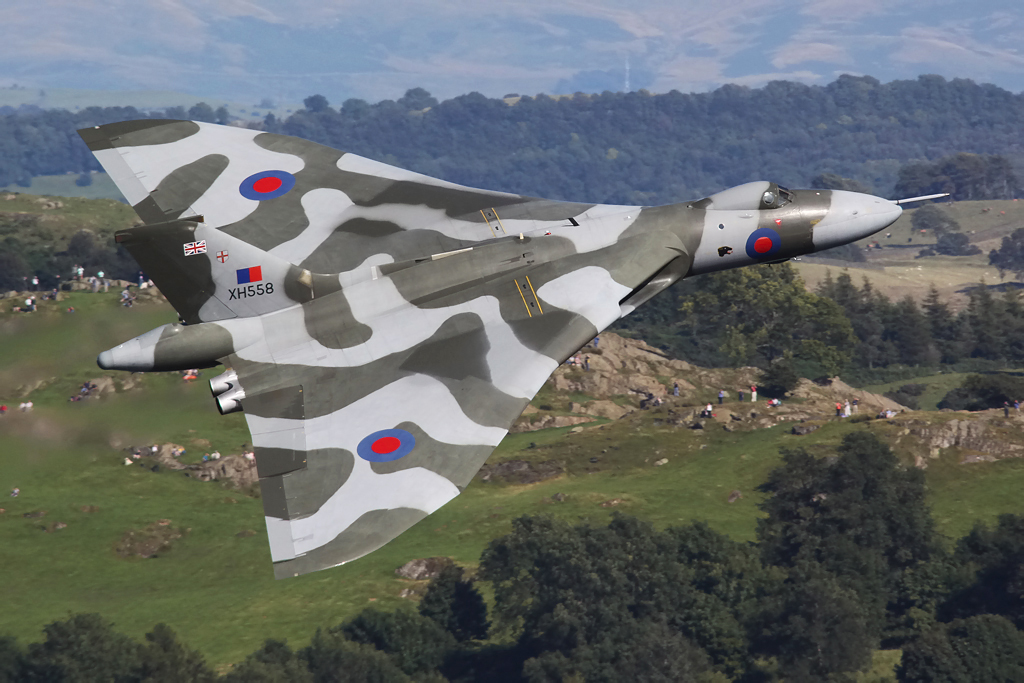

Which brings us nicely on to the Vulcan itself, the largest delta on the block and one which has cast its own significant shadow over the 2009 airshow scene, both literally and metaphorically. Much has already been said and written about the aircraft but the displays have left me underwhelmed as often as they have impressed this year, while some of the public relations and administrational issues, notably the permit to fly disaster which kept her firmly grounded at Waddington, have been nothing short of farcical. The so-called ‘Vulcan-effect’ certainly would not appear to have translated in to funding for the aircraft and, in the absence of a major sponsor, yet another fund-raising campaign began last week with, initially, £400K needed in the next six weeks. Personally I just can’t imagine the money being raised by appealing to the general public once more; if people are willing to donate surely they would have done so already to ‘save’ the aircraft? The future remains unclear for the Vulcan and, while it has been brilliant to have her back, there are certainly questions surrounding the long-term sustainability of a venture which costs many times that of the Sea Vixen and well, practically every other historic aircraft you can think of.
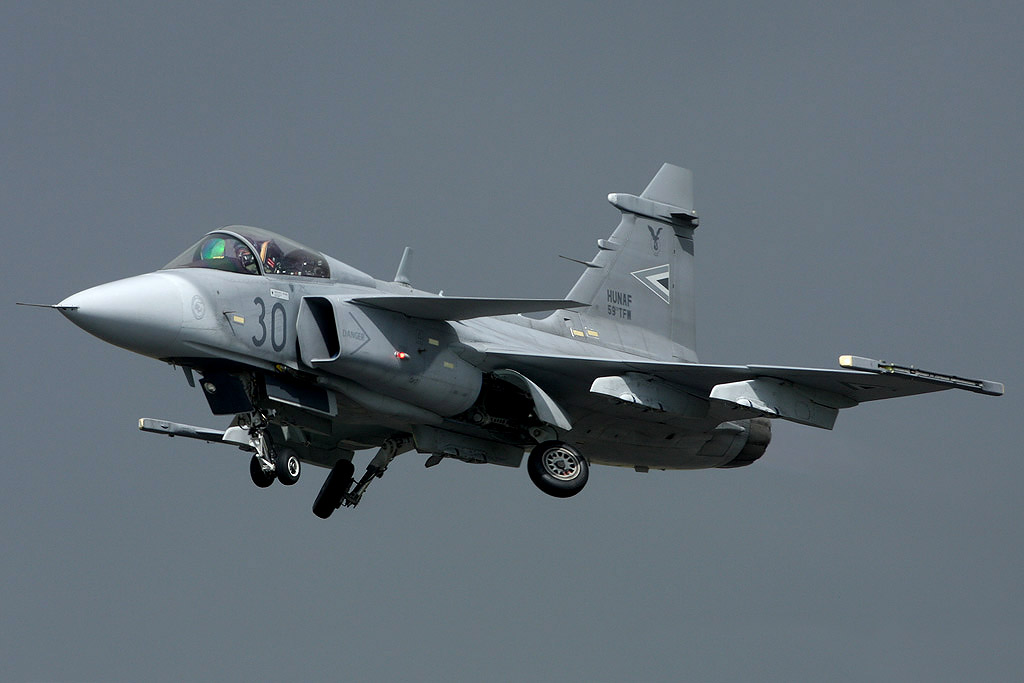
Foreign military participation was a mixed bag during a season which was notable for a distinct lack of appearances from the United States, even at RIAT with a B-52H the only flying USAF aircraft. The Spanish EF-18 display was a highlight for many at the Air Tattoo which was something of a Hornet-fest with no less than three examples displaying alongside two Saab Gripen demos. Overall though the Rafale displays get the vote in this category with Yeovilton, deprived of the full show due to the weather, getting a novel and quite stunning ‘weather check’ from the French display pilot, while RIAT got the Rafale full-monty. It was certainly an impressive and dynamic display though lacking the raw power and instantaneous manoeuvrability of Sqn Ldr Scott Loughran’s Eurofighter Typhoon demo. I must also mention the brilliant ongoing support from both the Dutch and Belgian Air Forces with their F-16 Fighting Falcons, always a welcome sight at UK shows and they bring with them great colour and enthusiasm whenever they visit.


The warbird scene has been slightly deprived this year with the absence of many aircraft from Duxford-based The Fighter Collection, due to both a CAA audit and other unspecified issues. With the RNHF Sea Fury and Swordfish both out for the season you would be forgiven for thinking that the older generations were poorly represented but such is the wealth of historic aircraft in the UK that some people will barely have noticed. Most important perhaps was the restoration, test flights and subsequent public displays of Hangar 11’s unique MkIIB Hurri Bomber which took to the air in January for the first time in some 63 years. Peter Teichman already has a crowd favourite on his hands, partly due to his wonderful flying displays, and it is so nice to see a project like this come to fruition. Let’s hope the Blenheim is next up in the not too distant future though it seems unlikely that this unsung hero of the Battle of Britain will be ready to commemorate the Battle’s 70th anniversary next year.
Warbird fans got their usual bumper fix at Duxford’s Flying Legends Show in July. For many it’s the top event of the season and 2009 was no different with the display receiving rave reviews from all sides with the FW-190 in the flying programme particularly worthy of praise, as was a UK debut for the Four Horseman’s P-51 Mustang demonstration. Old Warden meanwhile hosted a number of shows focussing largely on vintage aircraft and consistently won great praise for its displays, atmosphere and overall likability – the Shuttleworth Collection is a true gem and one we should all be proud of.


Some of the private and civilian display acts appeared frustratingly rarely in 2009 with Jonathan Whalley’s Hunter ‘Miss Demeanour’ springing to mind, as does Sky Blue Aviation’s Hunter FGA.9, the Delta Jets fleet and the Air Atlantique Meteor NF.11. Having said that a number of ‘new’ display aircraft such as Neil McCarthy’s Jet Provost T.3, Jeff Bell’s Jet Provost T.5 (flown by John Rowley for Heritage Aviation) and the Gnat Duo from North Weald all made solid debut seasons. The Vampire Preservation Group also had a busy season with their T.11, the world’s only flying example, but one classic jet really seemed to stand-out for regular airshow attendees – the F-86A Sabre operated by Golden Apple at Duxford. The aircraft has been superbly demonstrated this season and it looks as if, despite earlier stories to the contrary, she will be remaining this side of the Atlantic for the foreseeable future. If she were to depart it would be a great loss to aviation in the UK and hopefully we will continue to see her in 2010 and beyond.
On the quieter side of the display page it has been another hugely successful season for Guy Westgate and his Swift Aerobatic Display Team. There can be little doubt that Guy and his colleagues are among the most innovative of the display acts on the airshow circuit and people still gaze wondrously at the display, especially if they haven’t seen it before. Never one to stand still and allow mediocrity to creep in, there will be further changes to the display next season, including the addition of the Twister Duo which will be available as an act in its own right, and for that they should be applauded. The Blades meanwhile are always worthy of a mention and have clearly become a real crowd favourite, performing consistently well this season, their first without Andy Offer as Blade 1. His are big shoes to fill but it is a role which new team leader Myles Garland appears to have taken up admirably.


So we look ahead to 2010 and what will undoubtedly be an exciting season which marks the Battle of Britain’s 70th. Numerous shows will be commemorating this event, probably the last which will see any significant involvement from veterans as the passage of time slips by. As well as the inevitable and wholly appropriate warbird involvement, moves are afoot to attract modern day aircraft from nations whose pilots partnered our own boys in light blue, and this will hopefully lead to some notable visitors next season, including the possibility of some from far afield.
GAR wants to interact with its readers so if you have a question for the author or a comment to make on this feature, please click on the button below. The best comments will appear right here on GAR.If you would like to discuss using any of our imagery or feature content please contact us.