
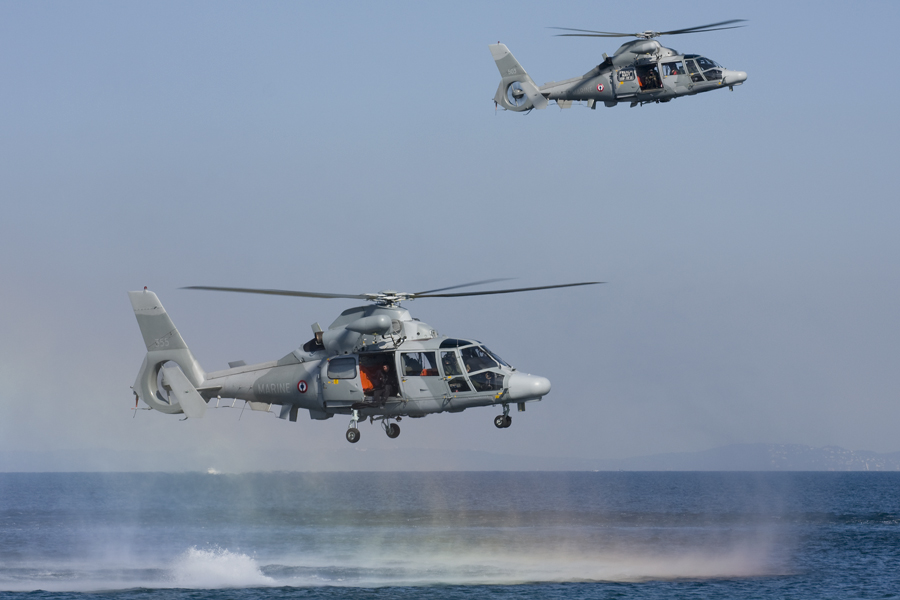
French Naval Aviation is in a state of change. The last decade has seen the introduction of France's nuclear powered aircraft carrier, the Charles De Gaulle, the new Rafale M and the Hawkeye radar surveillance aircraft. Rotary-wing assets too, have also been the subject of modernisation, the Super Frelon is likely to disappear in the very near future, whilst the Lynx will be replaced by the ship-borne variant of the NH-90 in around 2011.
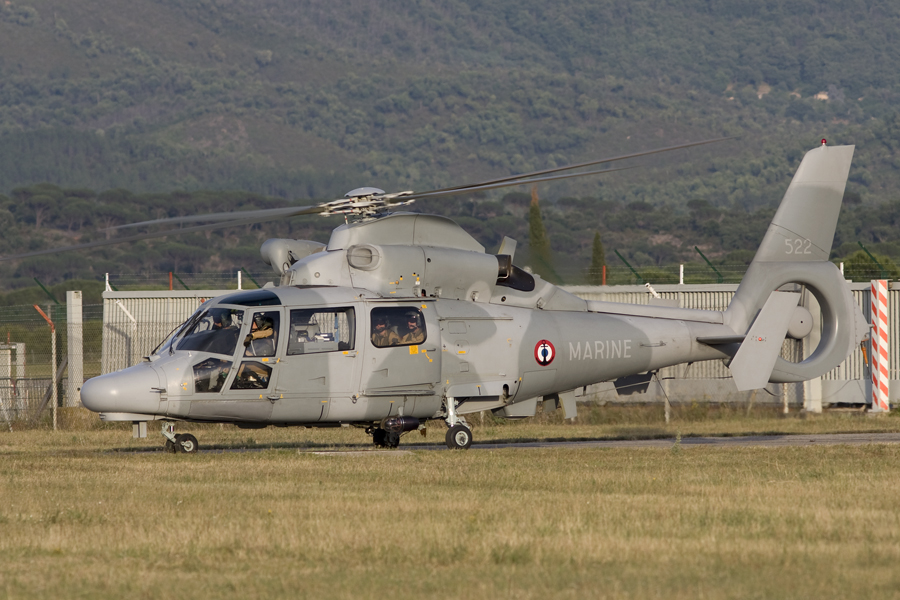
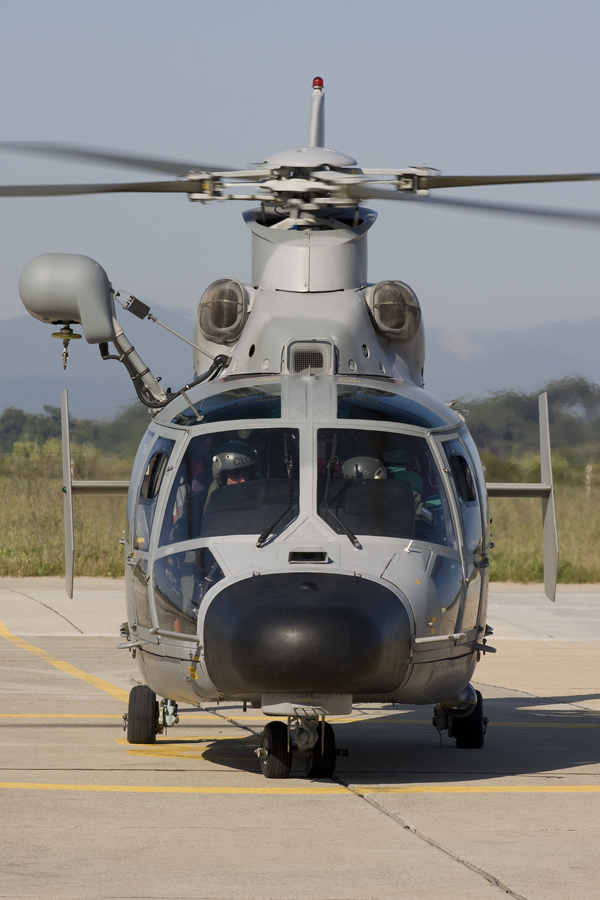
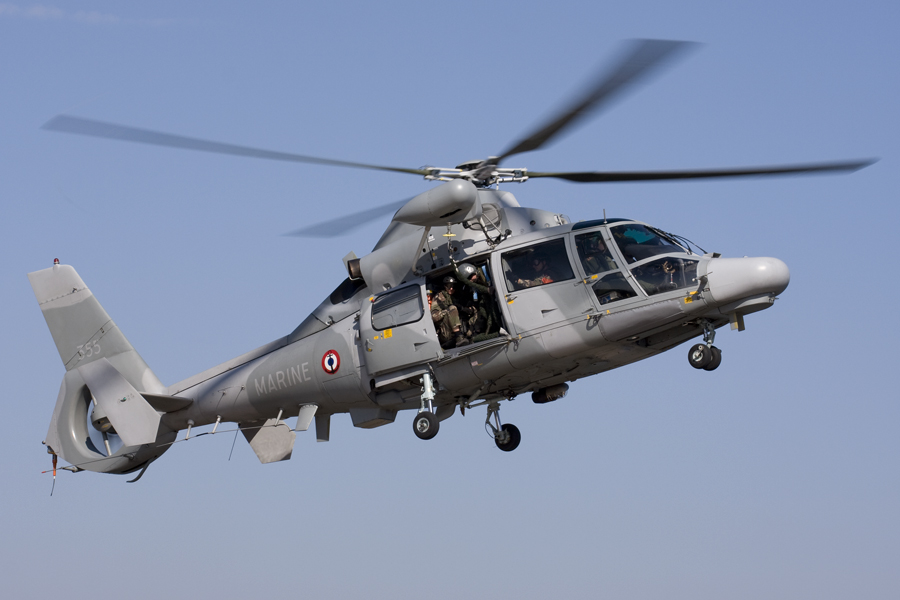
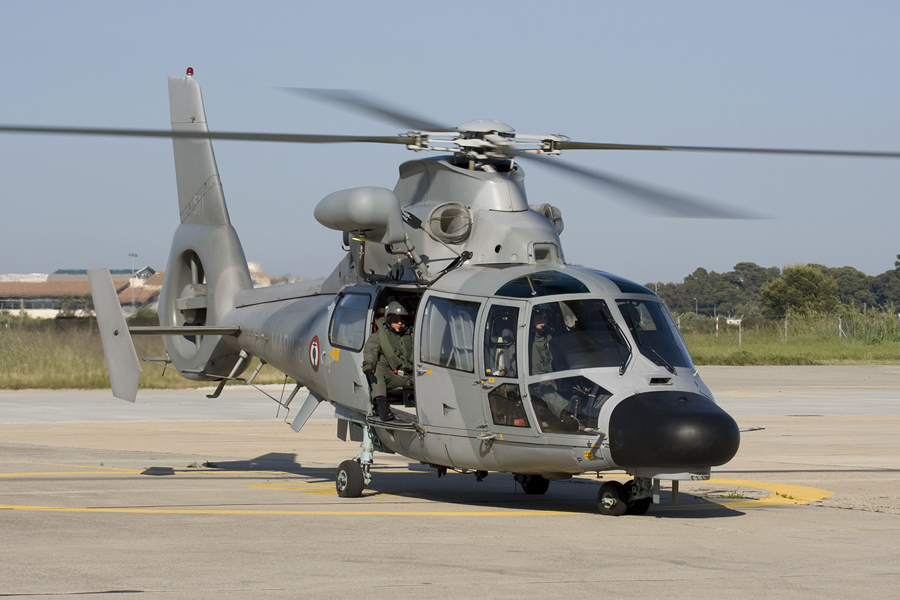
One type which serves the French Navy without much publicity, are the Eurocopter AS565MA Panthers of 36 Flotille based at Naval Air Station Hyères on the Mediterranean coast near Toulon. The unit was formed in September 1995, making it the latest French Naval Air Squadron to form, specifically to fly the Panther off the French Navy's fleet of small warships including the La Fayette-class Frigate and Forbin-class (Horizon) air-warfare ships.
The Panther was designed by Aerospatiale, now Eurocopter, as a military-specification version of the popular AS365 Dauphin and is also in service with the navies of Israel, Saudi Arabia and Morocco, but should not be confused with the Dauphin which also serves with the French Navy. These so-called 'Dauphin Pedros' are flown from the Charles De Gaulle in the Search and Rescue role during flight operations, similar aircraft are also flown by 35 Flotille on SAR missions around the French coastline.
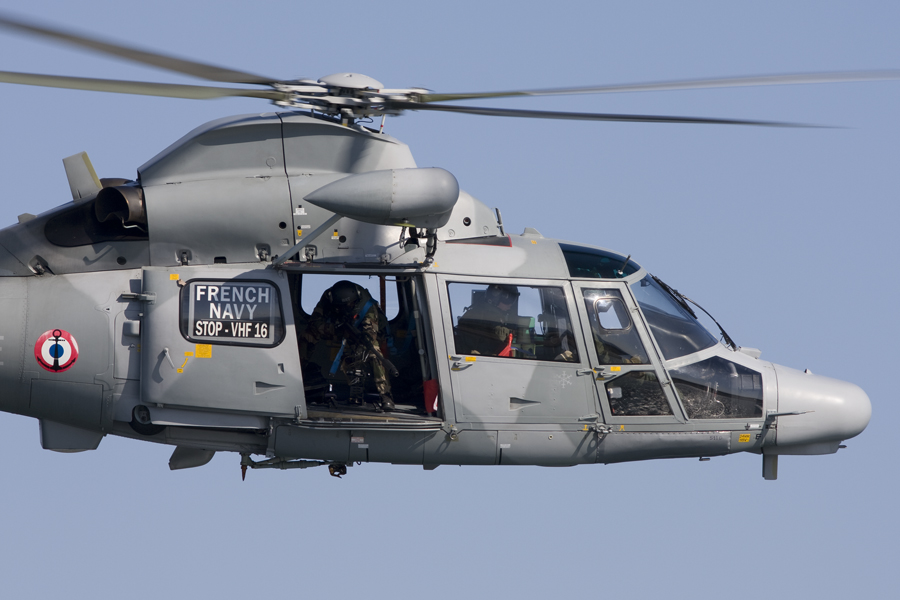

Unlike typical warship-based helicopters, the Panthers were seen as a lightweight-utility type helicopter which could extend the reach of the ship's field of view and provide Over-the-Horizon-Targeting for ship launched anti-surface weaponry. They do not have any anti-submarine warfare capability, nor do they carry offensive weaponry such as light anti-ship missiles, although a light 7.62mm machine can be mounted in the cabin. Sixteen aircraft were purchased and as many as eight can be at sea at any time leaving the remainder at Hyeres for training and maintenance. The unit flies around 3,000 hours a year, 65% of these whilst on a detachment.
In recent years, these detachments have become increasingly busier for 36F's crews. Panther detachments have been involved in the fight against drug smuggling with the squadron so far responsible for the seizing of more than nine tonnes of drugs including cannabis and cocaine, known to the crews as 'Moroccan Luggage'. Often these drugs are loaded into high-speed inflatable boats, their cargo carefully packaged and laid out inside the boat, interceptions see the fast boats disabled by snipers firing from the helicopter, and a team from the ship then takes the smugglers and their cargo into custody.
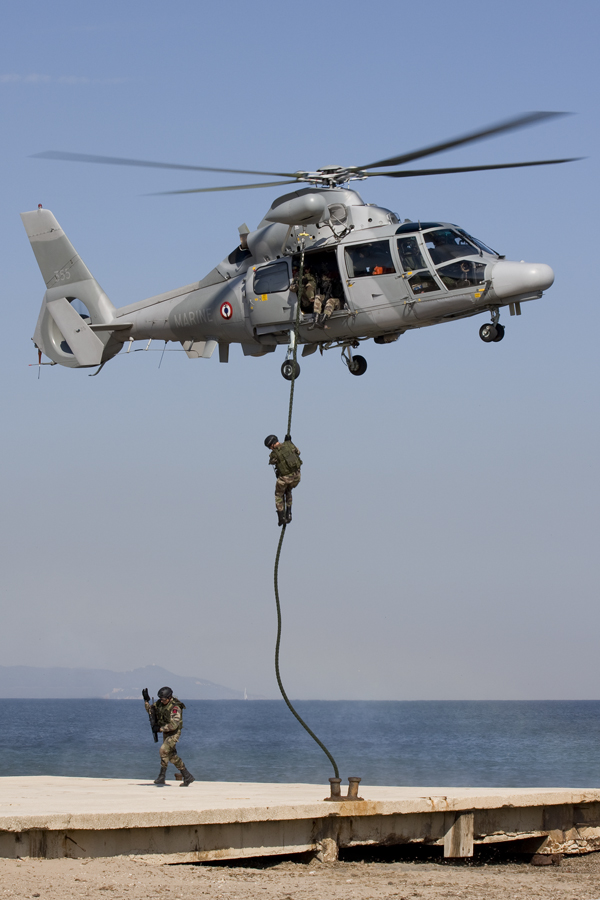
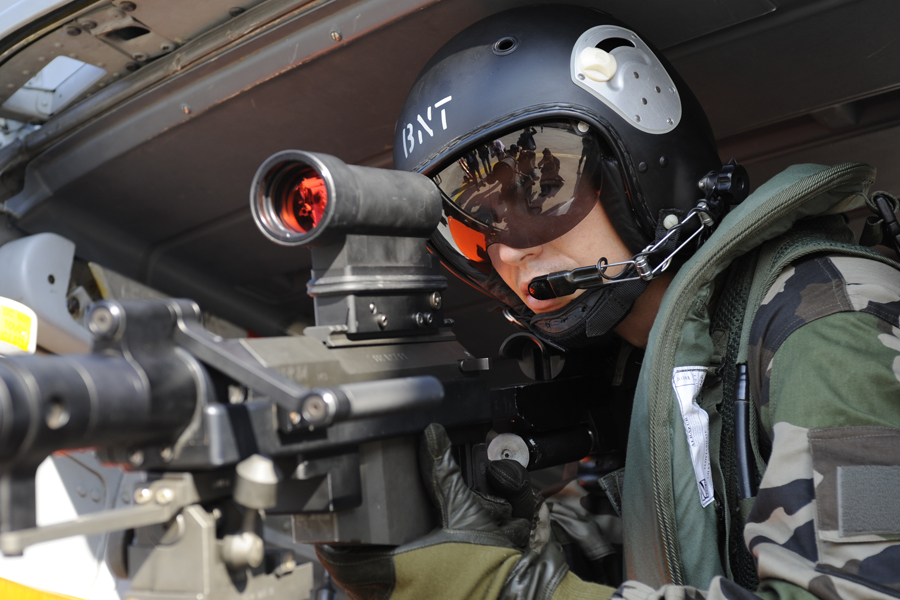
More recent world attention has been focused on the Horn of Africa and the problems of piracy in the Indian Ocean off Somalia. Here, the French Navy has been extremely busy as part of its role in the European Union's Operation Atalanta. In May, the FS Nivôse and her Panther helicopter intercepted and captured 22 pirates along with their mother ship and skiffs over a two week period, the ship's Panther also managed to thwart an attack against the container ship Safmarine Asia. Here Panthers fly routinely searching for the armed skiffs the pirates use. As these don't show up on radar, the crews are forced to scan the seas for these tiny targets.
It is in these waters that some of the Panther's deficiencies have been highlighted. In January 2007, a contract was awarded to Eurocopter to begin the development of a mid-life upgrade to the French Navy Panthers. Dubbed the Panther Mk 2, the project has been ongoing since 2003 in conjunction with 36F and the French Government's arms procurement agency, known as the Délégation Générale pour l'Armement (DGA). Key aims of this €80 million ($110 million) update programme are to reduce pilot workload, improve situational awareness and eventually add a self-protection system to the type.


The first upgraded Panther Mk 2 (aircraft 505) first flew in November 2008 at the Eurocopter plant in Marignane. The aircraft adds a NVG-compatible lighting system to the cockpit, updated communication systems including a NATO-standard data-link, the ability to carry a light anti-ship missile and new electro-optical turret attached to a pylon on the port-side of the aircraft. Information from the turret can be fed to multi-function tactical displays in the front cockpit or a mission system in the rear cabin.
These systems are currently being flight trialled and the first production retrofitted aircraft should re-enter service in 2010.

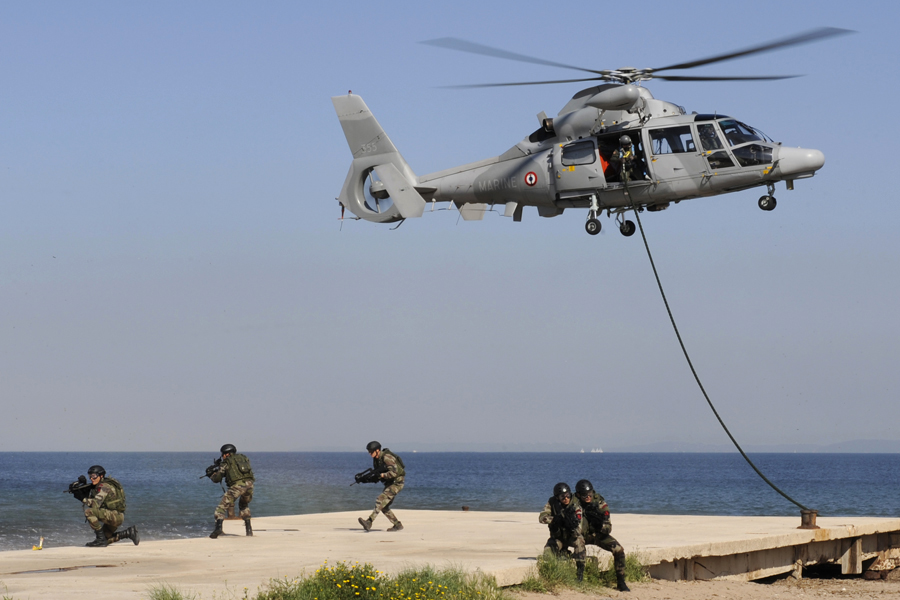
The second stage of the programme would see the introduction of a comprehensive self-protection system (SPS) similar to that used on the NH90 and Tiger with radar, missile and laser warning receivers integrated along with a flare dispensing system, the system has been designed to counter concerns about the increasing threat from portable surface-to-air missile systems,
Panther Mk 2s equipped with the SPS are likely to enter service between 2012 and 2014. All 16 aircraft in service will be upgraded, but only the first three will be completed by Eurocopter, the rest will be completed by Service Industriel de l'aéronautique (SIAé), a military maintenance organisation formed in 2008. As with all new upgrades and equipment they take time to enter service, but once operational, the Panther Mk 2 will be serving alongside the NH90 for many years to come.

If you would like to discuss using any of our imagery or feature content please contact us.